

Starting an exercise routine is one thing. Knowing how to organise your workouts throughout the week is another.
Many beginners understand that they should exercise regularly, but they are often unsure how to combine strength training, cardio, walking, stretching and rest days. Should you work out every day? Is three days a week enough? Should you train your upper body and lower body separately, or perform full-body workouts?
Building a weekly workout routine does not have to be complicated. A balanced exercise schedule can include a few strength-training sessions, regular cardiovascular activity, walking, mobility exercises and enough recovery time.
The right workout plan depends on your fitness level, goals, available time and ability to recover. You do not need to exercise intensely every day or follow an advanced bodybuilding split to improve your fitness.
In this guide, you will learn how to build a weekly workout schedule for beginners, how to combine strength training and cardio, how many rest days you need, and how to choose between two-day, three-day and four-day workout plans.
You will also find practical Monday-to-Sunday workout schedules, a four-week progression example and tips for developing an exercise routine you can maintain over time.
What Is a Weekly Workout Routine?
A weekly workout routine is a planned schedule that organises different types of physical activity across seven days.
Instead of choosing exercises randomly each day, you decide when to perform strength training, cardiovascular exercise, walking, mobility work and recovery activities.
A balanced weekly exercise schedule can help you distribute physical activity more consistently while avoiding unnecessary repetition or excessive training.
For example, your weekly fitness plan might include:
- Two or three strength-training sessions.
- Several walking or cardio sessions.
- Short mobility or flexibility sessions.
- One or more recovery days.
- Regular movement throughout the day.
A workout routine does not need to look the same for everyone. Someone exercising at home with bodyweight movements may follow a different schedule from someone training in a gym with machines and free weights.
The important thing is to include appropriate activity for your goals and fitness level.
The five main components of a balanced workout routine
1. Strength training
Strength training uses resistance to challenge muscles. Examples include squats, lunges, push-ups, dumbbell rows, resistance-band exercises and machine workouts.
It helps develop muscular strength, endurance and physical function.
2. Cardiovascular exercise
Cardio increases your heart rate and breathing. Examples include brisk walking, cycling, swimming, dancing and jogging.
It supports cardiovascular endurance and contributes to your weekly aerobic activity.
3. Walking and everyday movement
Walking is an accessible way to increase daily physical activity. It can be performed outdoors, indoors or on a treadmill.
Short walks can also help break up long periods of sitting.
4. Mobility and flexibility
Mobility exercises help you practise comfortable joint movement, while stretching can help maintain flexibility.
Examples include shoulder circles, hip mobility exercises, ankle movements and gentle stretches.
5. Recovery and rest
Recovery allows your body to adapt to exercise. It can include complete rest or lighter activities such as comfortable walking and gentle mobility work.
A balanced exercise schedule includes all these elements rather than focusing exclusively on one type of training.

Benefits of Following a Weekly Workout Schedule
A structured exercise routine can make it easier to develop consistent habits and balance different forms of physical activity.
Here are some important benefits of planning your workouts.
1. Helps You Stay Consistent
When you decide in advance which days you will exercise, you are less likely to rely on motivation alone.
For example, knowing that Monday and Thursday are your strength-training days can make it easier to organise your time.
A realistic workout schedule can turn exercise into a regular part of your week.
2. Helps Balance Strength and Cardio
Focusing only on cardio may leave strength training out of your routine. Similarly, concentrating entirely on resistance training may mean you do not get enough aerobic activity.
A balanced workout plan gives both types of exercise appropriate attention.
3. Allows Better Recovery
Training the same muscles intensely every day may leave you feeling excessively tired or uncomfortable.
Planning your workout days helps distribute demanding sessions and gives your body opportunities to recover.
4. Supports Different Fitness Goals
A weekly exercise routine can be adjusted to focus on:
- General fitness.
- Cardiovascular endurance.
- Muscular strength.
- Muscle development.
- Healthy weight management.
- Balance and mobility.
You can change the emphasis without removing the other important components of fitness.
5. Makes Progress Easier to Track
A planned workout schedule gives you a reference point.
You can record:
- Exercises performed.
- Sets and repetitions.
- Walking duration.
- Workout frequency.
- Exercise difficulty.
- Recovery and energy levels.
This makes it easier to recognise gradual improvements and decide when to adjust your routine.
6. Reduces Random and Excessive Training
Without a plan, beginners may perform the same exercises repeatedly, train intensely on consecutive days or skip important movement categories.
A structured routine helps you organise activity more thoughtfully.
The American College of Sports Medicine’s 2026 resistance-training guidance emphasises consistency, individualisation and gradual progression rather than complicated training programmes. ACSM: Updated Resistance Training Guidelines.
What Should a Balanced Weekly Workout Routine Include?
A well-rounded weekly workout plan should combine aerobic activity, strength training and other movement that supports mobility and everyday function.
For many adults, public-health guidelines recommend working towards at least 150 minutes of moderate-intensity aerobic activity each week, or 75 minutes of vigorous-intensity activity, or an equivalent combination.
Adults should also include muscle-strengthening activities that work all major muscle groups on at least two days each week.
These are general health recommendations. If you are new to exercise, you can build towards them gradually.
1. Strength Training: At Least Two Days a Week
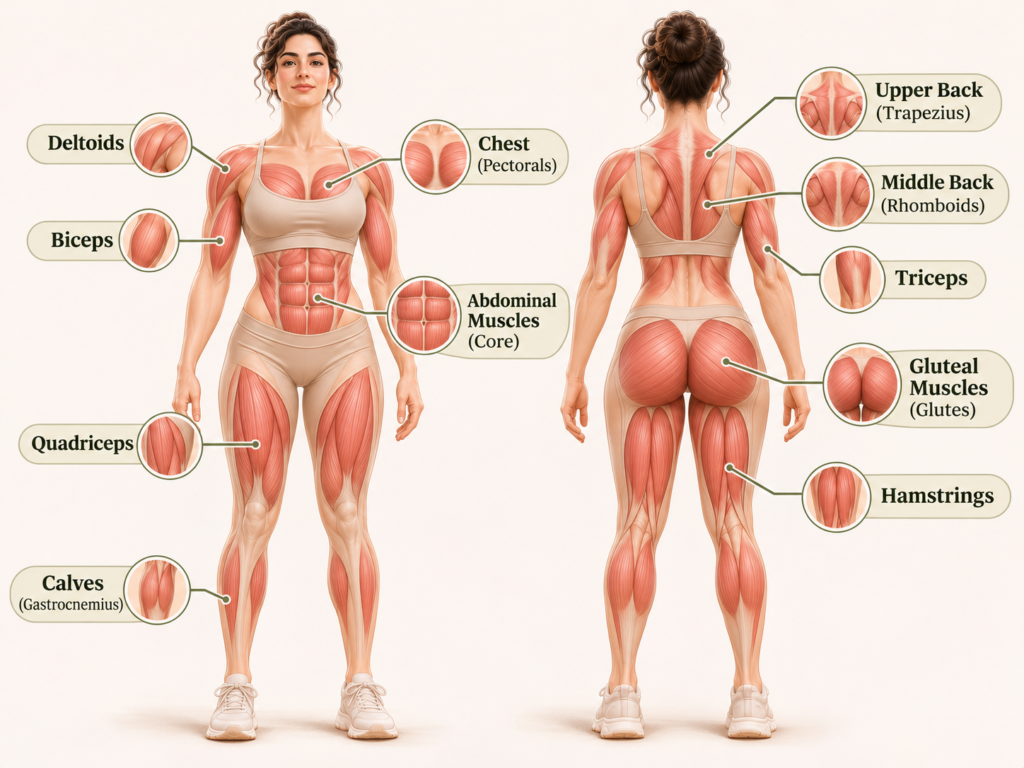
Strength training should challenge the major muscle groups, including:
- Legs.
- Hips.
- Back.
- Abdomen.
- Chest.
- Shoulders.
- Arms.
Examples include:
- Squats.
- Lunges.
- Glute bridges.
- Push-ups.
- Dumbbell rows.
- Shoulder presses.
- Resistance-band exercises.
- Machine-based resistance exercises.
You can train your whole body during one session or distribute muscle groups across different training days.
Beginners often find full-body workouts easier to organise because they allow major muscle groups to be trained without requiring a complicated workout split.
2. Cardiovascular Exercise: Build Towards Weekly Guidelines
Cardio activities increase your heart rate and breathing.
Examples include:
- Brisk walking.
- Cycling.
- Swimming.
- Dancing.
- Jogging.
- Low-impact aerobic exercise.
- Stair climbing, when appropriate.
The recommended 150 minutes of moderate-intensity aerobic activity can be divided across the week.
For example, five 30-minute brisk walks provide 150 minutes.
You do not have to complete the entire weekly amount in one session or begin at the full target immediately.
3. Walking and Everyday Movement
Walking can complement strength training and more structured cardio sessions.
You can include:
- Morning walks.
- Short walks during work breaks.
- Walking after meals.
- Evening walks.
- Indoor treadmill walking.
Walking is particularly useful for people who want to increase daily activity without adding complicated exercise sessions.
4. Mobility and Flexibility
Mobility and flexibility work can be included in warm-ups, cool-downs or separate short sessions.
Examples include:
- Shoulder circles.
- Gentle hip rotations.
- Ankle mobility.
- Comfortable hamstring stretches.
- Chest-opening movements.
- Gentle spinal mobility exercises.
These movements should be controlled and comfortable. Stretching should not cause sharp or worsening pain.
5. Rest and Recovery
Recovery is an important part of a weekly workout schedule.
You do not need to train intensely every day to make progress.
Recovery can include:
- Resting from demanding exercise.
- Gentle walking.
- Comfortable stretching.
- Adequate sleep.
- Appropriate nutrition and hydration.
The amount of recovery required depends on workout intensity, training experience, age, health and individual response.
How Many Days a Week Should Beginners Work Out?
The ideal number of workout days depends on your current fitness, available time, health and ability to recover.
Some beginners may prefer two structured strength sessions each week. Others may be comfortable with three or four workout days.
You do not need to begin with a six-day exercise split.
Two workout days per week
A two-day strength routine can be a practical starting point for people who are new to resistance training or returning after a long break.
For example:
- Monday: Full-body strength training.
- Thursday: Full-body strength training.
You can include comfortable walking on other days.
Three workout days per week
A three-day routine provides more opportunities to practise strength exercises while leaving recovery days between demanding sessions.
For example:
- Monday: Full-body strength.
- Wednesday: Full-body strength.
- Friday: Full-body strength.
The sessions should be adjusted so that the person can recover comfortably. A beginner does not need to train to exhaustion during every session.
Four workout days per week
A four-day schedule can provide more flexibility for separating upper-body and lower-body training or distributing exercise across different categories.
For example:
- Monday: Lower-body strength.
- Tuesday: Upper-body strength.
- Thursday: Full-body or balanced strength session.
- Saturday: Cardio or brisk walking.
This option may suit someone who already has a basic exercise habit.
Is working out five or six days a week necessary?
No. More workout days do not automatically produce better results.
The important factors include:
- Total weekly activity.
- Training quality.
- Appropriate exercise intensity.
- Recovery.
- Consistency.
- Individual health and fitness.
You can achieve meaningful health benefits without following an advanced high-frequency workout schedule.
How to Build Your Weekly Workout Routine Step by Step
Creating a workout schedule becomes easier when you make decisions in the right order.
Follow these steps to build a weekly exercise plan that suits your lifestyle.
Step 1: Identify Your Main Fitness Goal
Begin by deciding what you want your routine to help you achieve.
Possible goals include:
General fitness: Improve overall strength, endurance, mobility and physical activity.
Strength development: Focus on resistance exercises and gradually increasing training challenge.
Cardiovascular endurance: Include regular brisk walking, cycling, swimming or other aerobic activities.
Weight management: Combine appropriate physical activity with sustainable nutrition and lifestyle habits.
Mobility and functional fitness: Include movement, balance, strength and flexibility exercises.
Your main goal helps determine how you distribute exercise across the week. However, a balanced routine should still include the major components of physical activity.
Step 2: Assess Your Current Fitness Level
Be honest about your starting point.
Ask yourself:
- How much physical activity do I currently do?
- Can I comfortably walk for 10–20 minutes?
- Have I performed strength exercises before?
- Do I have any movement limitations?
- How much time can I realistically dedicate to exercise?
If you are completely new to exercise, start with a manageable schedule.
Step 3: Choose Your Workout Days
Select two, three or four days for structured training.
Try to avoid scheduling demanding sessions on consecutive days when the same muscles are being trained hard.
Your workout days should fit your normal responsibilities and allow sufficient recovery.
Step 4: Choose Your Training Structure
There are several ways to organise a weekly workout plan.
Full-body training: Exercises for the upper body, lower body and core are performed during the same session.
Upper/lower split: Upper-body and lower-body muscle groups are trained on separate days.
Cardio and strength combination: Resistance training and aerobic activity are distributed across the week.
For many beginners, full-body training is a straightforward starting option.
Step 5: Schedule Cardio and Walking
Choose aerobic activities you enjoy.
You might include:
- Brisk walking.
- Cycling.
- Swimming.
- Dancing.
- Treadmill walking.
- Low-impact cardio.
Distribute your aerobic activity throughout the week and gradually work towards recommended activity levels.
Step 6: Include Mobility and Recovery
Add short mobility sessions where useful and schedule lighter days between demanding workouts.
Remember that recovery is part of the programme, not a sign of laziness.
Step 7: Plan How You Will Progress
Once your routine feels manageable, you can gradually increase repetitions, resistance, duration or exercise difficulty.
Change one or two variables at a time rather than making every session harder simultaneously.
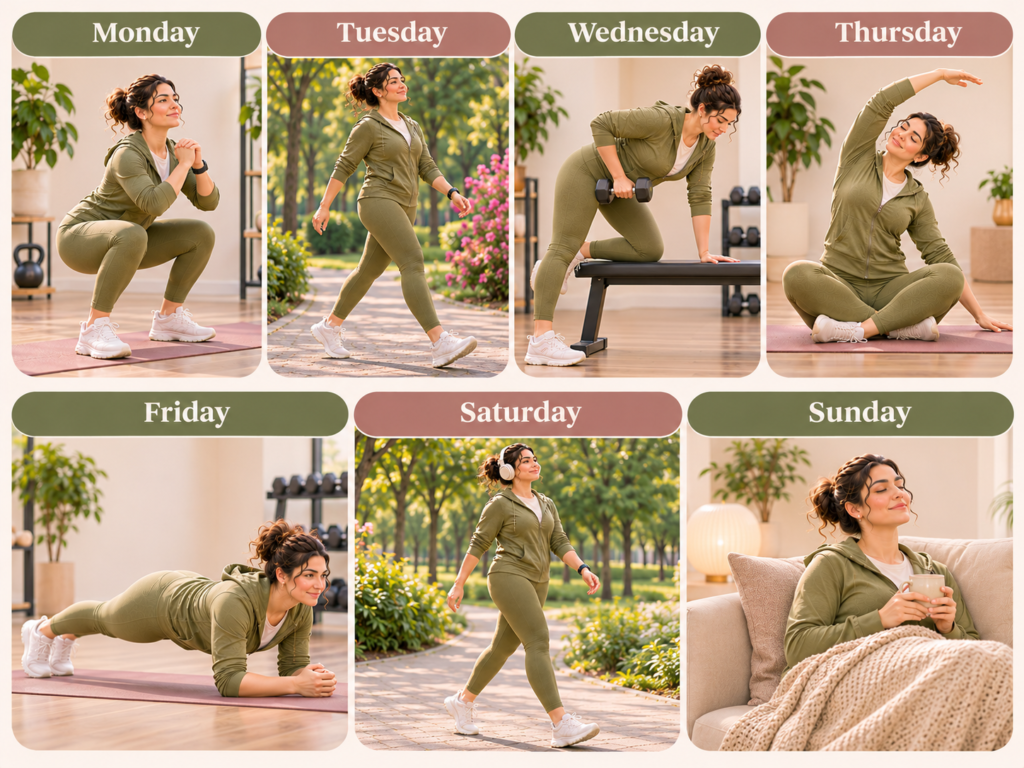
Beginner Weekly Workout Schedule: Monday to Sunday
The following example shows how a balanced weekly workout schedule can distribute strength training, aerobic activity, walking and recovery.
It is a general example for an otherwise healthy adult who is building a routine. Adjust the duration and intensity according to your starting fitness level.
Example balanced weekly workout schedule
| Day | Activity | Main focus |
|---|---|---|
| Monday | Full-body strength workout | Muscular strength |
| Tuesday | 30-minute brisk walk | Cardiovascular fitness |
| Wednesday | Full-body strength workout | Muscular strength |
| Thursday | Walking and gentle mobility | Aerobic activity and movement |
| Friday | Full-body strength workout | Strength and coordination |
| Saturday | Brisk walking, cycling or another enjoyable cardio activity | Cardiovascular endurance |
| Sunday | Rest or comfortable gentle movement | Recovery |
This example includes three strength sessions and several aerobic opportunities.
The 30-minute walk on Tuesday is only one part of the weekly aerobic target. Readers should adjust the remaining walking or cardio duration to work towards the recommended weekly total.
If three strength sessions feel too demanding, begin with two and build up when appropriate.
Three Weekly Workout Plans for Beginners
Not everyone has the same availability or exercise experience.
The following three weekly workout plans offer different starting options. Choose the schedule that matches your current ability rather than selecting the plan with the most workout days.
Plan A: Two-Day Beginner Workout Routine
This plan is useful for beginners who want to establish a strength-training habit without committing to several structured workout sessions.
| Day | Activity |
|---|---|
| Monday | Full-body strength workout |
| Tuesday | 20–30 minutes of comfortable walking |
| Wednesday | Rest or gentle mobility |
| Thursday | Full-body strength workout |
| Friday | Brisk walking |
| Saturday | Optional light cardio or enjoyable activity |
| Sunday | Rest |
Monday and Thursday strength sessions may include:
- Chair squats.
- Wall push-ups.
- Glute bridges.
- Dumbbell rows or resistance-band rows.
- Standing calf raises.
- Bird dogs.
Begin with comfortable repetitions and one manageable set if necessary. Increase the challenge gradually.
This plan provides two structured strength sessions. Walking and other aerobic activity should be adjusted to build towards weekly activity recommendations.
Plan B: Three-Day Full-Body Workout Routine
A three-day full-body workout schedule provides repeated opportunities to practise basic movements while allowing recovery between sessions.
| Day | Activity |
|---|---|
| Monday | Full-body strength workout |
| Tuesday | Brisk walking |
| Wednesday | Full-body strength workout |
| Thursday | Rest or gentle mobility |
| Friday | Full-body strength workout |
| Saturday | Walking, cycling or low-impact cardio |
| Sunday | Rest |
Monday — Full-body workout
- Chair squats.
- Wall or modified push-ups.
- Glute bridges.
- Dumbbell rows.
- Dead bugs.
Wednesday — Full-body workout
- Supported lunges.
- Shoulder presses with suitable resistance.
- Glute bridges.
- Resistance-band rows.
- Bird dogs.
Friday — Full-body workout
- Bodyweight squats.
- Wall push-ups.
- Hip-hinge movement.
- Calf raises.
- Modified plank.
You do not need to perform every exercise at maximum intensity. Use appropriate resistance, controlled repetitions and sufficient rest.
If three strength sessions are too much at first, begin with two and gradually add the third.
Plan C: Four-Day Balanced Workout Routine
This schedule may suit someone who already has a basic exercise habit and wants to distribute training across more days.
| Day | Activity |
|---|---|
| Monday | Lower-body strength |
| Tuesday | Upper-body strength |
| Wednesday | Walking and mobility |
| Thursday | Rest |
| Friday | Full-body strength |
| Saturday | Cardio or brisk walking |
| Sunday | Rest or gentle recovery |
Monday — Lower-body strength
- Squats.
- Glute bridges.
- Supported lunges.
- Calf raises.
Tuesday — Upper-body strength
- Wall or modified push-ups.
- Dumbbell rows.
- Shoulder presses.
- Biceps curls.
- Triceps extensions.
Friday — Full-body strength
- Squats.
- Rows.
- Push-ups.
- Hip-hinge exercises.
- Core stability movements.
Saturday — Cardio
Choose an activity you enjoy, such as brisk walking, cycling, swimming or dancing.
This four-day plan does not mean every session should be intense. Adjust the workload and recovery based on your experience.
Which weekly workout plan should you choose?
| Your situation | Suggested starting plan |
|---|---|
| Completely new to structured exercise | Two-day plan |
| Comfortable with basic exercises | Three-day plan |
| Already exercising regularly | Four-day plan |
| Limited weekly availability | Two-day plan |
| Wants a simple full-body routine | Three-day plan |
| Prefers separate upper- and lower-body days | Four-day plan |
These are general planning suggestions, not rigid rules. Your health, recovery and available time should guide the final choice.
How to Combine Strength Training and Cardio
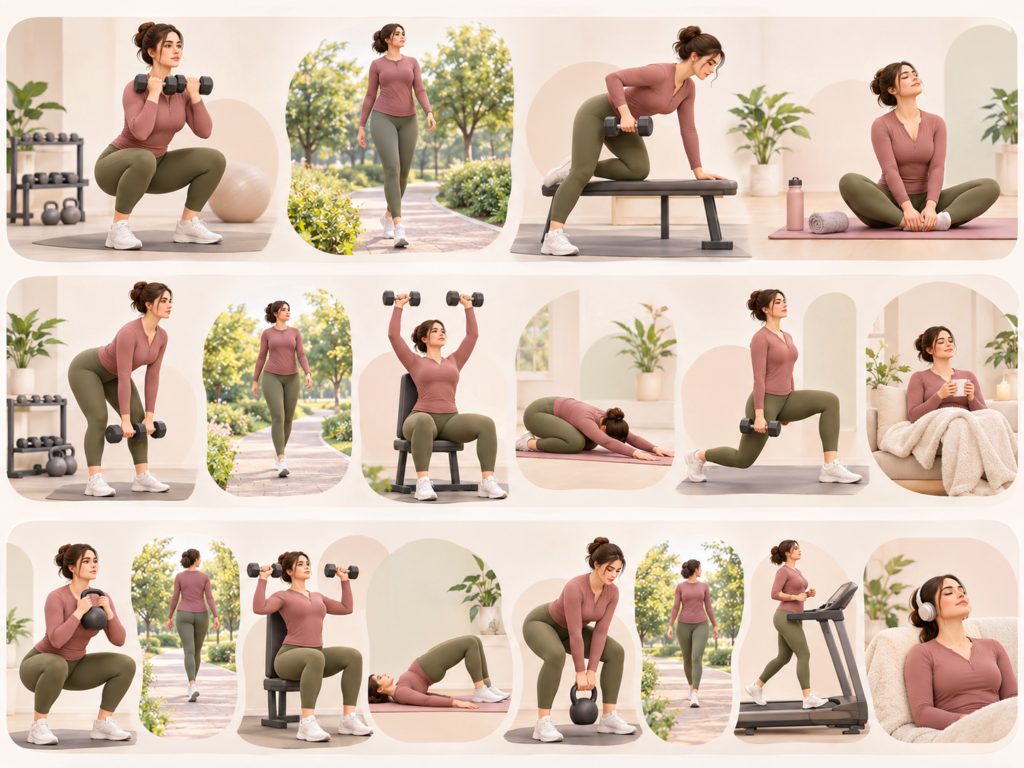
Strength training and cardio provide different but complementary benefits.
Strength training challenges muscles against resistance, while cardiovascular exercise develops the body’s ability to sustain aerobic activity.
A balanced weekly workout routine should include both.
Should you do cardio or strength training first?
There is no single order that is best for every person.
If your main priority is strength development, performing strength exercises first can help you approach them with more energy.
If your main goal is improving cardiovascular endurance, beginning with your aerobic session may make sense.
If you perform both in one workout:
- Begin with an appropriate warm-up.
- Prioritise the activity most important to your goal.
- Keep the total session manageable.
- Adjust intensity to avoid excessive fatigue.
- Allow adequate recovery.
Can you do cardio and strength training on the same day?
Yes. Many people combine both activities in one session or complete them at different times of the day.
For example:
- 25 minutes of strength training followed by 15 minutes of comfortable cardio.
- Strength training in the morning and walking in the evening.
- A full-body workout combined with a short easy walk.
The ideal arrangement depends on your goals, fitness level and available recovery time.
Does walking count as cardio?
Yes. Walking can count as cardiovascular exercise when performed at a moderate or vigorous intensity.
Brisk walking is a common moderate-intensity activity.
A relaxed stroll still contributes to daily movement, even if it does not reach moderate intensity.
Why should you not skip strength training?
Cardio and walking do not fully replace resistance exercise.
Strength training challenges muscles in ways that ordinary walking may not.
Adults are generally advised to perform muscle-strengthening activity on at least two days each week, targeting the major muscle groups.

How Many Rest Days Do You Need Per Week?
Rest days allow your body to recover from demanding exercise sessions.
The number of rest days you need depends on workout intensity, training frequency, fitness level and individual recovery.
A beginner who performs two full-body strength sessions per week may need different recovery arrangements from someone who has been training consistently for several years.
Why are rest days important?
Recovery helps your body adapt to physical activity.
It can support:
- Muscular recovery.
- Exercise performance.
- Movement quality.
- Energy levels.
- Long-term training consistency.
Rest also helps prevent a routine from becoming unnecessarily demanding.
What is active recovery?
Active recovery means performing gentle activity rather than a challenging workout.
Examples include:
- Comfortable walking.
- Gentle mobility exercises.
- Relaxed cycling.
- Light stretching.
- Easy movement around the home.
Active recovery should feel manageable and should not increase existing pain or exhaustion.
How do you know if you need more recovery?
Signs that your routine may need adjustment include:
- Persistent or unusual fatigue.
- Declining workout performance.
- Soreness that does not improve.
- Difficulty recovering between sessions.
- Reduced motivation associated with excessive training.
- Poor sleep or unusual irritability.
These symptoms can have multiple causes, so persistent or concerning symptoms should be assessed appropriately.

How to Progress Your Weekly Workout Routine
Once your current workout schedule becomes manageable, you can gradually increase the challenge.
This process is commonly described as progressive overload.
It involves increasing the demands placed on your muscles and cardiovascular system over time, while maintaining appropriate technique and recovery.
1. Increase repetitions
If you can perform an exercise comfortably, you may gradually add a few repetitions.
For example, you might progress from 8 controlled squats to 10 or 12.
2. Increase resistance
If you are performing resistance training, you may eventually increase the weight or resistance when your current level becomes manageable.
Small changes are generally easier to control than large increases.
3. Add another set
You can gradually increase the number of sets performed during an exercise.
For beginners, one manageable set may be an appropriate starting point. More experienced individuals may use additional sets according to their goals.
4. Improve movement control
Progress does not always mean adding weight.
You can also improve:
- Range of motion.
- Balance.
- Coordination.
- Stability.
- Exercise technique.
5. Increase cardio duration
If your current walking sessions feel comfortable, you can gradually increase the duration or include short periods of brisker walking.
Avoid increasing duration, intensity and frequency all at once.
6. Choose a more challenging variation
For example:
- Wall push-ups can progress to incline push-ups.
- Chair squats can progress to bodyweight squats.
- Supported lunges can progress to less-supported variations.
- Short walks can progress to longer brisk walks.
Choose a variation only when you can perform the easier version with good control.

Four-Week Beginner Workout Progression Plan
A four-week progression can help beginners establish a workout schedule and gradually develop exercise confidence.
The following example is flexible. You can repeat a week if you need more time to learn the movements or recover comfortably.
Week 1: Learn the basics
Main goal: Become familiar with your chosen exercises.
- Start with two manageable strength sessions.
- Include short comfortable walks.
- Practise basic exercise technique.
- Use supported or easier exercise variations.
- Schedule recovery days.
Week 2: Establish consistency
Main goal: Make your routine more predictable.
- Continue with two strength sessions.
- Add walking sessions where comfortable.
- Record your repetitions and workout duration.
- Practise controlled movements.
- Avoid rushing into more difficult exercises.
Week 3: Gradually increase activity
Main goal: Improve strength and endurance.
If your current schedule feels manageable:
- Add a third strength session or an additional aerobic session.
- Increase repetitions slightly.
- Extend comfortable walking sessions.
- Maintain sufficient recovery.
You do not need to increase everything simultaneously.
Week 4: Review and adjust
Main goal: Develop a sustainable longer-term routine.
- Review how often you exercised.
- Identify which activities you enjoyed.
- Notice improvements in technique and endurance.
- Adjust workout days if necessary.
- Choose a realistic plan for the next month.
How to Adjust Your Workout Routine for Different Fitness Goals
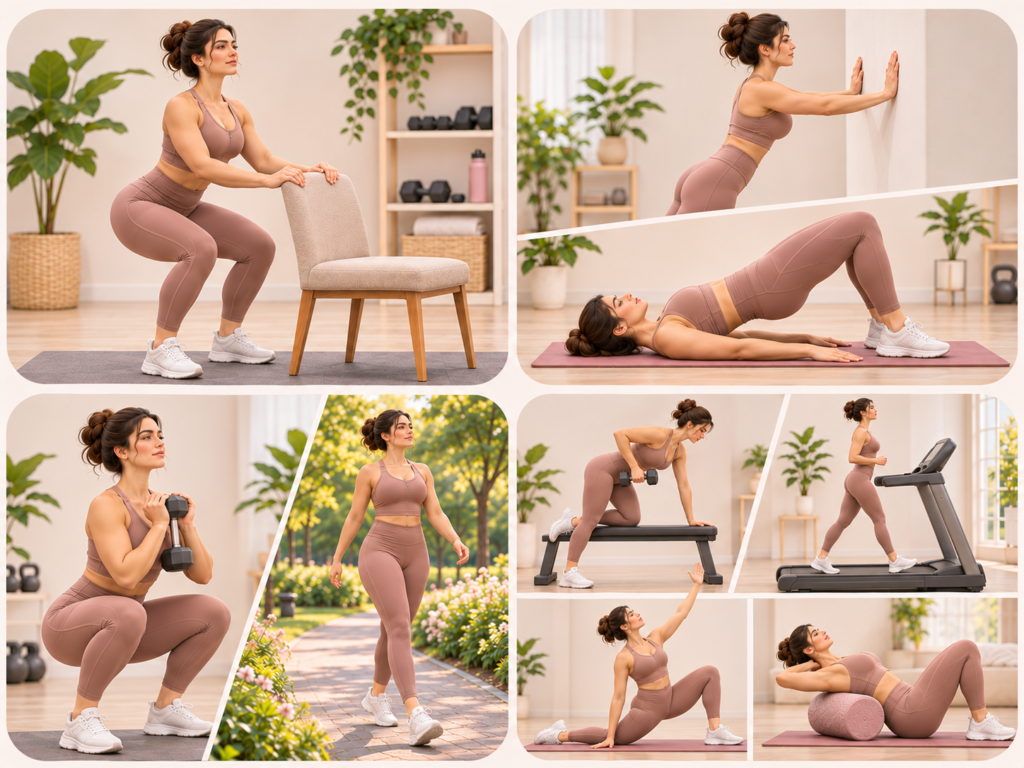
A weekly exercise schedule can be adapted according to your main fitness objective.
However, changing the emphasis does not mean removing every other type of activity.
1. Weekly Workout Routine for General Fitness
A general fitness routine should combine:
- Strength training.
- Moderate-intensity aerobic activity.
- Walking.
- Mobility and flexibility.
- Recovery.
This is a suitable broad approach for many healthy adults.
2. Weekly Workout Routine for Weight Management
A weight-management-focused routine can include:
- Regular brisk walking.
- Full-body strength training.
- Additional enjoyable aerobic activity.
- Daily movement.
- Adequate recovery.
Exercise can contribute to energy expenditure and help support physical fitness, but sustainable weight management also involves nutrition, sleep and other individual factors.
No weekly workout schedule can guarantee a particular amount of weight loss.
3. Weekly Workout Routine for Strength Development
A strength-focused routine can prioritise:
- Progressive resistance training.
- Training all major muscle groups.
- Appropriate resistance and repetitions.
- Adequate recovery between demanding sessions.
- Consistent technique.
Cardio and walking can still be included to support cardiovascular health.
4. Weekly Workout Routine for Cardiovascular Endurance
A cardio-focused routine may include:
- Brisk walking.
- Cycling.
- Swimming.
- Jogging, if appropriate.
- Low-impact aerobic activity.
Strength training should remain part of the overall programme.
5. Weekly Workout Routine for Mobility and Functional Fitness
A routine focused on everyday movement may include:
- Balance exercises.
- Gentle mobility.
- Functional strength exercises.
- Walking.
- Flexibility work.
Older adults and people with balance difficulties may benefit from individually appropriate balance and strength exercises.

Common Weekly Workout Planning Mistakes to Avoid
Even a well-intentioned workout routine can become difficult to maintain if it is poorly organised.
Here are common mistakes beginners should avoid.
1. Exercising intensely every day
Your body needs recovery from demanding sessions.
You do not need to perform intense strength or cardio workouts every day to develop fitness.
2. Ignoring cardiovascular activity
A strength-focused schedule should not completely exclude aerobic exercise.
Include walking, cycling or another suitable cardio activity.
3. Skipping strength training
Walking and cardio are valuable, but they do not replace exercises that challenge all major muscle groups.
4. Following an advanced workout split too early
A complicated six-day bodybuilding schedule is not necessary for most beginners.
Start with a simple structure that matches your experience.
5. Changing the routine too frequently
If you change every exercise every week, it can become difficult to practise technique and recognise gradual improvements.
Keep a manageable selection of movements and adjust them when appropriate.
6. Ignoring recovery
Persistent fatigue, declining performance and ongoing soreness may indicate that your routine needs adjustment.
7. Expecting immediate results
Fitness changes take time.
Improvements in movement confidence, exercise tolerance and consistency are meaningful progress even when physical appearance does not change.
How to Stay Consistent With Your Weekly Workout Routine
The best weekly workout plan is one that fits your life and can be maintained.
Here are some practical ways to stay consistent.
Schedule your workouts in advance
Choose your workout days and add them to your calendar.
This reduces the need to decide what to do each day.
Prepare your exercise space
Keep your exercise mat, comfortable clothing and basic equipment ready.
A prepared environment can make it easier to begin.
Choose activities you enjoy
Your routine can include walking, dancing, cycling, swimming, home workouts or gym training.
You are more likely to continue activities that you find enjoyable.
Track your progress
Use a notebook or fitness app to record your weekly activity.
Track:
- Workout sessions.
- Exercises performed.
- Sets and repetitions.
- Walking or cardio duration.
- Rest days.
- How comfortable each session feels.
Set realistic goals
Avoid setting a target that requires you to change your entire lifestyle immediately.
Start with a manageable schedule and build gradually.
Allow flexibility
If you miss a workout, return to your routine when you can.
You do not need to double the next workout or punish yourself with additional exercise.

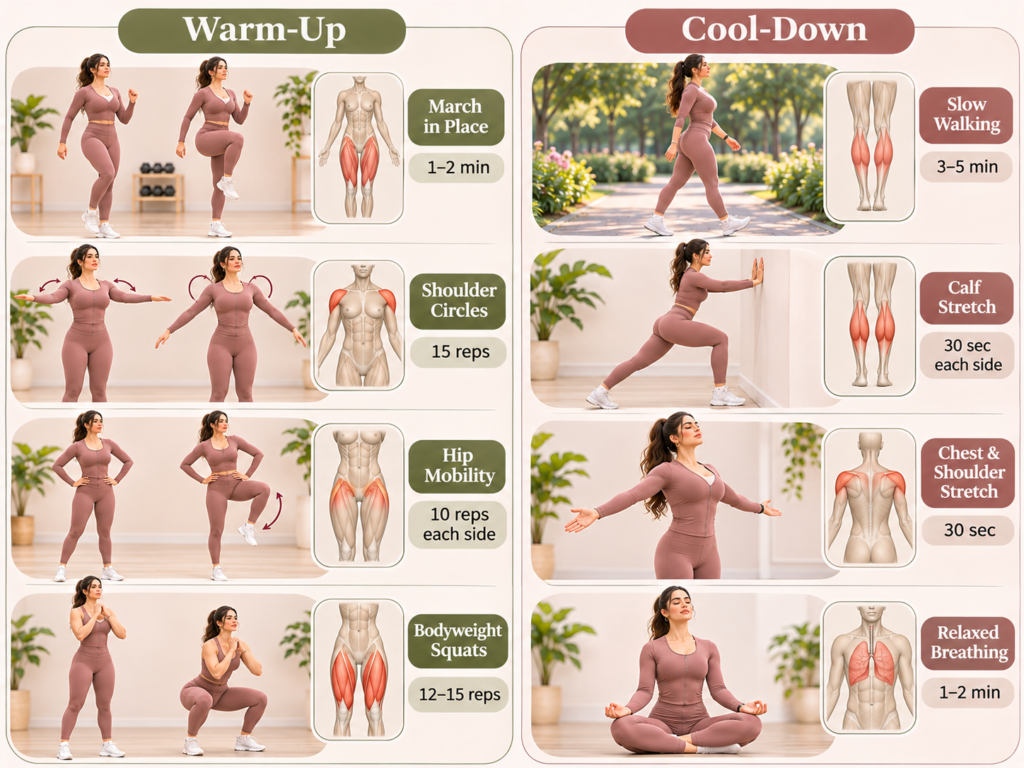
Warm-Up and Cool-Down: Where Do They Fit in Your Weekly Workout Plan?
Warm-ups and cool-downs are useful parts of exercise preparation and recovery.
They do not need to be complicated, but they should match the activity you are performing.
Why should you warm up before exercise?
A warm-up gradually prepares your body for more demanding movement.
A simple warm-up might include:
- Gentle marching.
- Shoulder circles.
- Hip movements.
- Comfortable bodyweight squats.
- Easy walking.
A warm-up should begin at a comfortable intensity and gradually become more specific to your planned workout.
What should you do after exercise?
A cool-down can involve reducing your activity gradually, walking slowly and performing gentle stretches if comfortable.
For example, after brisk walking, you might slow your pace for a few minutes before stopping.
After strength training, you can perform light movement and comfortable stretching.
Stretching should not be forced or painful.
FREQUENTLY ASKED QUESTIONS ABOUT WEEKLY WORKOUT ROUTINES
Many beginners can start with two or three structured workout days each week, depending on their fitness level and recovery. Include comfortable walking or other aerobic activity on additional days where appropriate.
Not necessarily. Five days of activity can be appropriate for some people if the intensity and recovery are balanced. You do not need five demanding workout sessions. Some days can involve walking or gentle movement.
A full-body workout performed two or three times per week is a practical option for many beginners. It allows major muscle groups to be trained regularly without requiring a complicated upper-body and lower-body split.
The number of rest days depends on exercise intensity, training experience and recovery. Beginners may benefit from lighter days between demanding full-body strength sessions. Recovery needs vary between individuals.
If strength development is your priority, perform strength exercises first when combining both in one session. If cardiovascular endurance is your main priority, you may prefer cardio first. You can also complete them at separate times.
Yes. Walking and strength training complement each other. Walking contributes to aerobic activity, while strength training challenges muscles and supports muscular function.
Workout duration depends on your schedule, fitness level and exercise selection. Beginners may start with 15–30 minutes and gradually increase the duration as appropriate. Quality and consistency matter more than completing an unnecessarily long session.
You can be physically active every day, but not every day needs to involve intense exercise. A balanced routine can alternate demanding sessions with walking, mobility, gentle activity and rest.
CONCLUSION
Building a weekly workout routine does not require an advanced exercise split, expensive equipment or daily intense training.
A balanced schedule can include strength training, cardiovascular exercise, walking, mobility and appropriate recovery. The key is to distribute these activities in a way that matches your fitness level, available time and personal goals.
If you are a beginner, starting with two or three strength-training sessions each week can be a practical approach. You can complement them with brisk walking, other enjoyable aerobic activities and lighter recovery days.
As your fitness improves, you may gradually increase your workout frequency, exercise duration or training challenge.
Remember that the most effective weekly workout routine is not necessarily the most complicated one. It is the routine you can perform safely, recover from and maintain consistently.
Start with a realistic schedule, build gradually and give your body time to adapt. Consistency is what turns an exercise plan into a lasting healthy habit.
MEDICAL DISCLAIMER
This article is intended for general educational purposes and does not replace professional medical advice, diagnosis or treatment.
Exercise recommendations vary according to age, fitness level, medical history, mobility, injuries, pregnancy status and other individual circumstances.
People with chronic health conditions, cardiovascular disease, uncontrolled blood pressure, persistent joint or back pain, recent injuries or other health concerns should seek individual advice from an appropriate healthcare professional before beginning or substantially changing an exercise programme.
Stop exercising if you experience chest pain, faintness, severe or unusual shortness of breath, sudden weakness or other concerning symptoms, and seek appropriate medical attention.
The workout schedules in this article are general examples for educational purposes. They should be adapted to individual abilities and recovery needs.
CREDIBLE MEDICAL AND FITNESS REFERENCES
- UK Chief Medical Officers: Physical Activity Guidelines
- NHS: Physical Activity Guidelines for Adults (19–64)
- NHS: How to Improve Strength and Flexibility
- CDC: Adult Physical Activity Recommendations
- CDC: Adding Physical Activity as an Adult
- ACSM (2026): Resistance Training Guidelines
- ACSM (2026): Resistance Training Prescription for Muscle Function, Hypertrophy, and Physical Performance in Healthy Adults. Currier BS et al., Medicine & Science in Sports & Exercise.
- American Heart Association: Resistance Exercise Training With and Without Cardiovascular Disease
Editorial note: These sources support the article’s general exercise recommendations. The sample workout schedules are educational guides, not personalised medical or rehabilitation programmes.