
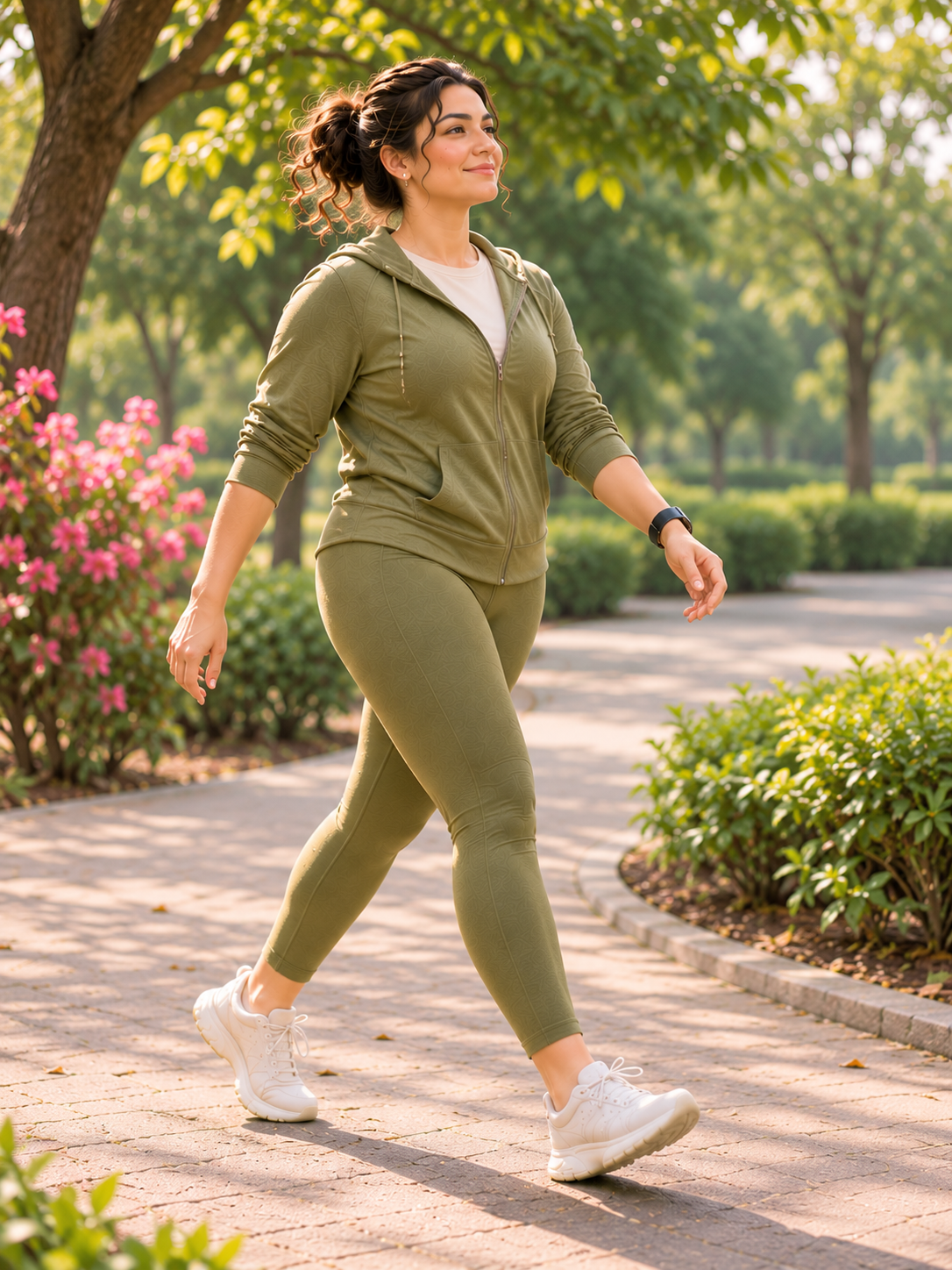
Walking is one of the simplest ways to become more physically active. It does not require a gym membership, expensive equipment or complicated exercise routines. Whether you walk around your neighbourhood, take a stroll in a nearby park, use a treadmill or include short walks in your daily schedule, regular walking can support your overall health.
The benefits of walking every day go beyond burning calories. Walking can improve cardiovascular fitness, support healthy blood pressure, strengthen the muscles used for movement, improve mood and contribute to better sleep. It is also an accessible form of physical activity for many people who are just beginning their fitness journey.
But how much walking do you actually need? Is walking 30 minutes a day enough? Should you aim for 10,000 steps, or can fewer steps still make a difference?
The answer depends on your current activity level, walking pace, health and fitness goals. You do not have to begin with long distances or a demanding daily step target. Starting with a comfortable amount and gradually increasing your walking time can help you develop a sustainable habit.
In this guide, you will learn about the 12 important health benefits of daily walking, how many minutes you should walk, what counts as brisk walking, how to build a beginner walking routine, and how walking can support weight management and long-term fitness.
What Is Walking Exercise?
Walking exercise is a form of aerobic physical activity that involves moving at a pace that increases your body’s energy demands. It can range from a relaxed stroll to a brisk walk that noticeably increases your breathing and heart rate.
Unlike some high-impact activities, walking is a weight-bearing movement that most people can adapt to their current fitness level.
There are several ways to include walking in your daily routine.
1. Casual walking
Casual walking is a comfortable, relaxed pace that does not significantly increase your breathing.
Examples include walking around your home, strolling through a park, moving around while shopping or taking a gentle walk after dinner.
It is a useful way to reduce sedentary time and increase general daily movement.
2. Brisk walking
Brisk walking is faster than a casual stroll. It increases your heart rate and breathing while still allowing you to speak in sentences.
The NHS describes a brisk walking pace as approximately 3 miles per hour, although the appropriate pace varies between individuals.
A practical way to recognise moderate-intensity walking is the talk test: you should be able to talk but not sing comfortably.
Brisk walking is particularly useful because it counts towards recommended weekly moderate-intensity aerobic activity.
3. Power walking
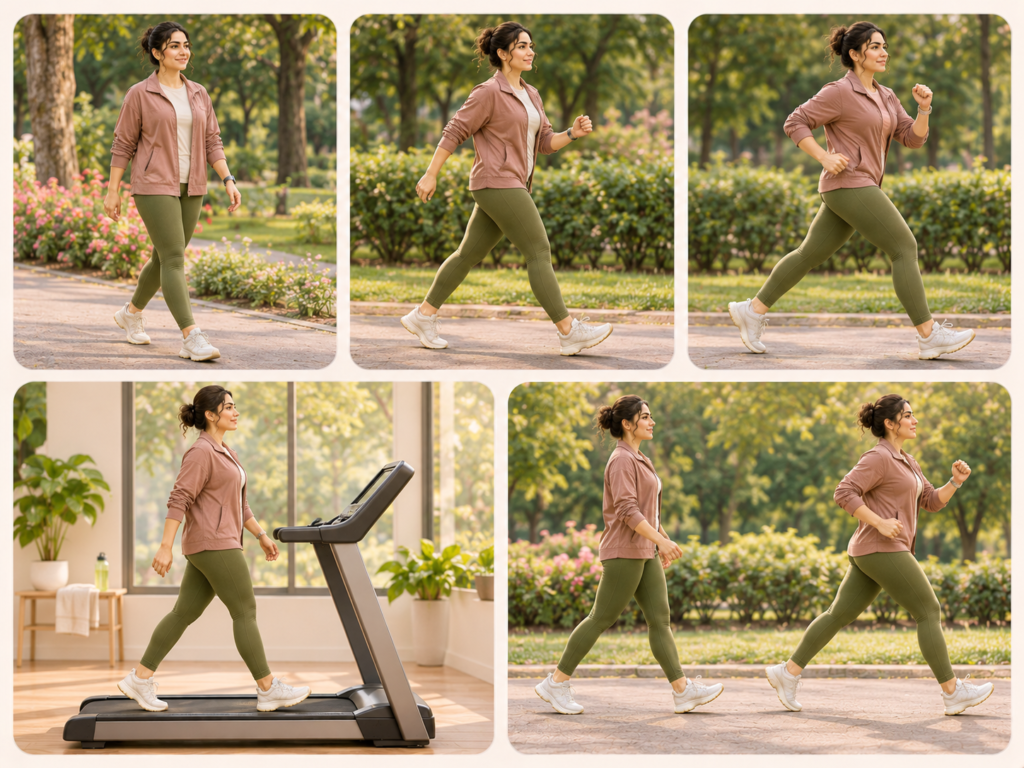
Power walking is a more purposeful, faster style of walking that involves active arm movement, controlled strides and an increased walking pace.
It can provide a greater cardiovascular challenge than relaxed walking. However, beginners do not need to start with power walking.
4. Treadmill walking
Treadmill walking allows you to exercise indoors and control your speed, duration and incline.
It can be useful when outdoor conditions are unsuitable or when you prefer exercising at home or in a gym.
5. Interval walking
Interval walking involves alternating between periods of faster and slower walking.
For example, you might walk comfortably for two minutes and then increase your pace for one minute before returning to a slower pace.
Beginners should first develop comfort with steady walking before introducing faster intervals.
12 Benefits of Walking Every Day
Walking regularly can support several aspects of physical and mental health. The benefits depend on your walking frequency, pace, duration, starting fitness level and overall lifestyle.
Here are 12 important benefits of making walking part of your daily routine.
1. Supports Heart Health
One of the most important benefits of walking is its contribution to cardiovascular health.
Regular brisk walking increases the demand placed on your heart and circulatory system. Over time, consistent aerobic activity can help improve cardiovascular fitness.
Physical activity is also associated with better management of several heart disease risk factors, including blood pressure and blood glucose.
Walking is not a replacement for prescribed medication or medical treatment, but it can be an important part of an overall heart-healthy lifestyle.
Why it matters: Regular movement helps you develop cardiovascular endurance and reduces the amount of time spent sitting.

2. Helps Improve Blood Pressure Management
Regular physical activity can contribute to healthier blood pressure levels.
Walking is a moderate-intensity aerobic activity when performed at a brisk enough pace. Including it regularly may help support blood pressure management as part of a broader healthy lifestyle.
However, people with high blood pressure should follow their healthcare professional’s recommendations, especially if their condition is not well controlled.
Why it matters: Walking provides a practical way to increase regular physical activity without requiring a complicated exercise programme.
3. Supports Blood Sugar Management
Physical activity helps your muscles use glucose for energy.
Walking after meals can be a practical way to add movement to your day. Research on post-meal activity suggests that walking soon after eating may help reduce post-meal blood glucose excursions in some people.
The effect varies according to meal composition, walking duration, individual health and other factors.
People taking insulin or medicines that can cause low blood glucose should follow their clinician’s advice about exercise timing, glucose monitoring and medication adjustments.
Why it matters: Regular walking can be one component of a lifestyle that supports healthy blood glucose regulation.
4. Supports Weight Management
Walking increases energy expenditure, which means your body uses energy while you move.
When combined with a balanced eating pattern and other healthy habits, regular walking can support weight management.
The amount of energy used during a walk varies according to:
- Body weight.
- Walking speed.
- Duration.
- Terrain and incline.
- Individual movement efficiency.
A short walk is not a guaranteed weight-loss method, but it can contribute to a more active lifestyle.
Why it matters: Walking is accessible, repeatable and easier for many people to maintain than more demanding forms of exercise.
5. Helps Improve Mood and Mental Well-Being
Walking can be beneficial for mental well-being.
Physical activity may help reduce short-term feelings of anxiety and improve mood. Walking outdoors may also provide opportunities for relaxation, social interaction and time away from screens.
Some people find that a morning walk helps them feel more alert, while others prefer an evening walk to unwind.
Why it matters: Walking offers a simple opportunity to combine physical movement with mental relaxation.
6. May Support Better Sleep
Regular physical activity is associated with better sleep quality and general well-being.
A consistent walking routine may help support your daily activity rhythm and create a healthier balance between periods of activity and rest.
However, individual responses differ. If a very intense or late-evening walk makes you feel more alert, consider adjusting the timing or intensity.
Why it matters: Better daily movement habits can be part of a wider sleep-supportive lifestyle.
7. Strengthens Muscles Used for Everyday Movement
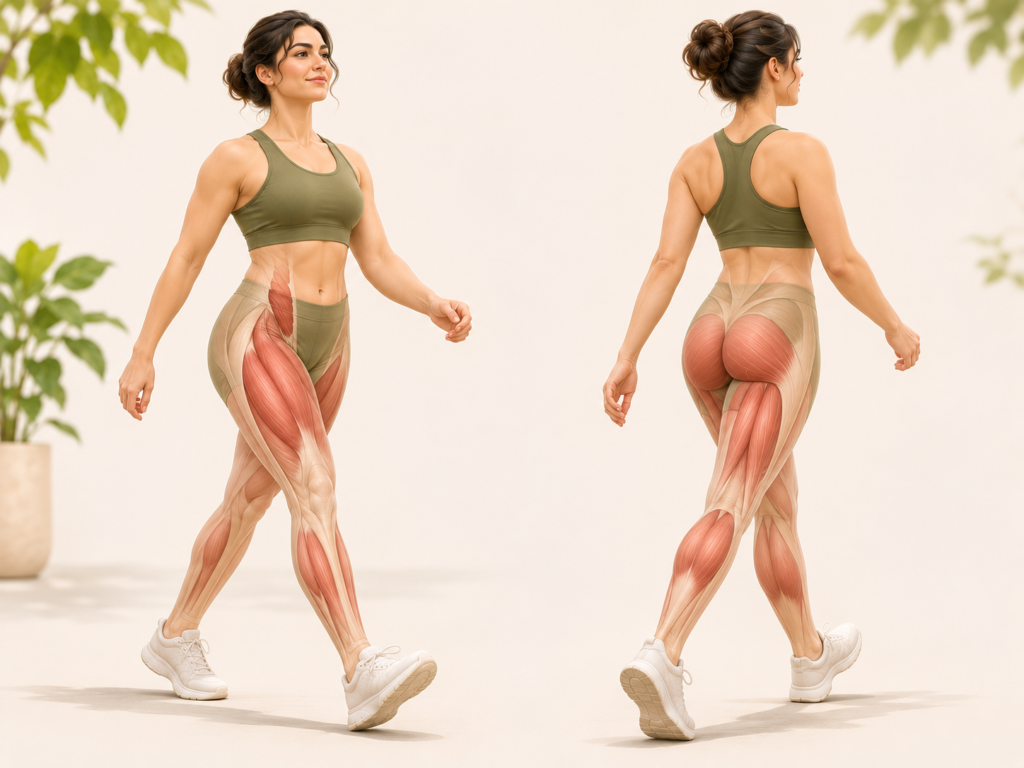
Walking uses several muscles in the lower body.
The primary muscles involved include:
- Quadriceps.
- Hamstrings.
- Gluteal muscles.
- Calf muscles.
- Hip flexors.
- Muscles that help stabilise the trunk.
Walking regularly can help develop muscular endurance and support everyday activities such as climbing stairs, standing and moving around.
However, ordinary walking does not replace a complete strength-training programme. Adults should also include muscle-strengthening activities on at least two days each week.
8. Supports Bone Health
Walking is a weight-bearing activity because your legs and feet support your body weight while you move.
Weight-bearing physical activity can contribute to bone health, especially when combined with appropriate strength and balance exercises.
The effect depends on age, health status, activity intensity and other factors.
Walking is not a complete treatment for osteoporosis or a substitute for medical management, but it may be one useful part of an appropriate physical activity programme.
9. Improves Balance and Coordination
Walking requires coordination between your legs, arms, trunk and nervous system.
Regular walking can help you practise controlled movement and maintain confidence with everyday mobility.
Walking on safe, predictable surfaces is a useful starting point. People who need additional balance support should use appropriate assistance and avoid uneven or slippery routes.
Older adults may benefit from adding specific balance exercises to their weekly routine.
10. Helps Reduce Sedentary Time
Spending long periods sitting can make it difficult to achieve enough daily physical activity.
Short walking breaks provide a practical way to interrupt prolonged sitting.
For example:
- Walk around your home during a break.
- Take a short walk after lunch.
- Stand and move between work tasks.
- Walk while taking a phone call.
- Use stairs when appropriate.
You do not need to complete one long walk to benefit from increased movement throughout the day.
11. Supports Healthy Ageing and Daily Mobility
Walking is a functional activity that supports everyday independence.
Regular walking can help maintain the ability to move around, complete daily tasks and participate in activities outside the home.
For older adults, a suitable programme may combine walking with strength, balance and flexibility exercises.
The walking environment should be appropriate for the person’s mobility, balance and health.
12. Encourages a More Active Lifestyle
Perhaps one of the most practical benefits of daily walking is that it can become a habit.
Once walking becomes part of your routine, it may encourage other positive behaviours, such as spending less time sitting, exploring outdoor spaces and taking part in other forms of physical activity.
You can start with a short daily walk and gradually build a routine that fits your life.

How Does Walking Work the Muscles in Your Body?
Walking may look like a simple movement, but it involves coordinated activity from several muscle groups.
Understanding these muscles can help you appreciate why walking supports everyday mobility and lower-body endurance.
Quadriceps
The quadriceps are located at the front of the thighs. They help extend the knee and contribute to controlling leg movement during walking.
Hamstrings
The hamstrings are located at the back of the thighs. They help control hip and knee movement as your legs move through the walking cycle.
Gluteal muscles
The gluteal muscles are located around the hips and buttocks. They help stabilise the pelvis and contribute to hip movement during walking.
Calf muscles
The gastrocnemius and soleus are important muscles in the lower legs. They contribute to ankle movement and help propel the body forward during walking.
Hip flexors
The hip flexors help bring the thigh forward during the walking cycle.
Core muscles
The abdominal and back muscles help stabilise the trunk while your arms and legs move.
Walking uses these muscle groups together rather than isolating one particular muscle.
How Much Walking Do You Need Every Day?
The amount of walking you need depends on your fitness level, health and goals.
For general adult health, public-health guidelines recommend at least 150 minutes of moderate-intensity aerobic activity each week, or 75 minutes of vigorous-intensity activity, or an equivalent combination.
Brisk walking is one example of moderate-intensity aerobic activity.
The UK Chief Medical Officers also recommend muscle-strengthening activities on at least two days per week.
You do not need to complete all your weekly walking in one session. You can divide it into shorter walks throughout the day or week.
Is walking 30 minutes a day enough?
For many adults, walking briskly for 30 minutes on five days each week provides 150 minutes of moderate-intensity activity.
This is a practical way to meet the general weekly aerobic activity recommendation.
However, you can also divide your activity into shorter sessions. For example:
- 10 minutes in the morning.
- 10 minutes after lunch.
- 10 minutes in the evening.
The important factor is your total activity, walking intensity and consistency.
Can 10 minutes of walking make a difference?
Yes. A short walk is a useful starting point, especially if you are currently inactive.
The NHS recommends brisk 10-minute walks as a practical way to increase activity. Even shorter periods of movement can contribute to reducing sedentary time.
If you are new to exercise, start with a duration you can comfortably manage and gradually increase it.
How much should beginners walk?
A beginner does not need to start with 30 or 60 minutes.
A practical starting point might be:
- 5–10 minutes of comfortable walking.
- Three to five days per week, depending on ability.
- Gradually increasing duration as walking becomes easier.
Some beginners may comfortably walk longer, while others may need shorter sessions or rest days.
The right starting point is the amount you can perform safely and recover from.
How Many Steps Should You Walk Every Day?
The number of steps you take each day can be a useful way to monitor your physical activity.
However, there is no universal step count that every adult must achieve.
The popular goal of 10,000 steps per day is a widely recognised fitness target, but it is not a universal public-health requirement.
The Physical Activity Guidelines for Americans focus on weekly activity duration and intensity rather than requiring a specific daily step count.
Research also suggests that meaningful health benefits can occur below 10,000 steps, and the amount associated with benefit varies across populations and age groups.
Is 10,000 steps a day necessary?
No. Walking 10,000 steps can be a useful personal goal for some people, but it is not a minimum requirement for good health.
If you currently take 3,000 or 4,000 steps per day, suddenly trying to reach 10,000 may feel difficult.
A more practical strategy is to establish your usual activity level and gradually increase it.
What if you cannot reach 10,000 steps?
You can still benefit from walking fewer steps.
Focus on:
- Increasing your average daily steps gradually.
- Including some brisk walking.
- Reducing long periods of sitting.
- Building a sustainable weekly routine.
- Combining walking with strength training.
How can you set a realistic step goal?
- Track your usual steps for several ordinary days.
- Calculate your approximate daily average.
- Choose a small increase that feels manageable.
- Maintain the new target before increasing it again.
- Review your progress every few weeks.
For example, someone averaging 4,000 steps daily might first aim for 4,500 or 5,000, depending on comfort and health.
This is an example of gradual progression, not a mandatory increase for everyone.
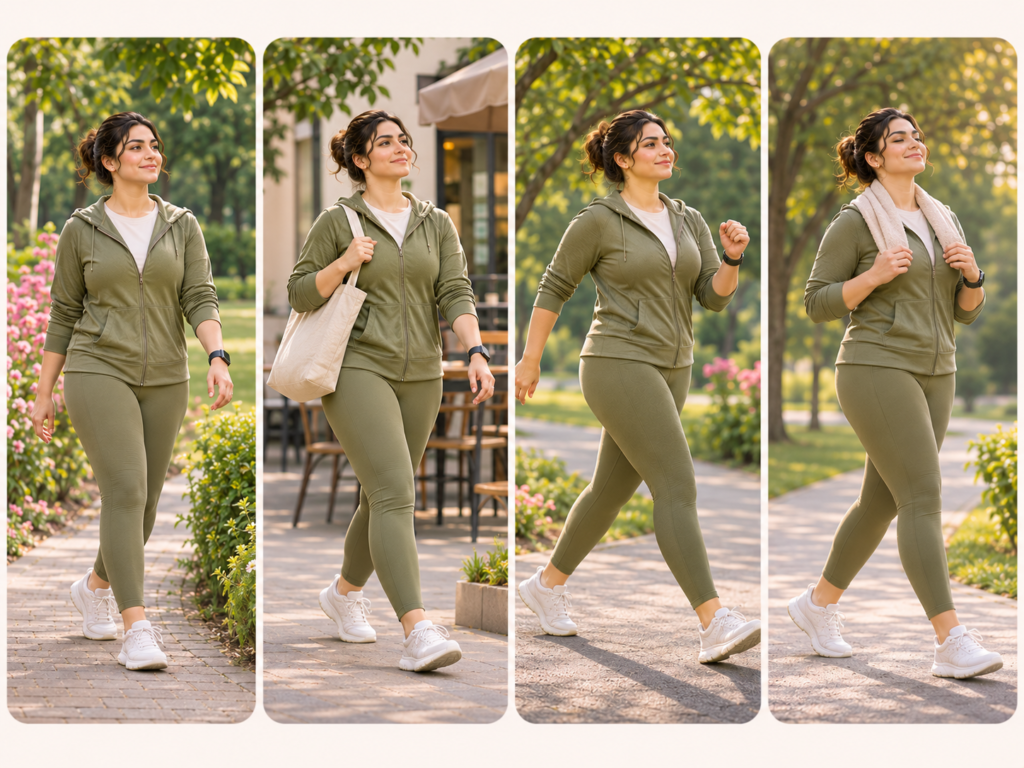
What Is the Best Walking Pace for Health?
The best walking pace depends on your fitness level and health.
For general cardiovascular benefits, moderate-intensity walking is a useful target for many adults.
You can estimate your intensity using the talk test.
Easy walking pace
At an easy pace:
- You can speak comfortably.
- Your breathing changes very little.
- You can maintain the pace for longer periods.
- It may be suitable for warm-ups, recovery and beginners.
Moderate or brisk walking pace
At a moderate pace:
- Your breathing becomes faster.
- Your heart rate increases.
- You can talk in sentences.
- Singing comfortably becomes difficult.
This is the general intensity level associated with moderate-intensity aerobic activity.
Vigorous walking effort
Very fast uphill walking or challenging incline walking may feel vigorous for some individuals.
At vigorous intensity:
- Breathing becomes considerably harder.
- You may only be able to say a few words before pausing for breath.
- The effort feels substantially more demanding.
Not every walk needs to be vigorous. Beginners should develop a comfortable routine before introducing harder efforts.
Should you walk fast or slowly?
Both can be useful.
Slow walking can help beginners increase movement and reduce sedentary time. Brisk walking provides a greater cardiovascular challenge and can count towards moderate-intensity activity recommendations.
A balanced routine can include both.
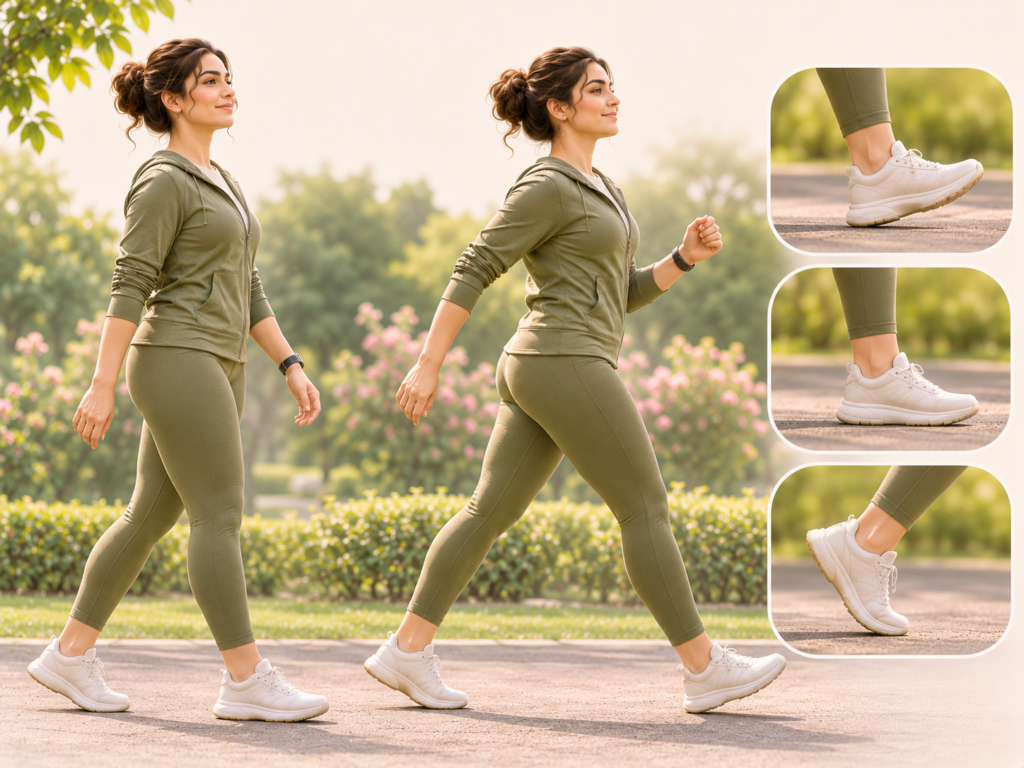
Does Walking Every Day Help With Weight Loss?
Walking can support weight loss because it increases energy expenditure.
When you walk, your muscles use energy to move your body. The amount of energy used depends on several factors, including walking speed, duration, body weight, terrain and individual physiology.
However, weight loss does not depend on exercise alone.
A sustainable weight-management approach generally involves:
- A balanced eating pattern.
- Appropriate portion sizes.
- Regular physical activity.
- Strength training.
- Adequate sleep.
- Consistency over time.
How does walking support weight management?
Walking can help by:
- Increasing daily physical activity.
- Contributing to total energy expenditure.
- Supporting cardiovascular fitness.
- Helping maintain an active lifestyle.
- Providing a manageable form of exercise for many beginners.
Can walking reduce belly fat?
Walking can support overall weight management, but it cannot selectively burn fat from the stomach.
The body loses fat according to overall physiological and energy-balance processes, not because one particular body part is exercised.
Walking regularly may contribute to changes in overall body composition when combined with an appropriate nutrition and activity plan.
Is walking better than running for weight loss?
Neither activity is automatically better for everyone.
Running generally uses more energy per minute because it is more intense, but walking may be easier to perform for longer periods and maintain consistently.
The best option depends on your health, fitness level, preferences and ability to recover.
A brisk walking routine can be an effective starting point for people who do not enjoy running or are not ready for higher-impact exercise.
Is Walking After Meals Beneficial?
Walking after meals can be a practical way to add movement to your daily routine.
Research suggests that short periods of light walking after eating may help reduce post-meal blood glucose rises in some people.
You do not need to walk at a fast pace immediately after eating. A comfortable walk may be sufficient for adding movement.
How long should you walk after eating?
There is no single required duration.
Some people may choose a short 5–15-minute walk after a meal, depending on comfort and schedule.
If you feel overly full or uncomfortable, wait until you feel ready.
People with diabetes who use glucose-lowering medication should follow their healthcare professional’s guidance, as exercise can affect blood glucose levels and medication-related risks.

How to Start Walking Every Day as a Beginner
If you have not exercised regularly, the easiest way to begin is to make walking manageable.
You do not need to start with long outdoor walks or a strict daily step target.
Step 1: Choose a safe walking location
Choose a flat, comfortable route where you can walk without unnecessary obstacles.
A nearby park, quiet neighbourhood street, walking track, indoor shopping area or treadmill can work.
Step 2: Start with a comfortable duration
Begin with approximately 5–10 minutes if that feels appropriate for your current fitness level.
If you can comfortably walk longer, you may begin with a longer session.
Step 3: Walk at a comfortable pace
Do not force yourself to walk quickly during the first few sessions.
Focus on natural breathing, comfortable steps and good posture.
Step 4: Gradually increase walking time
As your endurance improves, add a few minutes to your sessions.
You can increase the duration or frequency gradually rather than making large changes all at once.
Step 5: Introduce brisk walking
When comfortable, add short periods of faster walking.
For example, you might walk comfortably for two minutes, followed by one minute at a brisker pace.
Step 6: Track your progress
You can use a smartphone, pedometer, fitness tracker or simple notebook.
Track:
- Walking duration.
- Approximate distance.
- Daily steps.
- Walking frequency.
- How comfortable the session felt.
Remember that step counts are estimates and should not become a source of pressure.
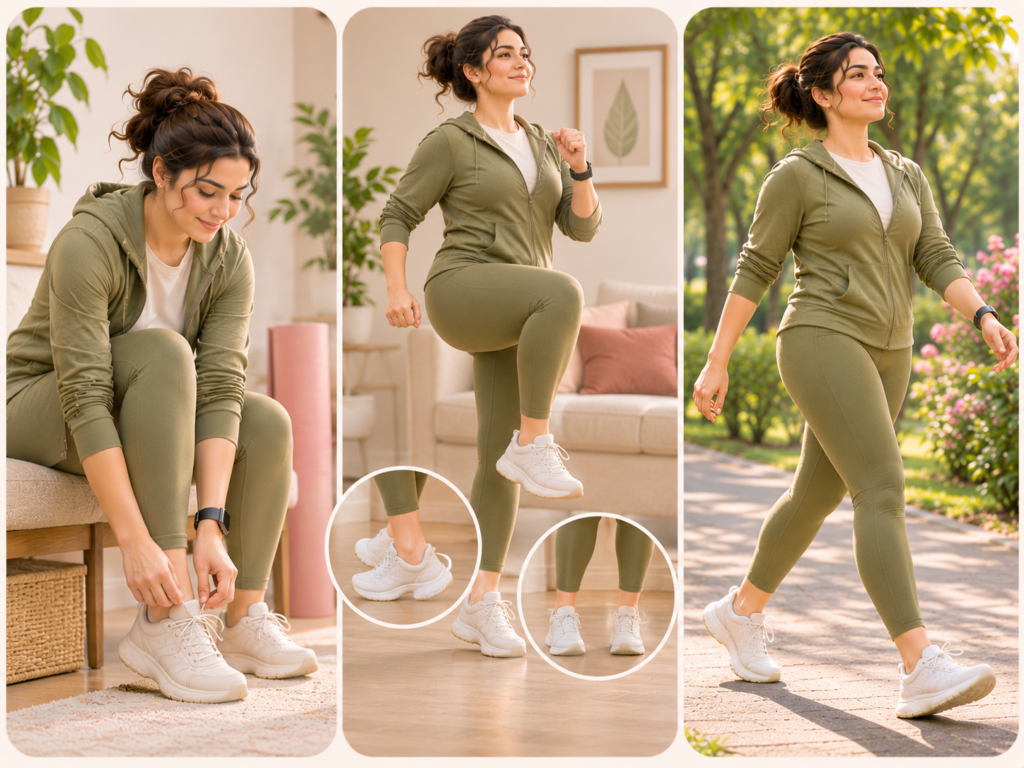
A Simple 4-Week Beginner Walking Plan
A structured walking plan can help you build consistency without increasing your activity too quickly.
The following is an illustrative progression for an otherwise healthy beginner who can walk comfortably. It is not a medical prescription, and you can repeat a week or reduce the duration if needed.
Week 1: Build the habit
Goal: Become comfortable with regular walking.
- Walk for approximately 5–10 minutes per session.
- Aim for three to five sessions if comfortable.
- Use an easy pace.
- Focus on safe routes and comfortable footwear.
Week 2: Increase walking duration
Goal: Gradually spend more time walking.
- Aim for approximately 10–15 minutes per session.
- Walk three to five days, depending on recovery.
- Maintain a comfortable pace.
- Add short walking breaks during the day.
Week 3: Introduce brisk walking
Goal: Develop cardiovascular endurance.
- Walk for approximately 15–20 minutes per session.
- Add short brisk intervals if comfortable.
- Return to an easy pace between faster periods.
- Continue to prioritise comfortable movement.
Week 4: Build a consistent routine
Goal: Work towards longer weekly walking time.
- Aim for approximately 20–30 minutes per session if ready.
- Spread sessions across the week.
- Include some brisk walking.
- Review your progress and adjust your next month’s goal.
Important: The durations above are examples, not requirements. A person with limited mobility, a health condition or a low starting fitness level may need a slower progression.
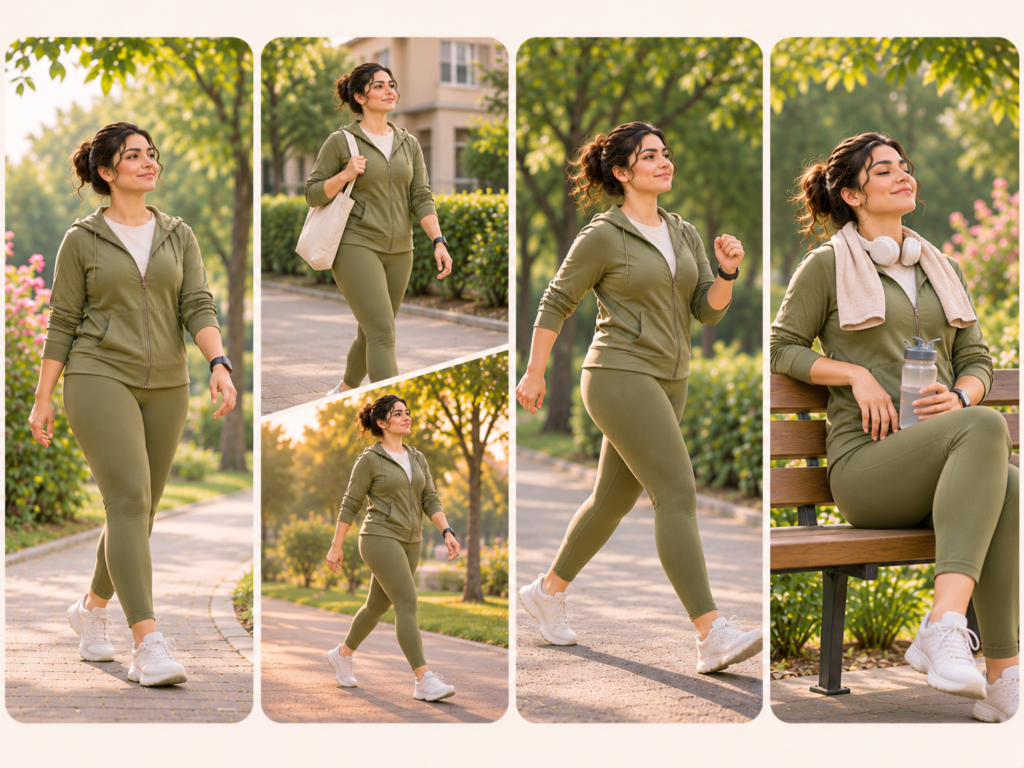
How to Make Walking More Effective
Once you become comfortable with regular walking, you can make your sessions more purposeful without turning every walk into an intense workout.
1. Include brisk walking
Add periods of moderate-intensity walking when your fitness allows.
2. Choose varied routes
Different safe walking environments can help keep your routine interesting.
You might alternate between neighbourhood paths, parks, indoor tracks and treadmills.
3. Use gentle inclines when appropriate
Walking uphill increases the physical demand of a session.
Start with small inclines and avoid challenging terrain if you have balance difficulties or joint discomfort.
4. Maintain a natural walking posture
Keep your head aligned comfortably, shoulders relaxed and arms moving naturally.
Avoid excessively long strides or leaning forward.
5. Combine walking with strength training
Walking is primarily an aerobic activity. Strength training helps challenge muscles in ways that walking alone may not.
A balanced weekly routine should include both when appropriate.
6. Break up long periods of sitting
Short movement breaks throughout the day can complement your planned walks.
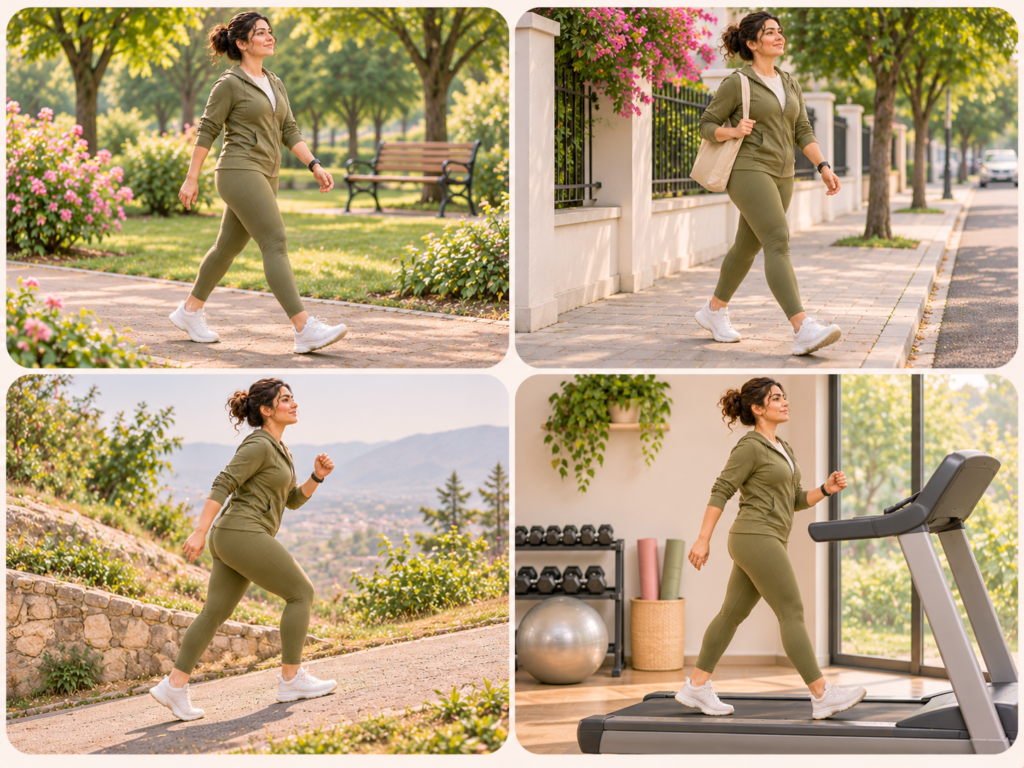
What Should You Wear for Daily Walking?
Comfortable clothing and appropriate footwear can make walking more enjoyable.
Choose supportive walking shoes
Look for shoes that:
- Fit comfortably around the heel and toes.
- Provide adequate support.
- Do not cause blisters or rubbing.
- Feel stable on your usual walking surface.
- Suit your foot shape and walking needs.
You do not necessarily need expensive specialist footwear for ordinary walking.
Wear comfortable clothing
Choose clothing that allows your legs and arms to move freely.
For outdoor walking, consider weather conditions and wear suitable layers.
Protect yourself from the weather
Depending on the climate, you may need:
- Sunscreen.
- A hat or cap.
- Water.
- Lightweight breathable clothing.
- Reflective clothing when walking in low light.
- A waterproof layer when appropriate.
In hot weather, choose cooler times of the day and take precautions against heat exposure.
Common Walking Mistakes to Avoid
Walking is simple, but a few habits can make your routine uncomfortable or unnecessarily difficult.
1. Increasing distance too quickly
Suddenly increasing your walking duration or distance can lead to discomfort and excessive fatigue.
Increase your activity gradually.
2. Taking excessively long steps
Trying to walk with very long strides can make your movement less comfortable.
Use a natural stride that feels balanced and controlled.
3. Ignoring footwear discomfort
Shoes that rub, pinch or cause blisters can make walking unpleasant.
Choose footwear that fits properly and stop to address discomfort.
4. Walking too fast too soon
Beginners do not need to walk at a brisk pace from the first day.
Build your endurance before introducing faster intervals.
5. Ignoring pain
Muscle effort and mild temporary fatigue can occur during physical activity, but sharp, worsening or persistent pain should not be ignored.
Reduce or stop the activity and seek appropriate advice if symptoms continue.
6. Focusing only on step counts
Step counts are useful for monitoring activity, but they do not tell the entire story.
Walking intensity, duration, fitness level, recovery and other forms of exercise also matter.
7. Neglecting strength training
Walking does not train every major muscle group as effectively as a dedicated strength programme.
Include muscle-strengthening exercises on at least two days each week, where appropriate.
When Should You Avoid Walking or Seek Medical Advice?
Walking is suitable for many people, but it may need to be modified according to individual health circumstances.
Speak with a healthcare professional before beginning a new exercise routine if you have:
- Significant heart or lung disease.
- Uncontrolled blood pressure.
- Persistent joint or back pain.
- A recent injury or surgery.
- Severe balance difficulties.
- A condition that affects your ability to walk safely.
- Symptoms that worsen with physical activity.
Choose safe, even walking surfaces if you have balance concerns.
Stop walking and seek urgent medical attention if you experience concerning symptoms such as chest pain, fainting, severe or unusual shortness of breath or sudden neurological symptoms.
People with diabetes, circulation problems or reduced foot sensation may need individual advice about footwear, foot checks and appropriate walking duration.
The goal is to find a level of activity that supports your health without creating unnecessary risk.
How to Stay Motivated to Walk Every Day
Developing a daily walking habit can be easier when you make it part of your normal routine.
Here are some practical strategies.
Choose a consistent time
Walk before breakfast, during a lunch break or after dinner. Choose a time that fits your schedule.
Start with a realistic goal
A short walk is better than repeatedly planning a long walk that never happens.
Track your progress
Use a phone or fitness tracker to monitor walking duration, steps or distance.
Find a walking partner
Walking with a friend or family member can make the experience more enjoyable.
Change your route
Explore safe local parks, neighbourhood paths or indoor walking areas.
Combine walking with enjoyable activities
You can listen to music or a podcast when it is safe to do so. Stay aware of traffic, other pedestrians and your surroundings.
Focus on consistency rather than perfection
Missing one walk does not mean you have failed. Return to your routine when you can.
FREQUENTLY ASKED QUESTIONS ABOUT WALKING EVERY DAY
Walking regularly can support cardiovascular fitness, blood pressure management, blood glucose regulation, weight management, mental well-being, sleep and everyday mobility. It can also help reduce sedentary time and increase overall physical activity.
For many adults, 30 minutes of brisk walking on five days each week adds up to 150 minutes of moderate-intensity activity. This meets the general weekly aerobic activity recommendation. You can also divide the time into shorter sessions.
There is no single step target that everyone must achieve. Ten thousand steps is a popular fitness goal, not a universal medical requirement. Start from your usual daily average and gradually increase your activity as appropriate.
Walking increases energy expenditure and can support weight management when combined with a balanced eating pattern and other healthy habits. The amount of weight change depends on overall energy balance, activity, nutrition and individual factors.
Brisk walking provides a greater cardiovascular challenge and can count as moderate-intensity aerobic activity. Comfortable walking is still useful for increasing daily movement and reducing sedentary time. Both can have a place in a balanced routine.
Walking can contribute to overall weight management, but it cannot selectively burn fat from the abdomen. Changes in body fat depend on overall energy balance and other individual factors.
A short, comfortable walk after eating can be a practical way to increase daily movement. Research suggests that post-meal walking may help reduce blood glucose rises in some people. The ideal duration and timing depend on individual comfort and health.
A beginner may start with approximately 5–10 minutes of comfortable walking and gradually increase the duration. Some people can begin with longer sessions, while others need shorter periods. Choose a duration that matches your ability and recovery.
CONCLUSION
Walking is one of the most accessible ways to become more active and support long-term health. The benefits of walking every day include improved cardiovascular fitness, support for blood pressure and blood glucose management, stronger lower-body endurance, better mental well-being and increased daily movement.
You do not need to begin with 10,000 steps or long-distance walks. Start with a comfortable amount, develop a consistent routine and gradually increase your walking duration or pace as your fitness improves.
For many adults, working towards 150 minutes of moderate-intensity activity each week is a practical long-term goal. Brisk walking can help you reach that target, while strength training on at least two days each week can complement your walking routine.
Whether you choose morning walks, evening walks, treadmill walking or short walks throughout the day, the most important thing is to find a routine that feels safe and sustainable.
Every step is an opportunity to move more. Start with what you can manage today and build from there.
MEDICAL DISCLAIMER
This article is intended for general educational purposes and does not replace professional medical advice, diagnosis or treatment.
The amount and intensity of walking appropriate for an individual can vary according to age, fitness level, mobility, medical history, injuries and other health circumstances.
People with chronic health conditions, heart or lung disease, uncontrolled blood pressure, diabetes-related foot problems, significant joint pain, balance difficulties or recent injuries should seek individual guidance from a qualified healthcare professional before beginning or substantially increasing a walking programme.
Stop exercising if you experience chest pain, faintness, severe or unusual shortness of breath, sudden weakness or other concerning symptoms, and seek appropriate medical attention.
CREDIBLE MEDICAL AND FITNESS REFERENCES
Use these established sources to support the health and physical-activity information in the article.
1. NHS — Walking for Health
Explains the benefits of walking, brisk walking, beginner recommendations, comfortable footwear and practical ways to build a walking habit.
https://www.nhs.uk/live-well/exercise/walking-for-health
2. UK Chief Medical Officers — Physical Activity Guidelines
Provides adult recommendations for weekly moderate-intensity activity, vigorous activity and muscle-strengthening exercise.
3. CDC — Adult Physical Activity Guidelines
Explains recommended weekly activity, moderate-intensity exercise and muscle-strengthening recommendations.
https://www.cdc.gov/physical-activity-basics/guidelines/adults.html
4. CDC — Benefits of Physical Activity
Explains immediate and long-term benefits of physical activity, including sleep, mental well-being and chronic disease risk management.
https://www.cdc.gov/physical-activity-basics/benefits
5. CDC — Physical Activity and Your Weight and Health
Explains the relationship between physical activity, energy expenditure and weight management. It also describes brisk walking as moderate-intensity activity.
https://www.cdc.gov/healthy-weight-growth/physical-activity/index.html
6. NIDDK — Tips for Starting Physical Activity
Provides practical advice for starting slowly, setting realistic goals and gradually increasing physical activity.
7. NHS — How to Be More Active
Explains how to increase everyday activity, reduce sedentary time and build sustainable physical activity habits.
https://www.nhs.uk/better-health/get-active/how-to-be-more-active
8. National Heart, Lung, and Blood Institute — Sample Walking Program
Provides an example of a gradual walking progression for people beginning a walking programme.
https://www.nhlbi.nih.gov/health/healthdisp/pdf/tipsheets/Sample-Walking-Program.pdf
9. American College of Cardiology — Exercise Prescriptions for Cardiovascular Health in Adults (2026)
A recent scientific statement discussing cardiovascular exercise prescriptions and evidence relating to step counts.
https://www.jacc.org/doi/10.1016/j.jacc.2026.09.008
Editorial note: These sources support general physical-activity recommendations and walking-related health information. They do not establish that walking alone treats or cures a medical condition. Keep all health claims appropriately qualified.