

Erectile dysfunction (ED) is a common men’s health problem in which a man has persistent difficulty getting or maintaining an erection firm enough for satisfactory sexual activity.
Having trouble with an erection occasionally is not necessarily erectile dysfunction. Stress, tiredness, anxiety, alcohol and other temporary factors can affect erections from time to time. But when erection problems keep happening, they deserve medical attention.
ED can happen at any age.
It can be related to blood-vessel health, diabetes, high blood pressure, medications, nerve problems, hormonal conditions, psychological factors, lifestyle factors—or a combination of several causes.
Importantly, erectile dysfunction isn’t simply something men have to “accept” as they get older.
It can sometimes be a symptom of an underlying health condition, and effective treatments are available.
In this complete guide, you’ll learn:
- What erectile dysfunction actually means
- The common symptoms of ED
- Why erections sometimes fail
- The physical and psychological causes of ED
- Whether stress can cause erectile dysfunction
- The connection between ED and heart health
- The relationship between testosterone and erections
- How erectile dysfunction is diagnosed
- ED treatment options
- How medications such as sildenafil and tadalafil work
- Why ED medications cannot be combined with nitrates
- Lifestyle changes that may improve erectile function
- When erectile dysfunction requires medical evaluation
- Frequently asked questions about ED
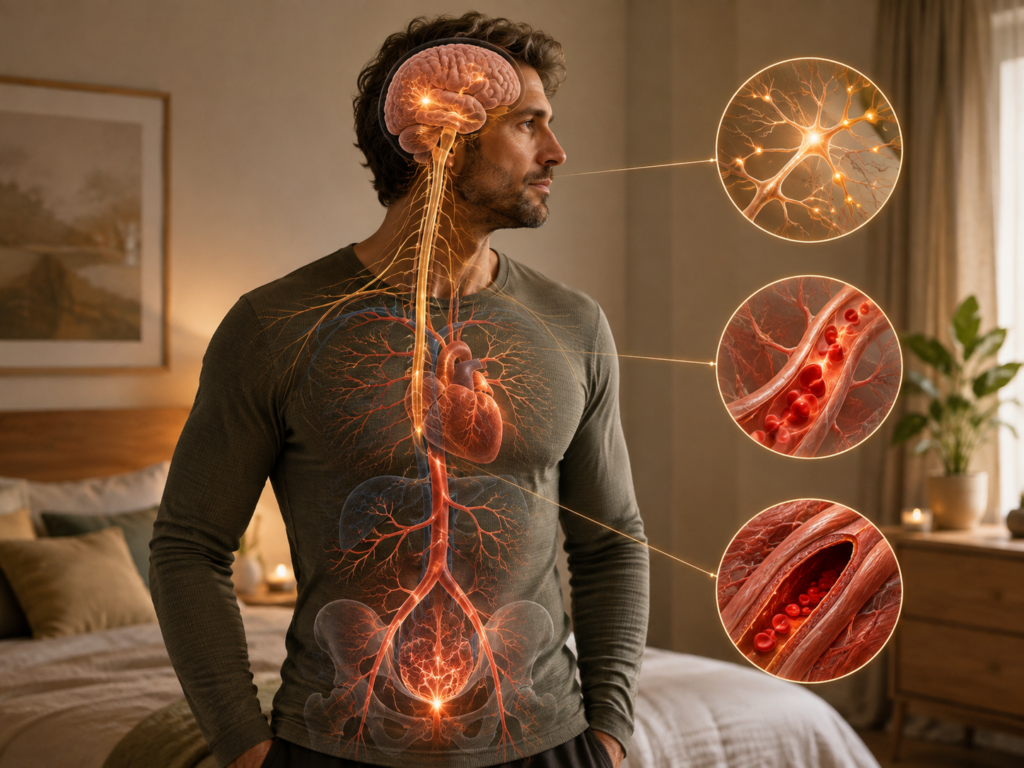
What Is Erectile Dysfunction?
Erectile dysfunction is the persistent inability to achieve or maintain an erection sufficient for satisfactory sexual performance. It can affect sexual confidence, relationships and overall quality of life.
ED can look different from one man to another.
You may:
- Have difficulty getting an erection
- Get an erection but lose it before or during sex
- Get an erection that isn’t firm enough for penetration
- Notice fewer spontaneous erections
- Experience changes in sexual confidence because of repeated erection difficulties
Some men can still get erections in certain situations but struggle in others.
For example, a man might have erections during sleep or upon waking but have difficulty maintaining an erection during partnered sex.
That pattern can provide useful information to a healthcare professional, although it doesn’t by itself establish the cause.
Is It Normal to Have Trouble Getting an Erection Sometimes?
Yes.
Occasional erection difficulties are common.
You may temporarily have difficulty getting or keeping an erection because you’re:
- Tired
- Stressed
- Distracted
- Anxious
- Drinking alcohol
- Experiencing relationship tension
- Dealing with an unfamiliar sexual situation
An isolated episode does not necessarily mean you have ED.
The concern is when the problem becomes persistent, recurrent or distressing.
What Are the Symptoms of Erectile Dysfunction?
The main symptoms of ED involve difficulty with erections.
Common symptoms include:
- Difficulty getting an erection
- Difficulty keeping an erection
- Erections that aren’t firm enough for sex
- Losing an erection during sexual activity
- Reduced confidence during sex
- Avoiding sexual activity because of erection concerns
Some men also experience reduced libido, although low sexual desire and erectile dysfunction are not the same condition.
Low libido refers primarily to reduced interest in sex.
ED refers primarily to difficulty achieving or maintaining an erection.
A man can have one without the other.
Why Do I Lose My Erection During Sex?
Losing an erection during sex can happen for many reasons.
Possible contributors include:
- Anxiety
- Performance pressure
- Distraction
- Relationship stress
- Alcohol
- Fatigue
- Reduced sexual stimulation
- Medication effects
- Blood-flow problems
- Diabetes
- High blood pressure
- Nerve problems
- Hormonal problems
If it happens occasionally, it may not indicate a medical problem.
But if you repeatedly lose your erection during sexual activity, especially if the problem is new or worsening, it’s worth discussing with a healthcare professional.
What Causes Erectile Dysfunction?
Erectile dysfunction doesn’t have one single cause.
Doctors generally consider several major categories:
Blood-vessel causes
Healthy blood flow is essential for an erection.
Conditions affecting blood vessels can therefore contribute to ED.
Neurological causes
The nerves involved in sexual arousal and erection need to function properly.
Hormonal causes
Hormonal conditions, including testosterone deficiency in some men, can affect sexual function.
Psychological causes
Stress, anxiety, depression and performance anxiety can contribute to ED.
Medication-related causes
Some medications can interfere with sexual function.
Lifestyle and metabolic factors
Smoking, obesity, physical inactivity, excessive alcohol use and metabolic conditions can increase ED risk.
Often, more than one factor is involved.
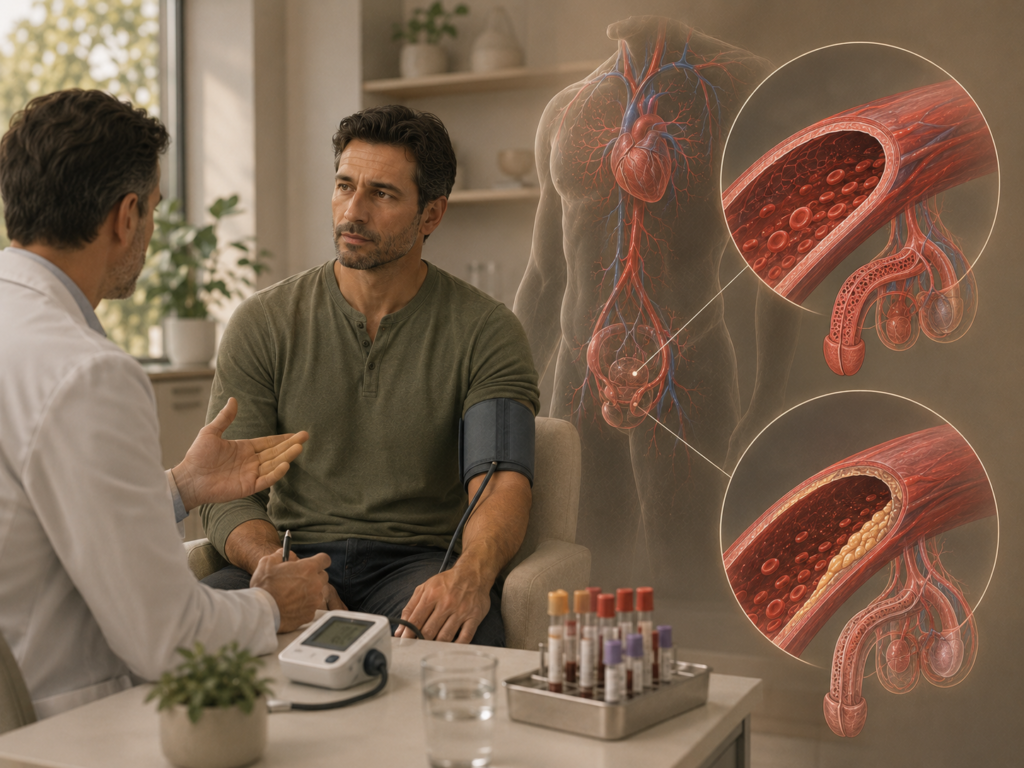
1. Cardiovascular Disease and Erectile Dysfunction
One of the most important connections between ED and men’s health is cardiovascular health.
An erection depends on adequate blood flow.
If blood vessels become narrowed or damaged, blood flow to erectile tissue can be affected.
Conditions associated with ED include:
- High blood pressure
- High cholesterol
- Coronary artery disease
- Peripheral vascular disease
- Diabetes
- Obesity
- Metabolic syndrome
The European Association of Urology notes that ED shares many risk factors with cardiovascular disease and can serve as an important opportunity to identify previously unrecognized cardiovascular risk.
This doesn’t mean:
“If you have ED, you definitely have heart disease.”
It means persistent ED can be a reason to evaluate cardiovascular risk—particularly when other risk factors are present.
2. Diabetes and Erectile Dysfunction
Diabetes can increase the risk of erectile dysfunction.
Persistently elevated blood glucose can contribute to damage affecting:
- Blood vessels
- Nerves
- Overall cardiovascular health
These changes can make it more difficult to achieve or maintain an erection.
If you have diabetes and develop ED, it’s worth discussing both conditions with your healthcare professional rather than treating the erection problem in isolation.
Managing blood glucose, blood pressure, cholesterol and other cardiovascular risk factors can be an important part of overall treatment.
3. High Blood Pressure and ED
High blood pressure can damage blood vessels over time.
Because erections depend on healthy blood flow, hypertension can contribute to erectile dysfunction.
Some blood-pressure medications can also affect sexual function in certain men.
However, don’t stop blood-pressure medication because you think it is causing ED.
Talk with your doctor first.
They can determine whether the medication may be contributing and whether a different treatment is appropriate.
4. High Cholesteroly and Erectile Dysfunction
High cholesterol can contribute to atherosclerosis—the buildup of plaque in blood vessels.
Because penile arteries are relatively small, vascular problems may affect erectile function before some other cardiovascular symptoms become obvious.
If you have ED alongside high cholesterol, high blood pressure, diabetes or smoking history, your doctor may consider your overall cardiovascular risk.
5. Obesity and Erectile Dysfunction
Obesity is associated with an increased risk of erectile dysfunction.
It can influence ED through several pathways, including:
- Cardiovascular disease
- Insulin resistance
- Diabetes
- Hormonal changes
- Inflammation
- Reduced physical activity
If weight loss is appropriate for you, even modest improvements in overall health can be beneficial.
The goal should be sustainable health improvement—not shame or unrealistic body standards.
6. Smoking and Erectile Dysfunction
Smoking damages blood vessels and is a recognized risk factor for erectile dysfunction.
Smoking cessation can therefore be an important part of protecting erectile and cardiovascular health.
If you smoke and are experiencing ED, quitting is one of the most useful changes you can make for your overall health.
7. Alcohol and Erectile Dysfunction
Alcohol can interfere with sexual function, particularly when consumed heavily.
It can affect:
- Nervous-system function
- Sexual arousal
- Hormonal health
- Sleep
- Cardiovascular health
Occasional drinking doesn’t necessarily cause ED, but persistent heavy alcohol use can contribute to sexual problems.
8. Medications That Can Contribute to ED
Some medications can affect erectile function.
Possible examples include certain:
- Blood-pressure medications
- Antidepressants
- Sedatives
- Hormonal medications
- Other prescription drugs
This does not mean you should stop taking prescribed medication.
If you notice ED after starting or changing a medication, tell your doctor.
They can determine whether the medication could be contributing and whether an alternative is appropriate.
9. Nerve Problems and Erectile Dysfunction
An erection requires coordinated communication between the brain, spinal cord and nerves supplying the penis.
Nerve damage can therefore interfere with erections.
Possible causes include:
- Diabetes-related nerve damage
- Spinal cord injury
- Multiple sclerosis
- Stroke
- Pelvic surgery
- Certain neurological disorders
Major pelvic surgery or radiation can also affect nerves and blood vessels involved in erectile function.
10. Low Testosterone and Erectile Dysfunction
Testosterone can influence sexual desire and aspects of sexual function.
But low testosterone isn’t automatically the cause of ED.
A man can have:
Normal testosterone + erectile dysfunction
or
Low testosterone + erectile dysfunction
or
Low testosterone + normal erections but reduced libido.
This distinction matters.
If ED is your main concern, your doctor will consider vascular, neurological, medication-related, psychological and hormonal causes rather than assuming testosterone is responsible.
For more information, see our LifeMate guide:
Low Testosterone in Men: Symptoms, Causes, Testing & Treatment
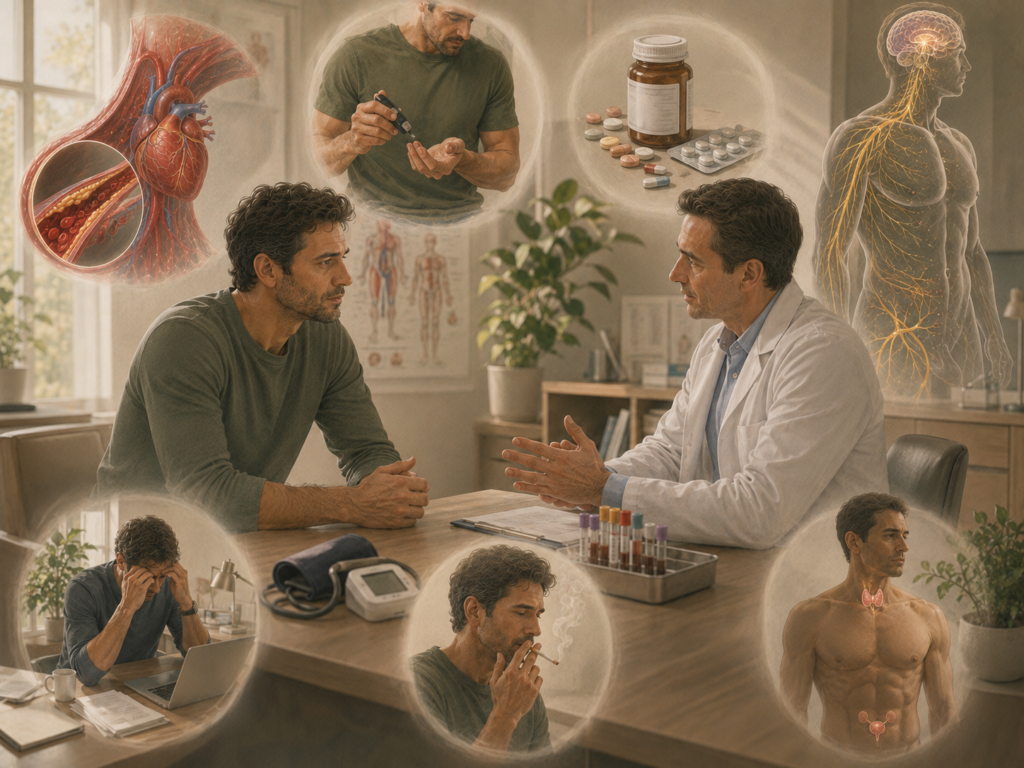
Psychological Causes of Erectile Dysfunction
Not every case of erectile dysfunction is caused by a physical problem.
The brain plays an important role in sexual arousal and erections, so psychological and emotional factors can interfere with sexual function.
Possible contributors include:
- Performance anxiety
- Stress
- Depression
- Anxiety disorders
- Relationship difficulties
- Low self-confidence
- Previous negative sexual experiences
- Fear of losing an erection
- Major life changes
Psychological and physical causes can also occur together.
For example, a man may experience a temporary erection problem, become worried that it will happen again, and then develop performance anxiety that makes future erections more difficult.
This can create a cycle:
Erection difficulty → worry → increased anxiety → more difficulty maintaining an erection
That doesn’t mean the problem is “just in your head.” Psychological factors can produce very real physical effects on sexual function.

How Can You Tell If Erectile Dysfunction Is Physical or Psychological?
It isn’t always possible to determine the cause yourself.
However, certain patterns can provide useful information to a healthcare professional.
For example, a man who consistently has erections during sleep or upon waking but repeatedly loses erections during partnered sex may have a psychological or situational component.
On the other hand, gradually worsening erections across different situations may suggest a physical contributor.
But these patterns aren’t diagnostic by themselves.
Physical and psychological causes frequently overlap, so a proper medical assessment is the best way to understand what’s happening.
Can Erectile Dysfunction Happen at a Young Age?
Yes.
ED isn’t exclusively a problem affecting older men.
Younger men can experience erectile difficulties because of:
- Anxiety
- Depression
- Performance pressure
- Medication
- Alcohol or recreational drug use
- Smoking
- Obesity
- Diabetes
- Hormonal conditions
- Cardiovascular risk factors
- Neurological problems
- Relationship difficulties
If erectile dysfunction is persistent, don’t dismiss it simply because you’re young.
At the same time, don’t assume that ED automatically means you have a serious disease.
The cause needs to be evaluated in context.
How Is Erectile Dysfunction Diagnosed?
There is no single test that diagnoses every case of erectile dysfunction.
Doctors usually begin with a detailed conversation about your symptoms and medical history.
Your healthcare professional may ask:
- When did the problem begin?
- Does it happen every time or only sometimes?
- Can you get an erection but not maintain it?
- Do you have morning or spontaneous erections?
- Is your sex drive reduced?
- Are you taking any medications?
- Do you smoke?
- How much alcohol do you drink?
- Do you have diabetes?
- Do you have high blood pressure or high cholesterol?
- Have you had pelvic surgery or an injury?
- Are you experiencing stress, anxiety or relationship difficulties?
These questions can feel personal, but they help identify the likely cause.
What Tests Are Used for Erectile Dysfunction?
Testing depends on your symptoms and risk factors.
A doctor may perform:
Blood pressure measurement
High blood pressure can contribute to ED and is an important cardiovascular risk factor.
Blood tests
Depending on your situation, testing may include:
- Blood glucose or HbA1c
- Lipid profile
- Testosterone
- Other hormone tests when indicated
Physical examination
This may include evaluation of the genital area, pulses, blood vessels, neurological function and other relevant physical findings.
Specialized testing
Some men may need additional testing, such as penile blood-flow assessment using Doppler ultrasound, particularly when the diagnosis is unclear or a vascular problem is suspected.
Not everyone needs extensive testing.
Your evaluation should be based on your individual symptoms and medical history.

What Is the Best Treatment for Erectile Dysfunction?
There isn’t one best treatment for every man.
The appropriate treatment depends on:
- The underlying cause
- Your overall health
- Medications you’re taking
- Cardiovascular risk
- Whether hormones are involved
- Your preferences
- How severe the ED is
- Whether you have a partner
- Whether psychological factors contribute
Treatment may involve lifestyle changes, medication, psychological support, treatment of an underlying condition, devices or procedures.
Sometimes combining approaches works better than relying on one treatment alone.
Lifestyle Changes That May Improve Erectile Function
Because erections depend heavily on cardiovascular and metabolic health, improving overall health can also benefit sexual function.
Helpful habits can include:
- Regular physical activity
- Stopping smoking
- Limiting excessive alcohol
- Maintaining a healthy weight when appropriate
- Eating a nutritious diet
- Managing diabetes
- Managing blood pressure
- Managing cholesterol
- Getting adequate sleep
- Addressing stress
The European Association of Urology recommends lifestyle modification and risk-factor management as part of erectile dysfunction care. (uroweb.org)
Lifestyle changes may not eliminate ED for everyone, but they can improve overall health and may improve erectile function in some men.
Can Exercise Help Erectile Dysfunction?
Regular physical activity supports cardiovascular health and can improve fitness, metabolic health and body composition.
Because vascular health is important for erections, exercise can be a useful part of an overall ED-management strategy.
You don’t need an extreme workout routine.
Examples include:
- Brisk walking
- Cycling
- Swimming
- Running
- Strength training
- Recreational sports
Choose activities you can maintain consistently.
If you have significant cardiovascular disease or symptoms such as chest pain or unexplained shortness of breath, speak with a healthcare professional before starting vigorous exercise.
Can a Healthy Diet Improve Erectile Function?
A healthy dietary pattern can support cardiovascular and metabolic health, which are closely connected to erectile function.
Build meals around:
- Vegetables
- Fruits
- Whole grains
- Legumes
- Fish
- Lean protein
- Nuts and seeds
- Healthy fats
At the same time, limit excessive intake of highly processed foods, added sugars and other foods that can make it harder to maintain overall cardiovascular health.
There is no single food that reliably “cures” erectile dysfunction.
Think overall dietary pattern, not miracle foods.
Can Losing Weight Improve Erectile Dysfunction?
If you have overweight or obesity, improving your weight and metabolic health may help erectile function.
Weight management can improve several factors associated with ED, including:
- Cardiovascular health
- Blood pressure
- Insulin sensitivity
- Physical fitness
- Hormonal health
But weight loss should be approached sustainably.
You do not need to pursue crash diets or extreme calorie restriction to improve your health.
Can Quitting Smoking Improve Erectile Dysfunction?
Smoking damages blood vessels and increases cardiovascular risk.
Because erections depend on healthy blood flow, smoking can contribute to erectile dysfunction.
Quitting smoking is therefore an important step for both sexual health and cardiovascular health.
If you’re struggling to quit, a healthcare professional can help you choose an evidence-based smoking-cessation strategy.
Prescription Medications for Erectile Dysfunction
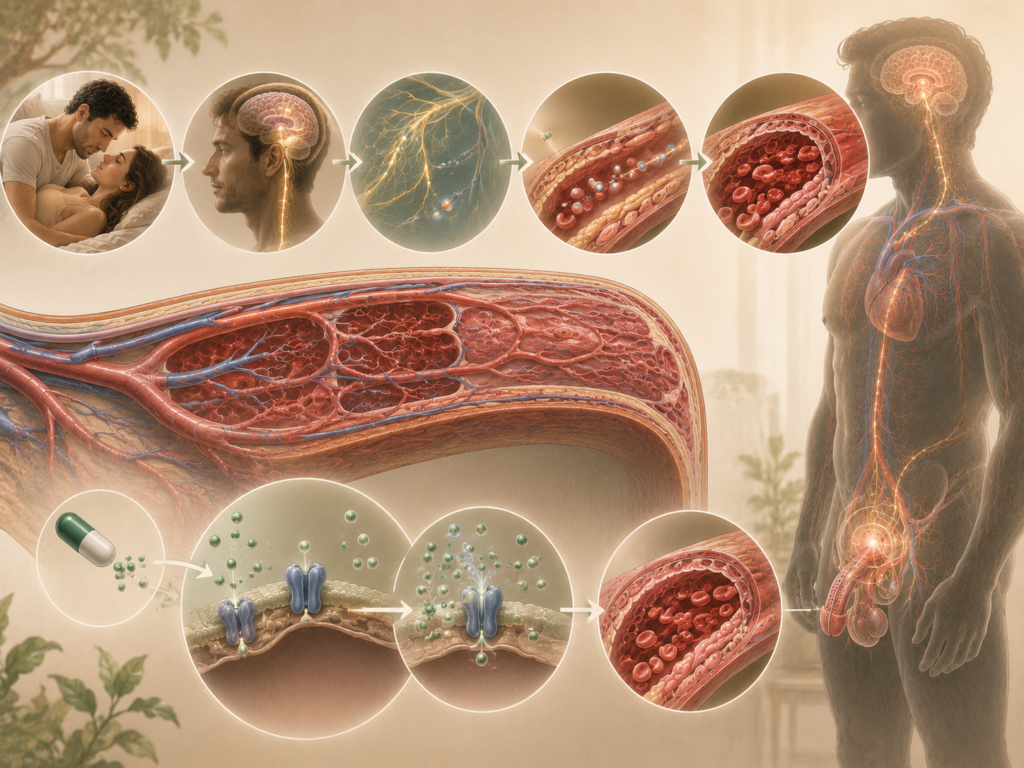
The most commonly used oral medications for ED belong to a group called phosphodiesterase type 5 (PDE5) inhibitors.
They include:
- Sildenafil
- Tadalafil
- Vardenafil
- Avanafil
These medications work by enhancing the effects of nitric oxide signaling and helping increase blood flow into the penis when sexual stimulation occurs.
They do not automatically cause an erection without sexual stimulation.
The medication and dose should be selected with appropriate medical advice.
Sildenafil vs Tadalafil: What’s the Difference?
Both sildenafil and tadalafil are PDE5 inhibitors, but they have different characteristics.
Sildenafil
Sildenafil is commonly taken before anticipated sexual activity and generally has a shorter duration of action.
Tadalafil
Tadalafil lasts considerably longer and is available in both as-needed and, for some men, daily dosing.
The best option depends on your health, other medications, frequency of sexual activity and personal preference.
Neither should be chosen solely because one is advertised as “stronger.”
Important: Who Should Not Take ED Medications With Nitrates?
This is one of the most important safety points about ED medication.
PDE5 inhibitors should not be combined with nitrate medications used to treat angina or certain heart conditions.
The combination can cause a potentially dangerous drop in blood pressure.
Nitrates can include medications such as:
- Nitroglycerin
- Isosorbide mononitrate
- Isosorbide dinitrate
If you take nitrates or use recreational nitrate products, tell your healthcare professional before taking medication for ED.
Never assume that an ED medication is safe simply because it is available by prescription.
Can You Take Viagra With Blood Pressure Medication?
It depends on the medication.
Some men taking blood-pressure medicines can safely use PDE5 inhibitors under medical supervision, while certain combinations or health conditions require additional caution.
Never stop or alter your blood-pressure medication on your own.
Tell your doctor or pharmacist exactly what medications and supplements you’re taking so they can check for interactions.
What If ED Medication Doesn’t Work?
A medication failing once doesn’t necessarily mean it cannot work.
The result can be affected by:
- Incorrect timing
- Inadequate sexual stimulation
- Incorrect dose
- Heavy alcohol use
- Medication interactions
- Underlying medical conditions
- Psychological factors
If a prescribed ED medication isn’t working, don’t simply take more.
Talk with your healthcare professional.
They can determine whether the medication, dose, timing or diagnosis needs to be reconsidered.
Other Treatments for Erectile Dysfunction
If oral medication isn’t suitable or doesn’t work adequately, other options may be considered.
These can include:
Vacuum erection devices
A vacuum device uses negative pressure to draw blood into the penis and help create an erection.
Intracavernosal injections
Medication can be injected directly into erectile tissue to produce an erection.
Intraurethral medication
Certain medications can be administered through the urethra in selected situations.
Penile implants
For men with severe ED who do not respond to or cannot tolerate other treatments, a penile prosthesis may be considered.
These treatments should be discussed with an appropriately qualified healthcare professional.
Psychological Treatment for Erectile Dysfunction
If anxiety, depression, performance anxiety or relationship difficulties are contributing to ED, psychological treatment can be highly relevant.
Options may include:
- Cognitive behavioral therapy
- Sex therapy
- Couples counseling
- Treatment for anxiety or depression
- Stress-management strategies
Psychological support can also be useful when a physical condition is already present.
You don’t have to choose between “physical treatment” and “mental-health treatment.”
Both may be appropriate at the same time.

Can Erectile Dysfunction Be Cured?
Sometimes the underlying cause can be treated or significantly improved.
For example, ED related to a medication, uncontrolled diabetes, smoking, psychological stress or another reversible factor may improve when that factor is addressed.
But there isn’t one universal “cure” for erectile dysfunction.
Some men require ongoing treatment.
The encouraging part is that effective treatment options exist for many causes of ED.
The first step is identifying what is contributing to the problem.
Can Erectile Dysfunction Go Away on Its Own?
Occasional erection difficulties may resolve when a temporary trigger—such as stress, exhaustion or excessive alcohol—is removed.
Persistent or recurrent ED is different.
If erection problems continue, don’t wait indefinitely hoping they’ll disappear.
A medical evaluation can identify potentially treatable causes and may also uncover cardiovascular or metabolic risk factors that deserve attention.
Is Erectile Dysfunction a Normal Part of Aging?
Erectile difficulties become more common with age, but persistent ED should not simply be dismissed as normal aging.
Older men are also more likely to have conditions such as:
- Cardiovascular disease
- Diabetes
- Hypertension
- Medication use
- Neurological disease
These can contribute to erectile problems.
Age may increase the likelihood of ED, but it doesn’t mean you have to accept persistent erectile difficulties without treatment.
When Should You See a Doctor About Erectile Dysfunction?
Consider making an appointment if:
- ED happens repeatedly
- You regularly lose erections during sex
- Erections aren’t firm enough for sexual activity
- Your sex drive has changed significantly
- ED began suddenly without an obvious explanation
- You have diabetes
- You have high blood pressure or cholesterol
- You smoke
- You have cardiovascular risk factors
- You’re taking medication that may affect sexual function
- ED is affecting your relationship or emotional well-being
- You’re concerned about low testosterone or fertility
ED is common, but that doesn’t mean you have to suffer in silence.
A doctor can help determine whether the cause is physical, psychological, medication-related or a combination.

Frequently Asked Questions About Erectile Dysfunction
Erectile dysfunction (ED) is the persistent or recurrent inability to achieve or maintain an erection sufficient for satisfactory sexual activity. Occasional erection difficulties are common and do not necessarily mean you have ED.
Early signs can include difficulty getting an erection, losing an erection during sexual activity, or erections that are not firm enough for sex. A noticeable change in your usual erection quality can also be worth discussing with a healthcare professional.
ED can result from cardiovascular disease, diabetes, high blood pressure, high cholesterol, obesity, smoking, medications, nerve problems, hormonal conditions, psychological factors, or a combination of these.
Yes. Stress and anxiety can interfere with sexual arousal and contribute to difficulty getting or maintaining an erection. Physical and psychological causes can also occur together.
Yes. Performance anxiety can create a cycle in which worrying about an erection makes it harder to maintain one. Counseling, sex therapy or other psychological support may help when anxiety contributes to ED.
Low testosterone can contribute to sexual problems, particularly reduced sexual desire, but it isn’t the only cause of ED. Blood-vessel, neurological, medication-related and psychological factors can also cause erectile difficulties.
It can sometimes be an early indicator of cardiovascular risk because erections depend on healthy blood-vessel function. ED does not mean that you definitely have heart disease, but persistent ED can be a reason to discuss cardiovascular risk factors with your doctor. (uroweb.org)
Yes. Diabetes can damage blood vessels and nerves involved in erections and is an important risk factor for ED. Good management of blood glucose and other cardiovascular risk factors is an important part of overall care. (uroweb.org)
Yes. High blood pressure can damage blood vessels and contribute to ED. Some medications used to treat hypertension can also affect sexual function in some men.
High cholesterol can contribute to atherosclerosis and vascular disease, which can reduce the blood flow needed for an erection.
Yes. Smoking damages blood vessels and is associated with an increased risk of erectile dysfunction. Quitting smoking can benefit both erectile and cardiovascular health.
Occasional erection difficulties may resolve when a temporary factor such as stress, fatigue or excessive alcohol is removed.
Repeated or persistent ED should be medically evaluated.
Is erectile dysfunction normal as you get older?
ED becomes more common with age, but persistent erectile difficulties should not automatically be dismissed as normal aging.
Treatable medical conditions and medications become more common with age and can contribute to ED.
How to Improve Erectile Function and Protect Men’s Sexual Health
There is no single lifestyle change that guarantees better erections.
Instead, focus on the factors that support your blood vessels, nerves, hormones and overall health.
Stay physically active
Aim for regular physical activity appropriate for your fitness level.
Don’t smoke
Smoking cessation can improve cardiovascular health and reduce a major risk factor for vascular ED.
Limit excessive alcohol
Heavy alcohol use can interfere with sexual function and general health.
Eat a balanced diet
Prioritize vegetables, fruits, whole grains, legumes, fish, lean proteins, nuts, seeds and other nutrient-dense foods.
Manage blood pressure
High blood pressure is both a cardiovascular and ED risk factor.
Manage blood glucose
If you have diabetes, follow your treatment plan and monitor your blood glucose as recommended.
Address high cholesterol
Healthy eating, physical activity and prescribed treatment can help manage cholesterol when necessary.
Get enough sleep
Poor sleep can affect energy, mood, hormones and sexual function.
Manage stress
Stress reduction doesn’t have to mean eliminating every stressful event. It can involve exercise, relaxation techniques, therapy, social support and adequate rest.

What You Should Know Before Buying ED Medication Online
Be cautious with websites selling erectile dysfunction medication without proper medical assessment.
Counterfeit or incorrectly dosed medicines can pose serious risks.
A legitimate prescription medicine should come from an appropriate healthcare professional and a reputable pharmacy.
Avoid products promising:
- Instant permanent erections
- “100% natural Viagra”
- Guaranteed cures
- Extremely rapid testosterone increases
- Permanent enlargement
- No-side-effect ED treatment
These claims are warning signs.
Your health history and medications matter when choosing ED treatment.
Why You Shouldn’t Be Embarrassed to Talk About Erectile Dysfunction
ED can be difficult to discuss.
Some men avoid medical care because they feel embarrassed, worry about being judged, or assume the problem is simply part of aging.
But erectile dysfunction is a medical issue, not a measure of masculinity.
Talking to a healthcare professional can help identify an underlying cause and open the door to effective treatment.
It can also uncover health conditions that you may not realize are affecting your sexual function.
You don’t have to wait until ED becomes severe before asking for help.
Final Takeaway
Erectile dysfunction is common, but it shouldn’t automatically be dismissed as normal aging or treated as something a man simply has to live with.
Persistent ED can be caused by many different factors, including cardiovascular disease, diabetes, high blood pressure, medications, neurological problems, hormonal conditions, stress and anxiety.
The most useful first step is finding out why it’s happening.
A medical evaluation can help determine whether the problem is primarily physical, psychological, medication-related, or a combination of factors.
Lifestyle changes can support cardiovascular and sexual health, while treatments such as PDE5 inhibitors, psychological therapy, vacuum devices, injections and other approaches may be appropriate depending on the individual.
Most importantly, don’t self-diagnose with testosterone or unregulated “male enhancement” products.
And if you’re considering testosterone treatment while trying to have children, discuss fertility first because testosterone therapy can suppress sperm production.
Erectile health is men’s health.
Getting persistent erection problems evaluated isn’t a sign of weakness—it’s a practical step toward understanding and protecting your health.
Medical Disclaimer
This article is for educational and informational purposes only. It does not replace personalized medical advice, diagnosis or treatment.
Erectile dysfunction can have many causes, and symptoms alone cannot determine the underlying condition.
Do not start, stop or change prescription medications based solely on information in this article.
PDE5 inhibitors can interact dangerously with nitrate medications and may not be appropriate for everyone with cardiovascular disease.
If erectile dysfunction is persistent, worsening, painful, associated with other concerning symptoms, or affecting your quality of life, speak with a qualified healthcare professional.
If you experience chest pain, severe shortness of breath, fainting or another medical emergency during sexual activity or after taking an ED medication, seek urgent medical care.
Sources & References
European Association of Urology — Sexual and Reproductive Health
Evidence-based guidance covering erectile dysfunction, cardiovascular risk, diagnosis, lifestyle interventions and treatment options. EAU Guidelines — Management of Erectile Dysfunction
NHS — Erectile Dysfunction
Patient-focused information covering common causes, symptoms and when to seek medical advice. NHS — Erectile Dysfunction
American Urological Association — Erectile Dysfunction
Professional guidance on evaluation and management of erectile dysfunction. American Urological Association
Endocrine Society — Testosterone Therapy
Clinical guidance regarding testosterone deficiency, diagnosis, fertility considerations and testosterone therapy. Endocrine Society — Testosterone Therapy