

The prostate is a small gland, but prostate health can have a major impact on a man’s urinary, reproductive and overall well-being.
As men age, changes in the prostate become increasingly common. Some men develop benign prostatic hyperplasia (BPH), also known as an enlarged prostate. Others may experience prostatitis, an inflammation of the prostate that can cause pelvic pain and urinary symptoms. Prostate cancer is another important condition to understand—and unlike BPH or prostatitis, it may cause no noticeable symptoms in its early stages.
Because several prostate conditions can produce similar symptoms, it can be difficult to know whether frequent urination, a weak urine stream, difficulty starting urination or pelvic discomfort is actually coming from the prostate.
For example, frequent urination in men can be associated with an enlarged prostate, but it can also occur because of urinary infections, bladder problems, diabetes, medications or other conditions.
Likewise, seeing blood in the urine does not automatically mean prostate cancer—but it should not be ignored.
Understanding the difference between common prostate problems, knowing the warning signs, and understanding when to seek medical evaluation can help men take action without unnecessary fear.
In this guide, we’ll cover prostate health symptoms, enlarged prostate symptoms, BPH, prostatitis, prostate cancer warning signs, PSA testing, prostate screening, prostate exams, urinary symptoms and practical ways to support long-term men’s health.
What Is the Prostate?
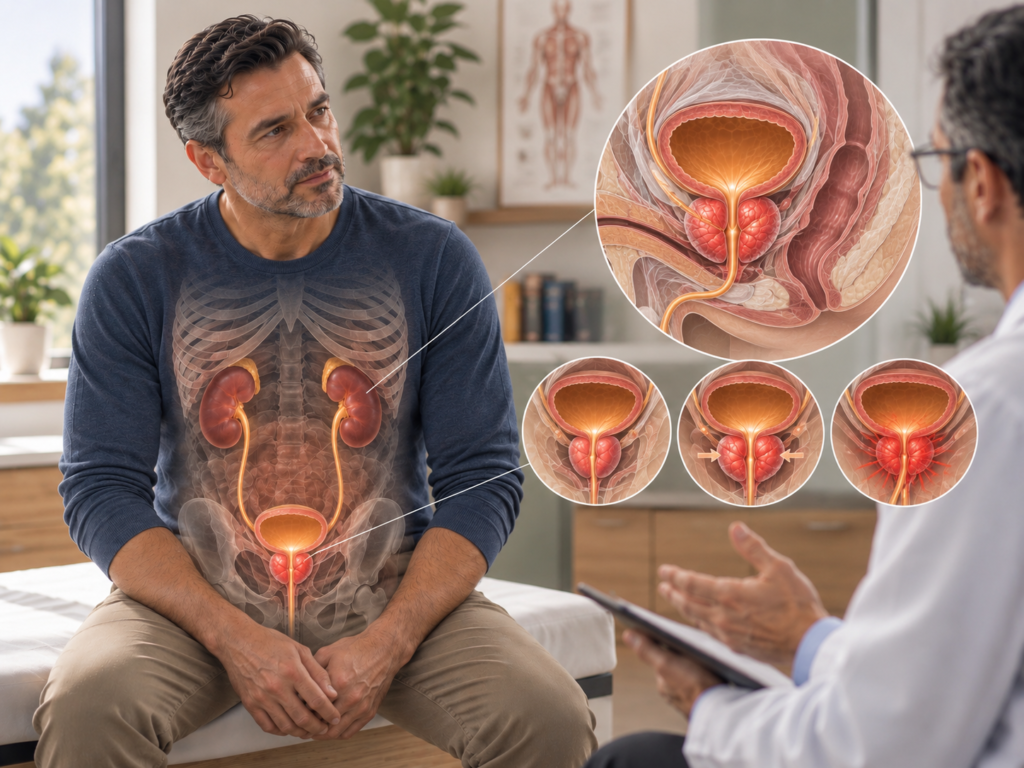
The prostate is a small gland belonging to the male reproductive system.
It is located below the bladder and in front of the rectum, surrounding part of the urethra—the tube that carries urine from the bladder out of the body.
The prostate produces fluid that contributes to semen and supports sperm function.
Its location is especially important because the prostate sits around the urinary passage.
When prostate tissue becomes enlarged or inflamed, it can affect the urethra and interfere with normal urine flow. This is why prostate conditions can produce symptoms such as:
- Weak urine stream
- Difficulty starting urination
- Frequent urination
- Urinary urgency
- Waking at night to urinate
- Dribbling after urination
- Interrupted urine flow
- Feeling that the bladder has not emptied completely
However, these symptoms are not exclusive to prostate disease. Other urinary and bladder conditions can produce similar problems.

Why Prostate Health Becomes More Important With Age
Prostate problems can occur at different ages, but the conditions men experience are not always the same.
Prostatitis can affect men of many ages and is particularly common among younger and middle-aged men. BPH, on the other hand, becomes increasingly common with age and is the most common prostate problem in men over 50.
Prostate cancer is also strongly associated with increasing age.
This does not mean that every older man will develop prostate disease.
It means that understanding your personal prostate health risks becomes increasingly important as you get older.
A man’s family history can also matter. Men with a strong family history of prostate cancer or certain inherited genetic changes may have a higher risk and may need to discuss screening earlier with a healthcare professional. The AUA/SUO recommends offering prostate cancer screening beginning around ages 40–45 for people at increased risk, including those with strong family history, certain germline mutations, or Black ancestry.
For men at average risk, screening decisions are individualized.
The 3 Most Common Prostate Problems
When people search for “prostate problems”, they’re often talking about three major conditions:
- Benign prostatic hyperplasia (BPH)
- Prostatitis
- Prostate cancer
Although their symptoms can overlap, they are very different conditions.
1. Benign Prostatic Hyperplasia (BPH)
Benign prostatic hyperplasia, commonly called BPH or an enlarged prostate, is a noncancerous increase in prostate tissue.
As the prostate enlarges, it can squeeze or narrow the urethra. The bladder may then have to work harder to push urine through the narrowed passage. In some men, this eventually contributes to incomplete bladder emptying or urinary retention.
Common Enlarged Prostate Symptoms
BPH may cause:
- Difficulty starting urination
- Weak urine stream
- Interrupted urine flow
- Dribbling at the end of urination
- Frequent urination
- Urinary urgency
- Waking frequently during the night to urinate
- Difficulty completely emptying the bladder
- Sometimes discomfort during urination
One important fact about BPH symptoms is that prostate size and symptom severity do not always match.
A man with a relatively large prostate may experience only mild symptoms, while another man with less enlargement may have significant difficulty urinating.
Is BPH prostate cancer?
No.
BPH is a benign, noncancerous prostate condition.
Having an enlarged prostate does not mean that you have prostate cancer.
However, because BPH and prostate cancer can sometimes produce similar urinary symptoms, persistent symptoms should be evaluated rather than self-diagnosed.
2. Prostatitis
Prostatitis means inflammation of the prostate.
It is not one single disease. Doctors recognize several forms, including:
- Acute bacterial prostatitis
- Chronic bacterial prostatitis
- Chronic prostatitis/chronic pelvic pain syndrome
- Asymptomatic inflammatory prostatitis
The symptoms can vary significantly depending on the type.
Prostatitis Symptoms
Possible symptoms include:
- Pelvic pain
- Pain between the scrotum and anus
- Lower abdominal pain
- Lower back pain
- Pain in the penis or genital area
- Burning or pain during urination
- Frequent urination
- Urinary urgency
- Weak or interrupted urine stream
- Difficulty starting urination
- Pain during or after ejaculation
Chronic prostatitis/chronic pelvic pain syndrome can produce pain lasting for months, while acute bacterial prostatitis can develop suddenly and cause more severe symptoms.
Acute Prostatitis Can Require Urgent Care
Acute bacterial prostatitis may cause:
- Fever
- Chills
- Body aches
- Nausea or vomiting
- Painful urination
- Urinary urgency
- Difficulty urinating
- Pelvic or lower abdominal pain
A man with these symptoms should seek prompt medical care, particularly if he cannot urinate.
3. Prostate Cancer
Prostate cancer occurs when abnormal cells in the prostate grow uncontrollably.
One of the most important facts about prostate cancer is that early prostate cancer often causes no symptoms.
This is why the absence of symptoms does not necessarily mean that a man has no prostate cancer risk.
As prostate cancer develops, some men may eventually experience urinary symptoms or other changes, but these symptoms can overlap with BPH and other noncancerous conditions.
Possible Prostate Cancer Symptoms
Depending on the disease and its stage, possible symptoms may include:
- Difficulty starting urination
- Weak or interrupted urine flow
- Frequent urination
- Waking at night to urinate
- Blood in urine or semen
- Erectile or sexual difficulties
- Persistent pain in the back, hips or pelvis in more advanced disease
However, these symptoms do not prove that a man has prostate cancer.
A man experiencing a weak urine stream, for example, is much more likely to have several possible explanations that need to be considered—including BPH.
This is why diagnosis requires proper medical evaluation.
10 Signs of Prostate Problems Men Should Know
Understanding the potential signs of prostate problems can help men recognize when to seek medical advice.
1. Frequent Urination
Needing to urinate more often than usual can occur with BPH, prostatitis and other urinary conditions.
Persistent frequency deserves attention, particularly when it affects sleep or daily activities.
2. Frequent Nighttime Urination
Repeatedly waking up to urinate—known as nocturia—is common in men with lower urinary tract symptoms.
BPH can contribute to nocturia, but it is not the only possible cause.
3. Weak Urine Stream
A gradually weakening urine stream is a classic symptom associated with an enlarged prostate.
As prostate tissue enlarges around the urethra, urine may have more difficulty passing through.
4. Difficulty Starting Urination
Having to wait before urine starts flowing is called urinary hesitancy.
It can occur when an enlarged prostate obstructs the urinary outlet, although other urinary conditions can cause it as well.
5. Interrupted Urine Flow
A stream that starts and stops repeatedly can be another sign of lower urinary tract obstruction.
Persistent interrupted flow should be evaluated.
6. Dribbling After Urination
Some men notice urine continuing to leak or drip shortly after they believe they have finished urinating.
This can occur with BPH and other urinary conditions.
7. Feeling Unable to Empty the Bladder
A persistent sensation that urine remains in the bladder after urination can indicate incomplete bladder emptying.
Significant urinary retention can become a serious problem if the bladder cannot empty properly.
8. Urinary Urgency
A sudden and difficult-to-delay need to urinate may occur with prostate or bladder problems.
Prostatitis, for example, can cause urinary urgency alongside frequency and pelvic symptoms.
9. Pain or Burning During Urination
Burning or pain during urination is not a classic symptom of uncomplicated BPH.
It may occur with prostatitis, urinary tract infection or other urinary conditions.
10. Pelvic Pain or Blood in the Urine
Pelvic, lower abdominal, genital or lower back discomfort can occur with prostatitis.
Blood in the urine, meanwhile, can have multiple causes and should be medically evaluated rather than automatically attributed to a prostate problem.
Important: Prostate Symptoms Don’t Always Mean Prostate Disease
This is one of the most important things to understand.
A symptom such as frequent urination can result from several different conditions.
A weak urine stream can occur because of BPH, but other urinary tract problems can produce similar symptoms.
And early prostate cancer may cause no symptoms whatsoever.
Therefore, don’t search for one symptom online and assume you know the diagnosis.
Persistent symptoms deserve proper evaluation.
BPH vs Prostatitis vs Prostate Cancer
Although these three conditions are often confused, they are fundamentally different.
BPH
BPH = noncancerous prostate enlargement
Most commonly associated with urinary symptoms such as weak flow, hesitancy, frequency and nocturia.
Prostatitis
Prostatitis = inflammation of the prostate
More likely to cause pelvic pain, painful urination and, in some cases, fever and chills.
Prostate Cancer
Prostate cancer = abnormal malignant growth of prostate cells
Early disease may cause no symptoms, while later disease can sometimes produce urinary or other symptoms.
The symptoms alone cannot reliably distinguish these conditions. Medical evaluation is necessary when symptoms persist or raise concern.

Does Frequent Urination Mean You Have an Enlarged Prostate?
Not necessarily.
This is an important prostate health question because frequent urination is one of the most searched urinary symptoms among men.
BPH can cause urinary frequency because the enlarged prostate can interfere with bladder emptying. But frequent urination can also occur because of:
- Urinary tract infections
- Prostatitis
- Diabetes
- Bladder conditions
- Certain medications
- High fluid intake
- Other medical conditions
Therefore, if you suddenly begin urinating much more frequently than usual, don’t automatically assume you have an enlarged prostate.
The pattern matters.
For example, frequent nighttime urination + weak urine stream + difficulty starting urination + incomplete bladder emptying may suggest lower urinary tract symptoms associated with BPH.
On the other hand, burning urination + pelvic pain + fever or chills may suggest an infection or acute prostatitis and requires prompt medical assessment.
Can Prostate Problems Affect Sexual Health?
Yes, but the relationship is complex.
Some prostate conditions can affect sexual function directly or indirectly.
Prostatitis, especially chronic prostatitis/chronic pelvic pain syndrome, can cause pain during or after ejaculation and may be associated with sexual dysfunction.
BPH and lower urinary tract symptoms can also negatively affect quality of life and sexual well-being.
Treatment can sometimes influence sexual function as well.
However, erectile dysfunction is not automatically a prostate problem.
Other common causes include:
- Cardiovascular disease
- Diabetes
- High blood pressure
- Obesity
- Smoking
- Certain medications
- Hormonal disorders
- Nerve problems
- Psychological factors
- Relationship or performance-related factors
If erection problems persist, they deserve their own medical evaluation.
Related LifeMate Guide: [Erectile Dysfunction (ED): Causes, Symptoms, Treatment & When to See a Doctor]
And if low testosterone is suspected:
Related LifeMate Guide: [Low Testosterone in Men: Symptoms, Causes, Testing & Treatment]
How Doctors Check Prostate Health
If you have persistent prostate symptoms, your doctor may use several pieces of information to determine what is causing them.
There isn’t one test that can diagnose every prostate condition.
Medical History
Your healthcare professional may ask about:
- Urination frequency
- Nighttime urination
- Urine flow
- Difficulty starting urination
- Urgency
- Leakage
- Pain
- Blood in the urine
- Sexual symptoms
- Previous infections
- Previous prostate problems
- Medications
- Family history of prostate cancer
Your family history is particularly important when assessing prostate cancer risk.
Physical Examination
A physical examination may help identify potential causes of urinary or pelvic symptoms.
In some circumstances, a healthcare professional may perform a digital rectal examination (DRE).
During this examination, the clinician uses a gloved, lubricated finger to feel the prostate through the rectum.
The DRE can provide information about the prostate’s size, texture and possible abnormalities, but it is not a standalone test for prostate cancer.
Urine Testing
Urine tests can help look for:
- Infection
- Blood
- Inflammation
- Other urinary abnormalities
Urine testing can be especially useful when painful urination, fever, chills or pelvic discomfort raises the possibility of prostatitis or another urinary infection.
PSA Blood Test
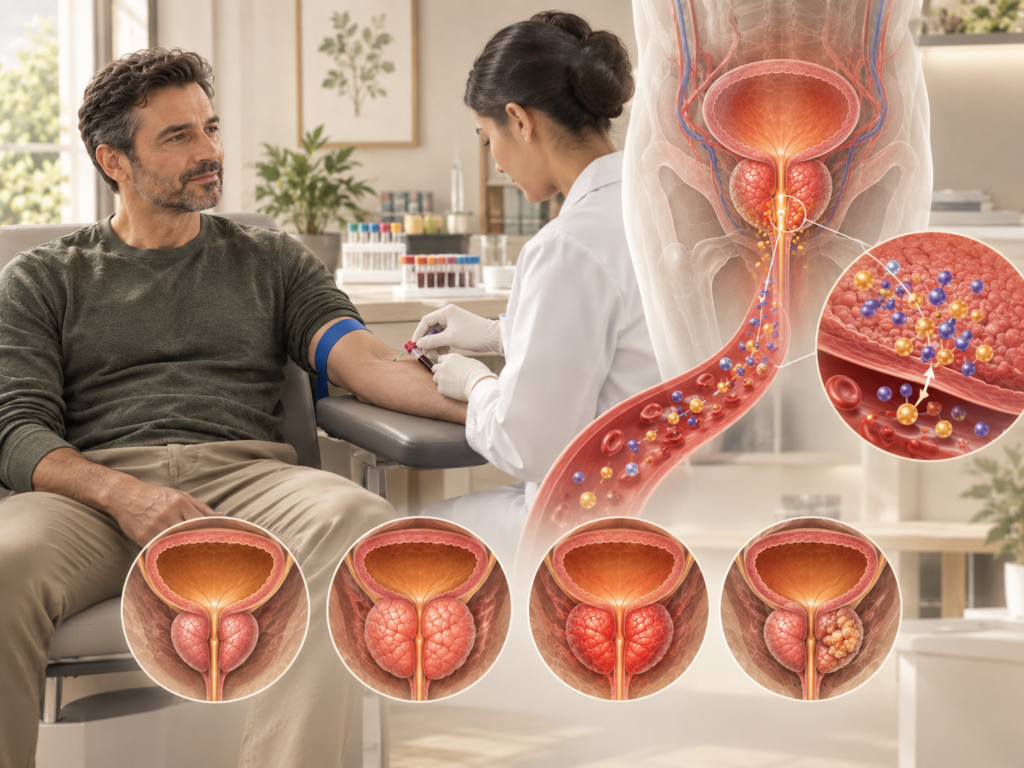
The prostate-specific antigen (PSA) test is a blood test that measures PSA, a protein produced by prostate cells.
PSA can be elevated in prostate cancer, but also in several noncancerous situations, including BPH and prostatitis.
Therefore:
A high PSA does not automatically mean prostate cancer.
This is a crucial point for anyone researching PSA levels or prostate cancer screening.
MRI and Prostate Biopsy
If other findings raise concern, a doctor may recommend additional testing.
This can include imaging such as prostate MRI and, when indicated, a prostate biopsy.
A biopsy allows prostate tissue to be examined under a microscope for cancerous changes.
Not every man with urinary symptoms needs an MRI or biopsy.
The appropriate testing depends on the individual’s symptoms, PSA results, risk factors and clinical findings.
PSA Testing: What Does a High PSA Mean?
A PSA result should never be interpreted in isolation.
An elevated PSA may occur because of:
- Prostate cancer
- BPH
- Prostatitis
- Other prostate inflammation
- Other factors affecting the prostate
This is why doctors consider the overall clinical picture, including previous PSA results and individual risk factors.
The AUA/SUO guideline also notes that a newly elevated PSA can return to a normal level when retested, which is one reason clinicians may confirm an unexpected elevation before moving to additional evaluation.
The key message is:
PSA is a useful tool—not a cancer diagnosis.
A high PSA does not prove cancer, and a PSA test is only one component of prostate cancer risk assessment.
When Should Men Get Their Prostate Checked?
There are two different situations to understand:
You have symptoms
If you develop persistent urinary or prostate-related symptoms, you do not need to wait until a certain age to seek medical advice.
Speak with a healthcare professional if you have:
- Persistent weak urine flow
- Difficulty starting urination
- Frequent urination
- Repeated nighttime urination
- Urinary urgency
- Incomplete bladder emptying
- Painful urination
- Pelvic pain
- Blood in the urine
- Blood in semen
- Persistent sexual changes
NIDDK specifically advises men to seek medical evaluation for symptoms such as weak urine stream, blood in the urine, urinary difficulty, pelvic or genital pain, fever/chills and incomplete bladder emptying.
You have no symptoms
This is where prostate cancer screening becomes a separate conversation.
Screening decisions depend on age and individual risk.
The AUA/SUO recommends that clinicians offer prostate cancer screening beginning around age 40–45 for men at increased risk, including men with strong family history, certain germline mutations and Black ancestry.
For average-risk men, screening should be an informed discussion rather than an automatic test for everyone.
The USPSTF recommends that men aged 55–69 make an individual decision about PSA-based screening after discussing benefits and harms with a clinician, and recommends against routine PSA-based screening in men aged 70 and older.
Because recommendations can differ between organizations and individual risk varies, your doctor can help determine what makes sense for you.
How to Support Long-Term Prostate Health
There is no guaranteed method to prevent every prostate condition.
NIDDK notes that researchers have not established specific dietary or nutritional measures that prevent prostate problems.
However, several habits support overall health and can contribute to healthier aging.
Stay Physically Active
Regular physical activity supports cardiovascular health, metabolic health, mobility and healthy weight management.
These benefits matter because prostate health is part of overall men’s health—not an isolated system.
Maintain a Healthy Weight
Maintaining a healthy weight can support metabolic and cardiovascular health.
Rather than relying on extreme diets, focus on sustainable eating and regular physical activity.
Eat a Balanced Diet
There is no single “best food for prostate health” proven to prevent prostate disease.
Instead, aim for a balanced dietary pattern containing a variety of:
- Vegetables
- Fruits
- Whole grains
- Legumes
- Nuts and seeds
- Fish and other protein sources
- Healthy fats
Be cautious of websites claiming that one food, juice or supplement can “cleanse” or “detox” the prostate.
Don’t Ignore Urinary Changes
One of the most practical prostate health habits is simply paying attention to changes in urination.
If your urine stream becomes consistently weaker, you begin waking repeatedly at night to urinate, or you regularly feel unable to empty your bladder, talk to a healthcare professional.
Early evaluation can identify the cause and help prevent symptoms from unnecessarily affecting your sleep and quality of life.
Be Skeptical About Prostate Supplements
Products marketed for prostate health, urinary flow or prostate cleansing are widely available.
But marketing claims are not the same as medical evidence.
A supplement should never replace evaluation for:
- Blood in the urine
- Significant urinary obstruction
- Persistent pelvic pain
- Fever and urinary symptoms
- Suspected prostate cancer
- Persistent urinary changes

When Prostate Symptoms Need Urgent Medical Attention
Most prostate symptoms are not emergencies, but some situations require immediate medical attention.
Seek urgent medical care if you:
Cannot Urinate
Complete inability to urinate can indicate acute urinary retention and requires prompt treatment.
Have Fever and Chills With Urinary Symptoms
Painful or frequent urination combined with fever and chills can occur with acute bacterial prostatitis or another significant infection.
Have Blood in Your Urine
Blood in the urine can have multiple causes and should be medically evaluated.
Have Severe Lower Abdominal or Urinary Pain
Severe pain combined with urinary problems should not be ignored.
Don’t attempt to determine the cause yourself through an online symptom search.
Frequently Asked Questions About Prostate Health
Early symptoms can include frequent urination, nighttime urination, weak urine flow, difficulty starting urination, urinary urgency, dribbling or incomplete bladder emptying. Pelvic pain or painful urination can occur with prostatitis. However, early prostate cancer often causes no symptoms.
Common enlarged prostate symptoms include weak or interrupted urine flow, difficulty starting urination, frequent urination, nighttime urination, urinary urgency, dribbling and difficulty completely emptying the bladder.
No. Frequent urination can occur with BPH, prostatitis, urinary infections, bladder conditions, diabetes and other causes. Persistent or bothersome urinary frequency should be evaluated.
BPH is a noncancerous enlargement of the prostate. Prostate cancer involves abnormal malignant growth of prostate cells. They can cause overlapping urinary symptoms, but they are different conditions.
A high PSA can occur with prostate cancer, but also with BPH, prostatitis and other prostate-related conditions. A high PSA result does not automatically mean cancer.
Some prostate conditions and their treatments can affect sexual function. However, erectile dysfunction has many possible causes and should not automatically be attributed to the prostate.
Men with persistent urinary or prostate symptoms should speak with a healthcare professional regardless of age. For men without symptoms, prostate cancer screening should be based on age, individual risk and a discussion of potential benefits and harms. Higher-risk men may need to begin screening discussions earlier.
Focus on overall healthy aging: stay physically active, maintain a healthy weight, eat a balanced diet, avoid smoking, moderate alcohol consumption, manage chronic health conditions and don’t ignore persistent urinary changes.
Conclusion
Your prostate may be small, but understanding prostate health can make a meaningful difference to men’s health as you age.
The three major prostate conditions—BPH, prostatitis and prostate cancer—are different, even though some of their symptoms overlap.
An enlarged prostate can cause weak urine flow, difficulty starting urination, frequent urination and nighttime urination. Prostatitis can cause pelvic discomfort, painful urination and, in bacterial cases, fever and chills. Prostate cancer, meanwhile, can develop without noticeable symptoms in its early stages.
That is why a urinary symptom should not automatically be labeled as “just an enlarged prostate.”
Likewise, an elevated PSA test does not automatically mean prostate cancer.
The best approach is to understand your symptoms, know your individual risk factors, discuss appropriate screening with your healthcare professional and seek evaluation when something changes.
Taking care of your overall health, staying active, eating a balanced diet and paying attention to urinary changes are sensible parts of long-term men’s health.
Most importantly, don’t ignore persistent or concerning prostate symptoms simply because they seem like a normal part of getting older.
Medical Disclaimer
This article is intended for general educational and informational purposes only. It does not replace professional medical advice, diagnosis or treatment.
Prostate symptoms can have many possible causes, and information in this article cannot determine which condition you may have. Do not use this article to self-diagnose BPH, prostatitis, prostate cancer or another medical condition.
If you experience persistent urinary symptoms, pelvic pain, painful urination, blood in the urine, difficulty urinating or other concerning changes, speak with a qualified healthcare professional.
If you cannot urinate at all, or have significant urinary symptoms accompanied by fever and chills, seek urgent medical care.
Prostate cancer screening recommendations can vary depending on age, risk factors, health status and clinical guidelines. Discuss PSA testing and prostate screening with your healthcare professional to determine what is appropriate for you.
Sources & References
1. National Institute of Diabetes and Digestive and Kidney Diseases (NIDDK)
Prostate Problems — overview of BPH, prostatitis, prostate cancer, symptoms, diagnosis, treatment and prevention.
2. National Institute of Diabetes and Digestive and Kidney Diseases (NIDDK)
Prostatitis: Inflammation of the Prostate — types, symptoms, complications, diagnosis and treatment.
3. National Institute of Diabetes and Digestive and Kidney Diseases (NIDDK)
Enlarged Prostate (Benign Prostatic Hyperplasia) — BPH symptoms, urinary obstruction and complications.
4. National Cancer Institute (NCI)
Prostate-Specific Antigen (PSA) Test — PSA testing, elevated PSA and prostate cancer screening.
5. American Urological Association / Society of Urologic Oncology (AUA/SUO)
Early Detection of Prostate Cancer Guideline — risk-based screening and PSA evaluation.
6. U.S. Preventive Services Task Force (USPSTF)
Prostate Cancer: Screening — benefits, risks and individualized PSA screening decisions.