
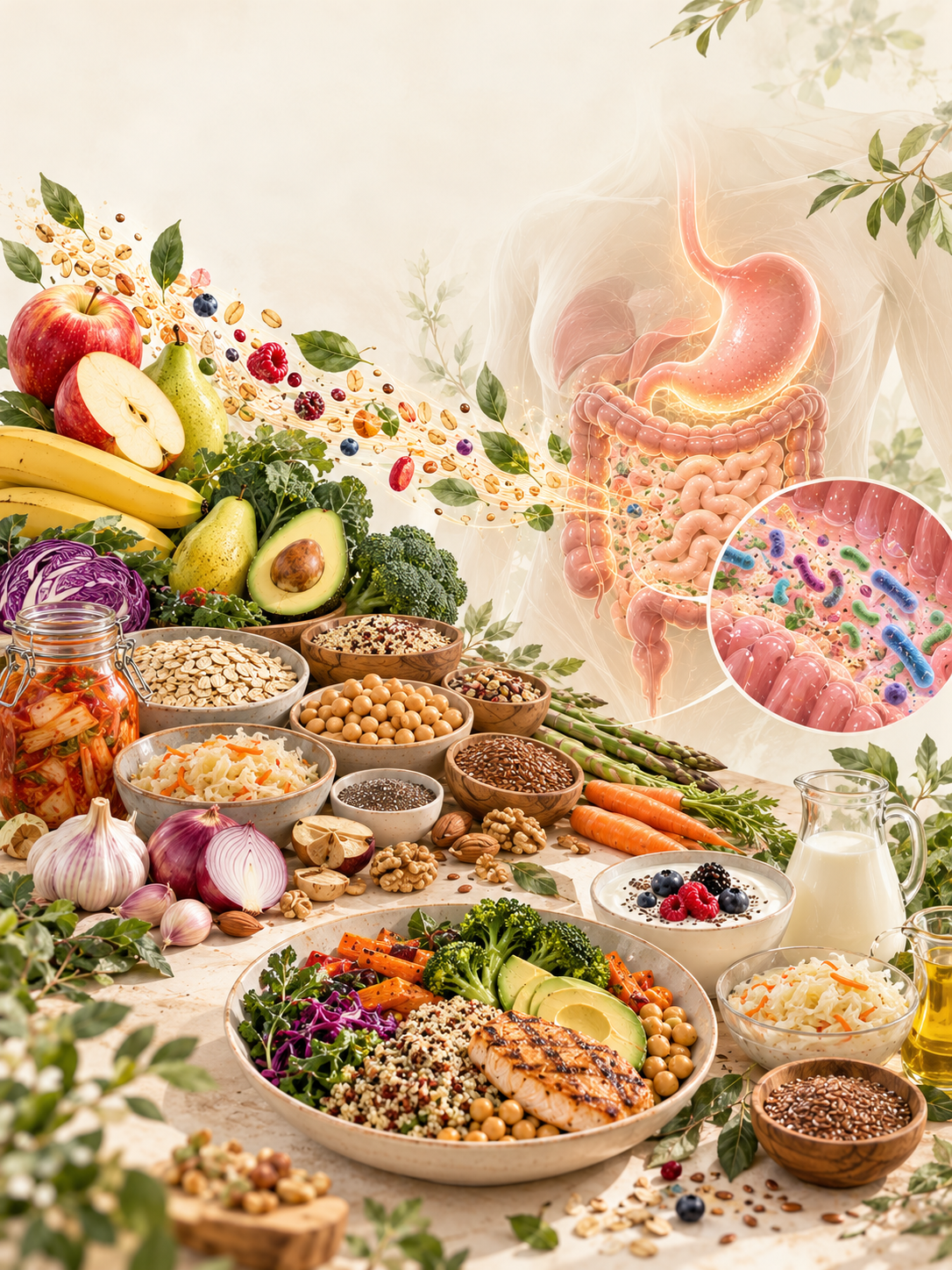
Your digestive system does much more than break down food.
Inside your gastrointestinal tract lives a complex community of microorganisms known as the gut microbiome. The foods you regularly eat can influence the environment in which these microorganisms live and the substances they produce. A varied diet rich in plant foods, fiber and appropriate fermented foods is one practical way to support overall digestive health. Harvard Health
But gut health has become surrounded by exaggerated claims.
You may have seen foods advertised as “gut-healing,” “detoxifying,” or capable of completely “resetting” your microbiome. The science is more nuanced than that.
There is no single magical food that guarantees a healthy gut.
Instead, the most useful approach is to build a diverse eating pattern that regularly includes fiber-rich plants, legumes, whole grains, nuts, seeds, fruits and vegetables, along with suitable fermented foods. Harvard Health
In this LifeMate guide, you’ll discover 30 of the best foods for gut health, including prebiotic foods, fiber-rich foods and fermented foods. We’ll also explain probiotics, prebiotics, the gut microbiome, how to build a gut-friendly meal, and what to know if you experience digestive symptoms.
What Is Gut Health?
“Gut health” is a broad term describing the condition and functioning of the gastrointestinal tract and the microorganisms that live within it.
Your gut microbiome contains a vast community of microorganisms, particularly in the large intestine. These microbes interact with the food you eat and contribute to processes involved in digestion and other aspects of health. Harvard Health
Gut health is therefore not simply about whether you feel bloated after a meal.
A healthy digestive system should be considered in the context of:
- Regular bowel function
- Digestion and nutrient absorption
- The intestinal environment
- The gut microbiome
- Your overall dietary pattern
- Individual tolerance to foods
And importantly, everyone’s digestive system is different.
A food that feels comfortable for one person may cause bloating or discomfort in another.
How Does Food Affect the Gut?
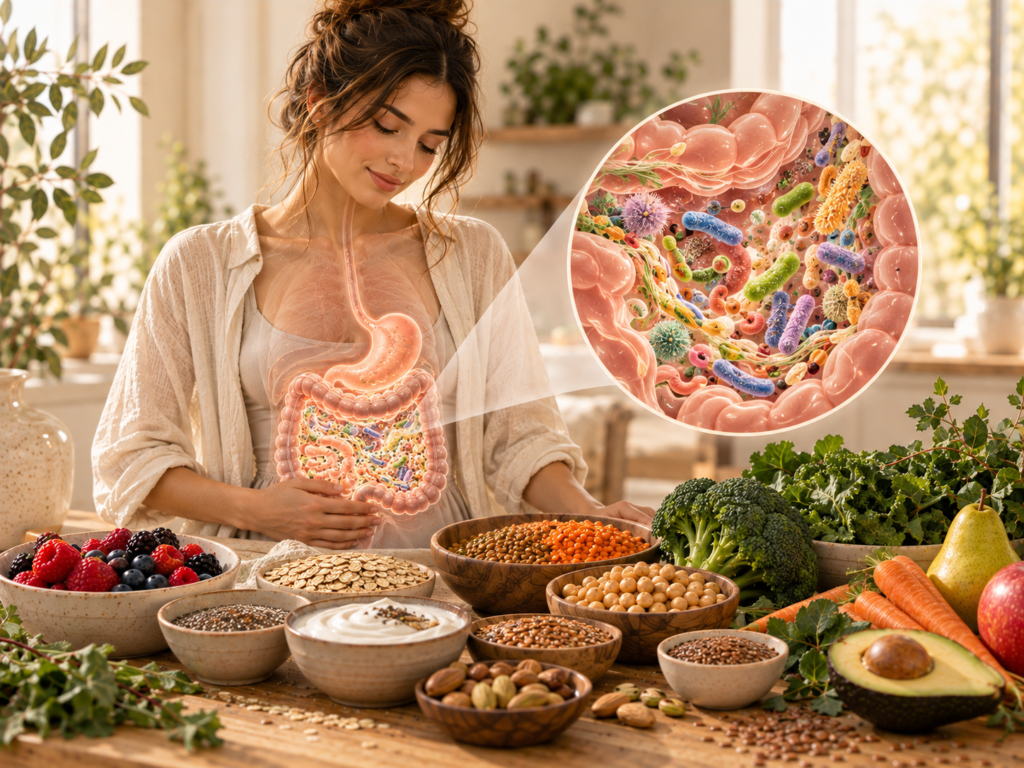
Your diet provides both nutrients for your body and substrates that can interact with microorganisms in your digestive tract.
In particular, many plant foods contain dietary fiber. Some fibers can be fermented by gut microorganisms, producing compounds such as short-chain fatty acids. A varied intake of fruits, vegetables, legumes, whole grains, nuts and seeds can therefore support a diverse dietary pattern for the microbiome. Harvard Health
This is one reason we shouldn’t think about gut health as simply taking a probiotic supplement.
The overall pattern matters.
Probiotics vs. Prebiotics: What’s the Difference?
These two words sound similar but mean different things.
What Are Probiotics?
Probiotics are live microorganisms that, when consumed in adequate amounts, provide a health benefit.
Certain fermented foods can contain live microorganisms, although not every fermented food automatically qualifies as a probiotic food.
Yogurt with live cultures is a familiar example. Other fermented foods may include kefir, kimchi and certain traditionally fermented vegetables. Whether a particular packaged product contains live microorganisms depends on how it was produced and processed. Harvard Health
What Are Prebiotics?
Prebiotics are substances, often certain types of dietary fiber and related compounds, that are utilized by microorganisms and can support beneficial changes in the gut environment. Harvard Health
Examples of foods containing prebiotic compounds include:
- Garlic
- Onions
- Asparagus
- Bananas
- Whole grains
- Beans
- Some vegetables
The two concepts work differently, which is why a varied diet can include both fiber-rich/prebiotic foods and appropriate fermented foods.
30 Best Foods for Gut Health
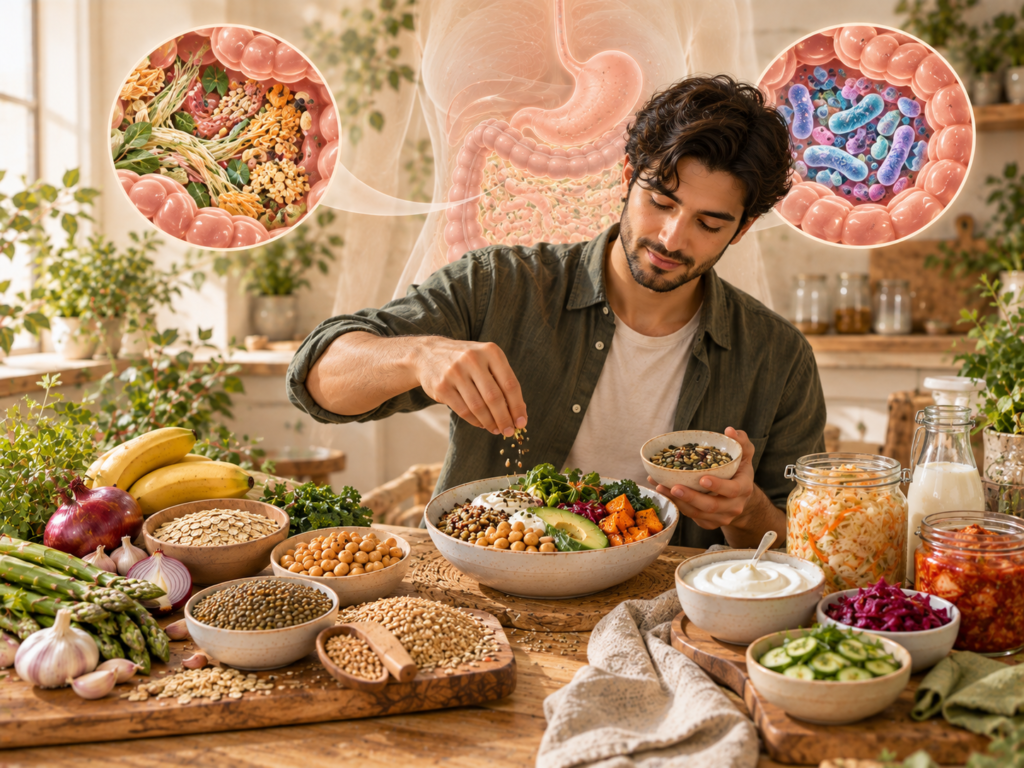
There is no single “best” gut-health food.
The strongest approach is variety.
Here are 30 useful foods to include in a diverse diet.
1. Plain Yogurt With Live Cultures
Plain yogurt can provide protein, calcium and, depending on the product, live microorganisms.
When choosing yogurt for gut health, check the label for live and active cultures and consider products without excessive added sugar. Harvard Health
Try it with:
- Berries
- Oats
- Chia seeds
- Ground flaxseed
- Nuts
2. Kefir
Kefir is a fermented milk drink with a tart flavor.
It can be used as a drink or added to smoothies and breakfast bowls.
If you’re sensitive to dairy, choose a suitable lactose-free product if available, or discuss alternatives with a healthcare professional.
3. Sauerkraut
Sauerkraut is fermented cabbage.
Some traditionally fermented versions can contain live microorganisms, but processing methods differ between products.
If you’re specifically looking for live cultures, check the product information rather than assuming every jar contains them.
4. Kimchi
Kimchi is a Korean fermented vegetable dish, often made with cabbage and seasonings.
It can provide vegetables and, when traditionally fermented and not heat-treated, live microorganisms.
Because some varieties are high in sodium and spice, portion size and individual tolerance matter.
5. Naturally Fermented Pickles
Fermented cucumbers can provide live microorganisms when they are naturally fermented rather than simply preserved in vinegar.
Check the product label or preparation method when this distinction matters.

6. Oats
Oats are a practical source of dietary fiber and can contribute to a gut-friendly eating pattern.
Try combining them with:
- Berries
- Banana
- Chia seeds
- Ground flaxseed
- Plain yogurt
- Nuts
This turns a simple bowl of oats into a more diverse meal.
7. Barley
Barley is a whole grain that contains fiber.
It can be added to:
- Soups
- Stews
- Grain bowls
- Salads
- Savory dishes
Its fiber content makes it another useful alternative to relying exclusively on refined grains.
8. Lentils
Lentils provide fiber and plant-based protein.
They’re particularly versatile in South Asian and Middle Eastern cuisines.
Use them in:
- Daal
- Soups
- Curries
- Salads
- Grain bowls
They also connect naturally to LifeMate’s existing high-fiber foods article.
9. Chickpeas
Chickpeas are another fiber-rich legume that can support a varied dietary pattern.
Try:
- Chana
- Hummus
- Chickpea salads
- Curries
- Roasted chickpeas
- Grain bowls
10. Black Beans
Black beans provide fiber and plant protein.
They work well in:
- Bean bowls
- Soups
- Salads
- Wraps
- Rice dishes
11. Kidney Beans
Kidney beans can be used in soups, curries, salads and bean-based meals.
If using canned beans, rinsing them can reduce some of the sodium from the canning liquid.
12. Green Peas
Green peas provide fiber and can be incorporated into familiar meals without much effort.
Add them to:
- Rice
- Soups
- Pasta
- Curries
- Omelets
- Vegetable dishes

13. Apples With the Skin
Apples provide fiber, particularly when eaten with the skin.
Wash the apple thoroughly and eat it whole rather than automatically peeling it.
14. Pears
Pears are another fruit that can contribute fiber.
Enjoy them:
- Whole
- Sliced into yogurt
- Added to oatmeal
- Combined with nuts
- Included in salads
15. Raspberries
Raspberries are a fiber-rich berry that can add variety to breakfast and snacks.
Try them with plain yogurt, oats or chia pudding.
16. Blackberries
Blackberries provide fiber and can be used similarly to raspberries.
Frozen berries can be a practical alternative when fresh berries aren’t available.
17. Bananas
Bananas are convenient, portable and contain fiber.
They can also provide prebiotic compounds, particularly depending on their ripeness. Harvard Health
Try bananas with:
- Oatmeal
- Plain yogurt
- Nut butter
- Chia seeds
18. Avocado
Avocado contributes fiber alongside unsaturated fats.
Use it in:
- Whole-grain toast
- Grain bowls
- Salads
- Wraps
- Vegetable dishes
19. Garlic
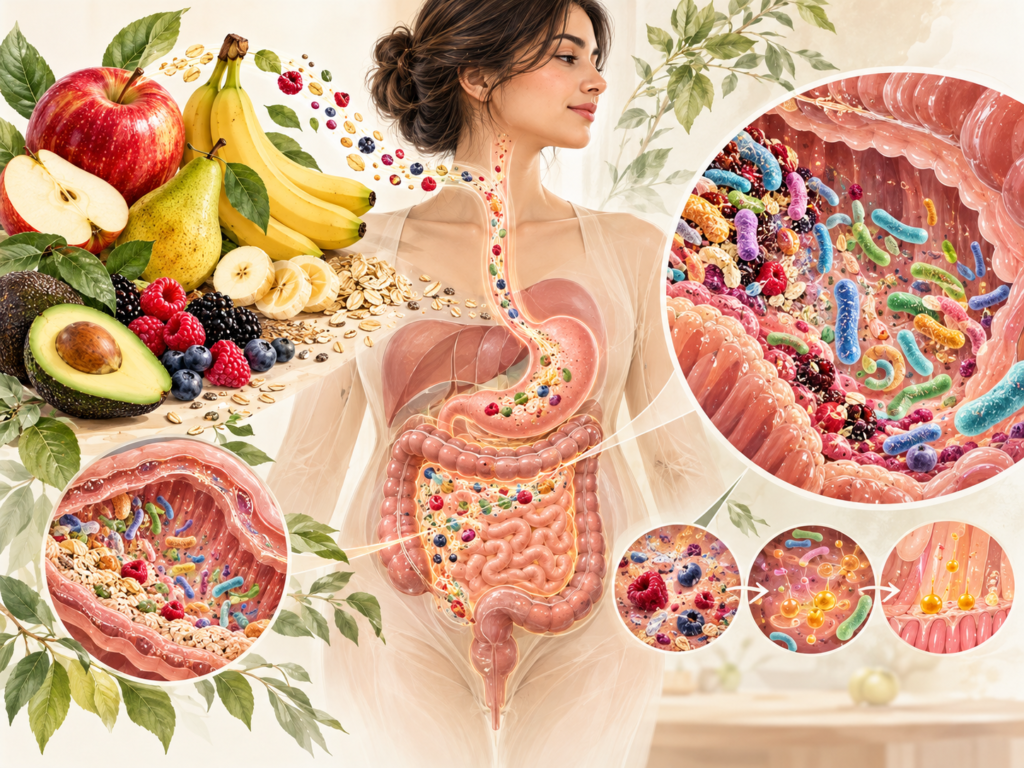
Garlic contains prebiotic compounds and can add flavor without requiring large amounts of processed sauces.
Use it in:
- Lentils
- Vegetable dishes
- Soups
- Whole-grain meals
- Homemade sauces
20. Onions
Onions are another practical source of prebiotic compounds.
They can be incorporated into:
- Soups
- Curries
- Stir-fries
- Salads
- Omelets
- Grain dishes
21. Asparagus
Asparagus provides fiber and prebiotic compounds.
Roast it, steam it or add it to grain-based meals.
22. Broccoli
Broccoli provides fiber and a range of other nutrients.
Try:
- Roasted broccoli
- Steamed broccoli
- Stir-fried broccoli
- Broccoli soups
- Vegetable grain bowls
23. Carrots
Carrots provide fiber and are easy to add to meals.
They can be:
- Raw
- Roasted
- Steamed
- Added to soups
- Served with hummus
24. Sweet Potatoes
Sweet potatoes provide fiber and can be used as a nutrient-rich carbohydrate source.
For additional fiber, the skin can be eaten when appropriately cleaned and prepared.
25. Almonds
Almonds provide fiber, unsaturated fats and protein.
Because nuts are energy-dense, a moderate portion is usually more practical than eating them in unlimited quantities.
26. Walnuts
Walnuts can contribute fiber and unsaturated fats.
Add them to:
- Oatmeal
- Yogurt
- Salads
- Grain bowls
- Snacks
27. Chia Seeds
Chia seeds provide substantial fiber in a relatively small serving.
Because they absorb liquid, they can be incorporated into:
- Chia pudding
- Oatmeal
- Yogurt
- Smoothies
Increase concentrated fiber sources gradually if your current diet is low in fiber.
28. Ground Flaxseed
Ground flaxseed is another convenient way to add fiber.
Mix it into:
- Oats
- Yogurt
- Smoothies
- Homemade breads
- Breakfast bowls
29. Quinoa
Quinoa can contribute fiber while serving as a versatile base for meals.
Combine it with:
- Vegetables
- Beans
- Lentils
- Herbs
- Lean protein
30. Whole-Grain Bread
Whole-grain bread can provide more fiber than refined white bread.
Look at the nutrition label because products marketed as “wheat” aren’t necessarily equivalent to products made primarily from whole grains.
The Most Important Gut-Health Food Isn’t One Food
It’s variety.
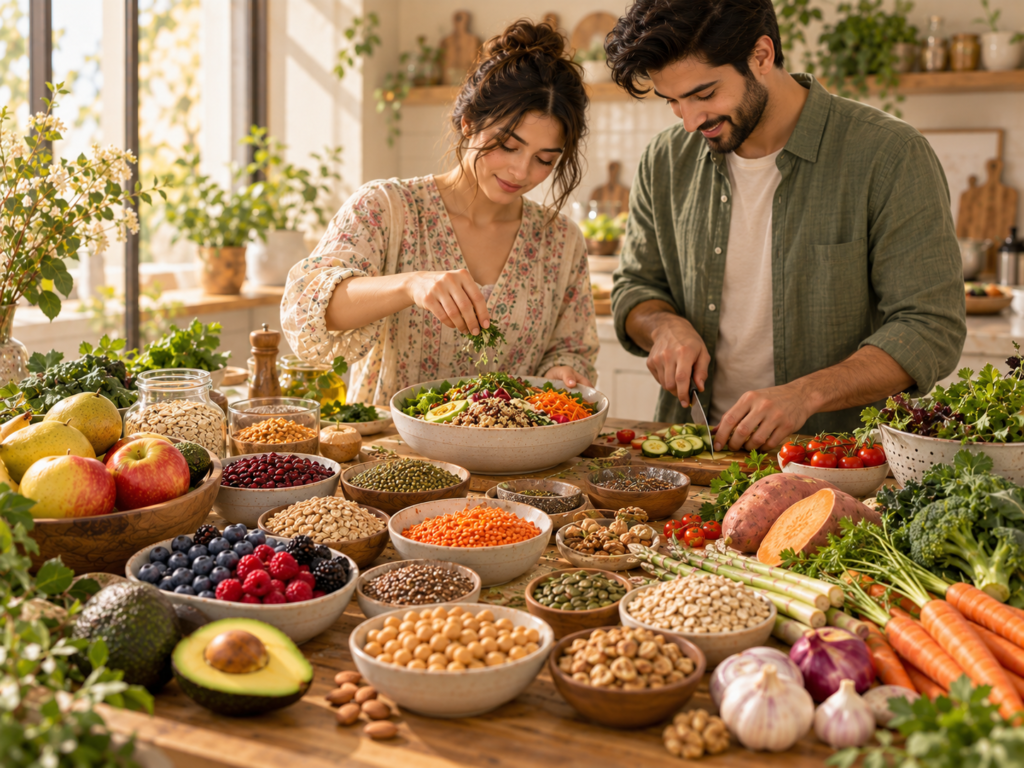
A diet containing only yogurt isn’t necessarily better for your gut than a diet containing yogurt plus vegetables, legumes, whole grains, nuts, seeds and fruits.
Different plant foods provide different types of fiber and other compounds.
Harvard Health’s current guidance emphasizes increasing the variety of plant foods—particularly fruits, vegetables, beans, whole grains, nuts and seeds—as part of supporting the gut microbiome. Harvard Health
This means your goal shouldn’t be:
“What is the one best food for gut health?”
A better question is:
“How can I eat a wider variety of nutritious plant foods throughout the week?”
How to Build a Gut-Friendly Meal
You don’t need a special “gut health diet.”
Instead, build balanced meals around several food groups.
A simple formula:
Fiber-rich carbohydrate + plant food + protein + healthy fat
For example:
Breakfast
Oats + berries + chia + plain yogurt
Lunch
Lentils + brown rice + vegetables + yogurt
Snack
Apple + almonds
Dinner
Chickpeas + roasted vegetables + whole grain + avocado
This approach naturally brings several different types of food into your diet.
And it connects directly with LifeMate’s existing articles on balanced eating, high-protein foods and high-fiber foods.
How to Improve Gut Health Naturally
There isn’t a single “gut reset.”
Instead, focus on sustainable habits.
1. Eat More Fiber-Rich Foods
Whole grains, legumes, vegetables, fruits, nuts and seeds are important sources of dietary fiber. NIDDK
2. Increase Fiber Gradually
If your current diet is low in fiber, suddenly eating very large amounts may cause gas and bloating.
Increase gradually and allow your digestive system time to adapt. NIDDK
3. Drink Enough Fluids
Adequate fluids are particularly important when increasing fiber intake because fluids help fiber work properly and can help keep stool softer. NIDDK
4. Eat a Variety of Plant Foods
Instead of eating the same vegetable every day, rotate fruits, vegetables, legumes, whole grains, nuts and seeds.
5. Include Suitable Fermented Foods
Yogurt with live cultures and certain traditionally fermented foods can provide live microorganisms. Harvard Health
6. Limit an Overreliance on Highly Processed Foods
A dietary pattern heavily dominated by ultra-processed foods can crowd out the fiber-rich plant foods that support a diverse diet.
This doesn’t mean you must never eat processed food.
The goal is the overall pattern, not perfection.
Can Gut Health Improve Digestion?
A diet rich in fiber and varied plant foods can support regular bowel function and digestive health.
Fiber adds bulk to stool, and adequate fluid intake helps fiber work effectively. NIDDK recommends gradually increasing fiber and getting enough liquids, particularly when addressing constipation. NIDDK
However, digestive symptoms are not always caused by diet.
Persistent:
- Abdominal pain
- Diarrhea
- Constipation
- Rectal bleeding
- Vomiting
- Unexplained weight loss
- Significant changes in bowel habits
should not simply be attributed to an “unhealthy gut.”
These symptoms deserve appropriate medical evaluation.
What About Probiotic Supplements?
Probiotic supplements are heavily marketed, but more probiotics are not automatically better.
Different probiotic organisms and strains may have different effects, and evidence can vary depending on the condition being studied.
Harvard Health notes that there is no universal recommended daily intake for probiotics and that supplements are not equivalent to simply eating fermented foods. Harvard Health
For everyday nutrition, it is generally more useful to first focus on:
- Fiber-rich plant foods
- Dietary variety
- Adequate fluids
- Appropriate fermented foods
- Overall balanced eating
If you’re considering a probiotic supplement for a specific medical problem, discuss it with a qualified healthcare professional.
Are Fermented Foods Always Probiotic?
No.
This is an important distinction.
Fermentation and probiotics are related concepts, but they aren’t interchangeable.
Some fermented foods contain live microorganisms at the time they’re eaten. Others may be heated, pasteurized or processed in ways that reduce or eliminate live microorganisms.
That means you shouldn’t assume:
“Fermented = probiotic.”
Instead, check how the product was made and whether it specifically indicates live cultures.
This distinction is supported by the International Scientific Association for Probiotics and Prebiotics’ consensus work on fermented foods and by current Harvard Health guidance. PubMed Central (PMC)
Can Gut Health Help With Weight Management?
Gut health and body weight are scientifically connected areas of research, but it would be misleading to say that eating specific “gut-health foods” automatically causes weight loss.
A more reliable approach is to build meals around:
- Fiber-rich foods
- Adequate protein
- Vegetables and fruit
- Whole grains
- Appropriate portions
- Healthy fats
Fiber-rich foods may help with fullness, while protein also contributes to satiety.
For someone working on weight management, LifeMate’s existing 30 High-Protein Foods and 25 High-Fiber Foods articles can provide more detailed guidance.
Foods That May Not Work for Everyone
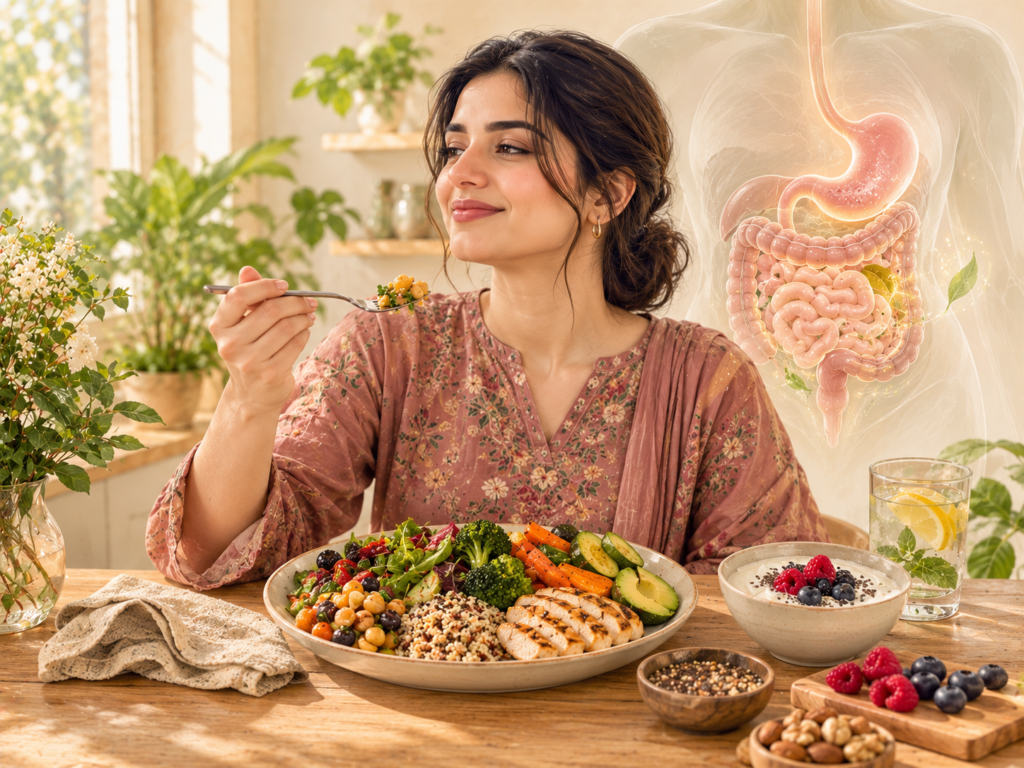
A food can be nutritious and still cause symptoms in a particular person.
For example, some people experience digestive discomfort after consuming:
- Large amounts of legumes
- Certain high-fiber foods
- Large quantities of dairy
- Spicy foods
- Carbonated drinks
- Sugar alcohols
- Certain fermentable carbohydrates
This does not mean these foods are universally unhealthy.
Individual tolerance matters.
If you repeatedly notice symptoms after eating particular foods, keep a simple food-and-symptom record and discuss persistent symptoms with a healthcare professional rather than unnecessarily eliminating large numbers of foods.
8 Frequently Asked Questions About Gut Health Foods
Some of the most useful foods include fiber-rich fruits and vegetables, beans, lentils, chickpeas, whole grains, nuts, seeds and appropriate fermented foods such as yogurt with live cultures. The most important principle is dietary variety rather than relying on one “superfood.”
Fiber-rich plant foods such as legumes, whole grains, vegetables, fruits, nuts and seeds provide substrates that can be used by gut microorganisms. Foods containing appropriate live cultures, such as some yogurts and fermented foods, can also provide microorganisms.
Plain yogurt containing live cultures is one of the most familiar probiotic-containing foods. Other fermented foods, including kefir, kimchi and some traditionally fermented vegetables, may contain live microorganisms. Always check how a product was processed rather than assuming every fermented food contains live cultures.
Prebiotic compounds are found in a variety of plant foods. Examples include garlic, onions, asparagus, bananas, legumes and whole grains. Prebiotics can provide fuel for certain beneficial gut microorganisms.
A varied diet containing adequate fiber from fruits, vegetables, legumes, whole grains, nuts and seeds can support normal digestive function. If you’re increasing fiber, do so gradually and drink enough fluids.
Focus on dietary variety, regular fiber-rich foods, appropriate fermented foods, adequate fluid intake and an overall balanced eating pattern. Avoid thinking of gut health as something that can be permanently “reset” by one food, drink or supplement.
There is no universal recommended daily amount of probiotics for healthy people. Including suitable fermented foods as part of a varied diet can be reasonable for many people, but the appropriate amount depends on the individual food and your tolerance.
There is no universal list of foods that everyone must avoid. Some people may experience symptoms from particular foods or ingredients. Instead of unnecessarily eliminating nutritious foods, identify personal triggers and seek medical advice if digestive symptoms are persistent, severe or unexplained.
A Simple One-Day Gut-Friendly Meal Plan
This is an example of how the principles can come together.
Breakfast
Oat bowl
- Oats
- Plain yogurt with live cultures
- Berries
- Banana
- Chia seeds
Lunch
Lentil bowl
- Lentils
- Brown rice or another whole grain
- Broccoli
- Carrots
- Avocado
- Plain yogurt or another suitable side
Snack
Apple + almonds
Dinner
Chickpea and vegetable meal
- Chickpeas
- Roasted vegetables
- Whole-grain bread or quinoa
- Naturally fermented vegetables in a moderate portion, if tolerated
Important
This is an example, not a prescribed diet.
Portions should be individualized according to age, energy needs, activity level, dietary preferences and health conditions.
The Bottom Line
A healthy gut isn’t built by one expensive supplement, one “detox” drink or one miracle food.
It’s built through consistent dietary patterns.
Eat a variety of fruits and vegetables. Include beans and lentils. Choose whole grains regularly. Add nuts and seeds. Include suitable fermented foods such as yogurt with live cultures if you tolerate them. Increase fiber gradually and stay adequately hydrated.
Most importantly, think about variety rather than perfection.
The more diverse your diet is within the foods you tolerate and enjoy, the more opportunities you give your body—and the microorganisms living in your gut—to interact with different nutrients and fibers. Harvard Health
And if you have ongoing digestive symptoms, don’t assume that you simply have a “bad gut.” Persistent or concerning symptoms deserve proper medical evaluation.
Medical Disclaimer
LifeMate provides general health and nutrition information for educational purposes only. This article is not medical advice and is not intended to diagnose, treat, cure or prevent any disease or medical condition.
Individual digestive responses vary. People with diagnosed gastrointestinal conditions, food allergies or intolerances, significant dietary restrictions, immune-system problems, recent gastrointestinal surgery, or persistent digestive symptoms should speak with an appropriate healthcare professional before making major dietary changes.
Seek medical attention for concerning symptoms such as persistent or severe abdominal pain, gastrointestinal bleeding, unexplained weight loss, persistent vomiting, severe or ongoing diarrhea or constipation, difficulty swallowing, or significant changes in bowel habits.
Sources & References
- Harvard Health Publishing — How to Feed Your Gut: overview of gut microbiota, probiotic foods, prebiotic foods and practical dietary approaches. Harvard Health
- Harvard Health Publishing — Prebiotics: Understanding Their Role in Gut Health: definitions, food sources and current understanding of prebiotic compounds. Harvard Health
- Harvard Health Publishing — Food Is Medicine: dietary diversity, plant foods, fiber and gut microbiome considerations. Harvard Health
- NIDDK — Eating, Diet, & Nutrition for Constipation: dietary fiber, gradual increases in fiber and adequate fluids. NIDDK
- NIDDK — Treatment for Constipation: dietary and lifestyle approaches to constipation. NIDDK
- International Scientific Association for Probiotics and Prebiotics — Consensus Statement on Fermented Foods: distinction between fermented foods and probiotics and current scientific understanding. PubMed Central (PMC)
- Harvard Health Publishing — Fermented Foods: Should They Be Part of Your Diet?: current information on fermentation and fermented foods. Harvard Health
- Harvard Health Publishing — How and Why to Fit More Fiber and Fermented Food Into Your Meals: practical guidance on fiber and fermented foods. Harvard Health