
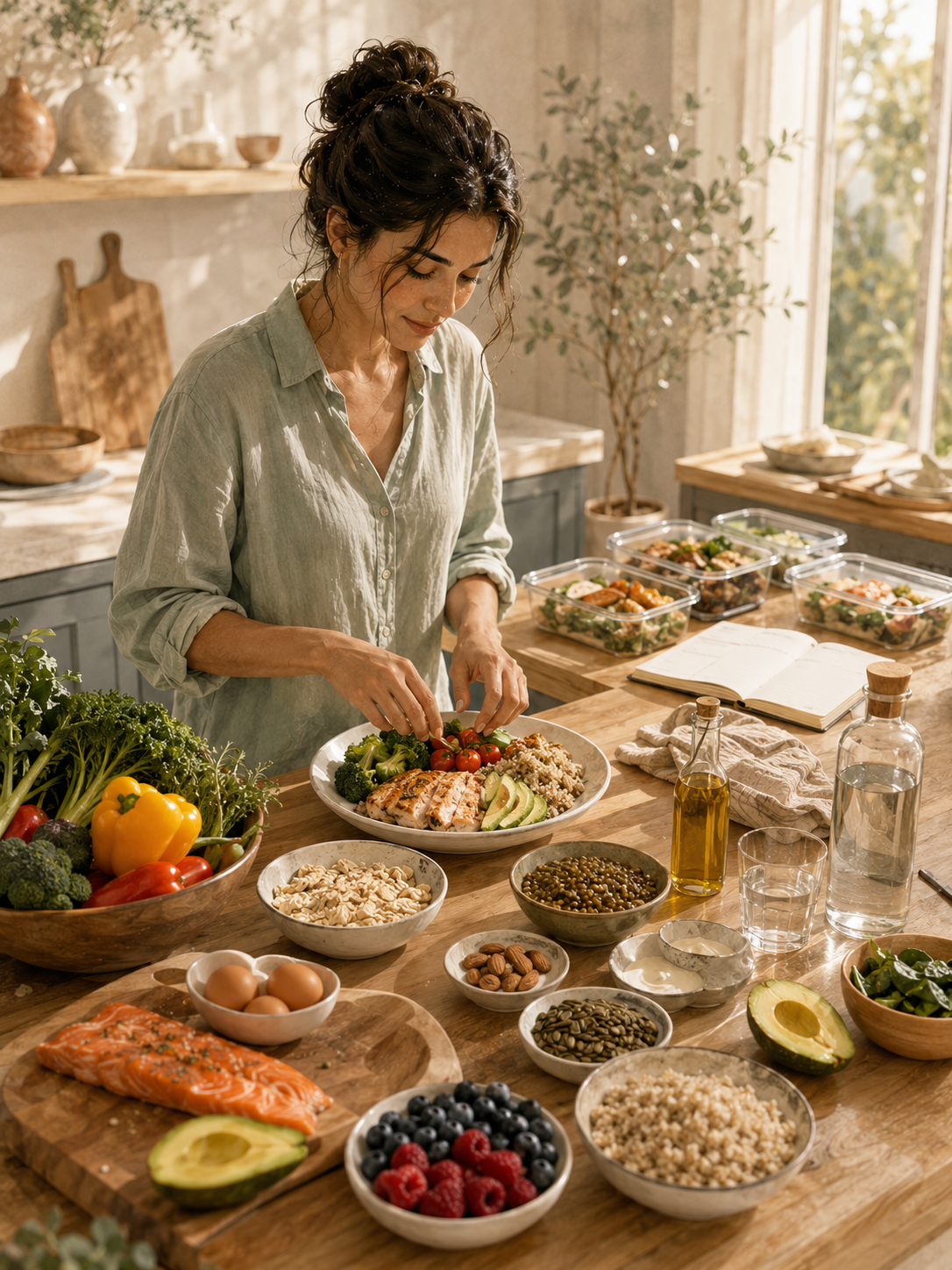
If you have polycystic ovary syndrome (PCOS), you’ve probably come across dozens of different claims about what you should and shouldn’t eat.
One person says you need to completely eliminate carbohydrates.
Another recommends a strict keto diet.
Someone else says dairy is the problem.
You may also see advice telling you to avoid gluten, sugar, fruit, or entire food groups.
The reality is much less extreme.
There is no single PCOS diet that has been proven to work best for everyone. Current international PCOS guidance recommends healthy eating that is sustainable, nutritionally balanced, and adapted to individual preferences and goals rather than prescribing one specific diet composition for everyone.
For someone living with PCOS, the goal isn’t to find a “perfect” food list.
It’s to build an eating pattern that supports:
- Overall health
- Metabolic health
- Stable and sustainable energy
- Adequate nutrition
- Heart health
- Healthy blood glucose regulation
- Weight management when appropriate
- Long-term adherence
And importantly, you don’t have to lose weight to benefit from healthy lifestyle changes. The international guideline specifically recognizes benefits of healthy lifestyle behaviors even when weight loss does not occur.
In this guide, we’ll explain exactly what the evidence says about a PCOS diet, including which foods can form the foundation of your meals, which foods you may want to limit, whether carbohydrates are actually bad for PCOS, and how to build a simple 7-day meal plan.
Important: This is general educational information, not a personalized medical or nutrition prescription. If you have diabetes, are pregnant, have an eating disorder, take glucose-lowering medication, or have another medical condition that affects your diet, speak with an appropriately qualified healthcare professional before making major dietary changes.
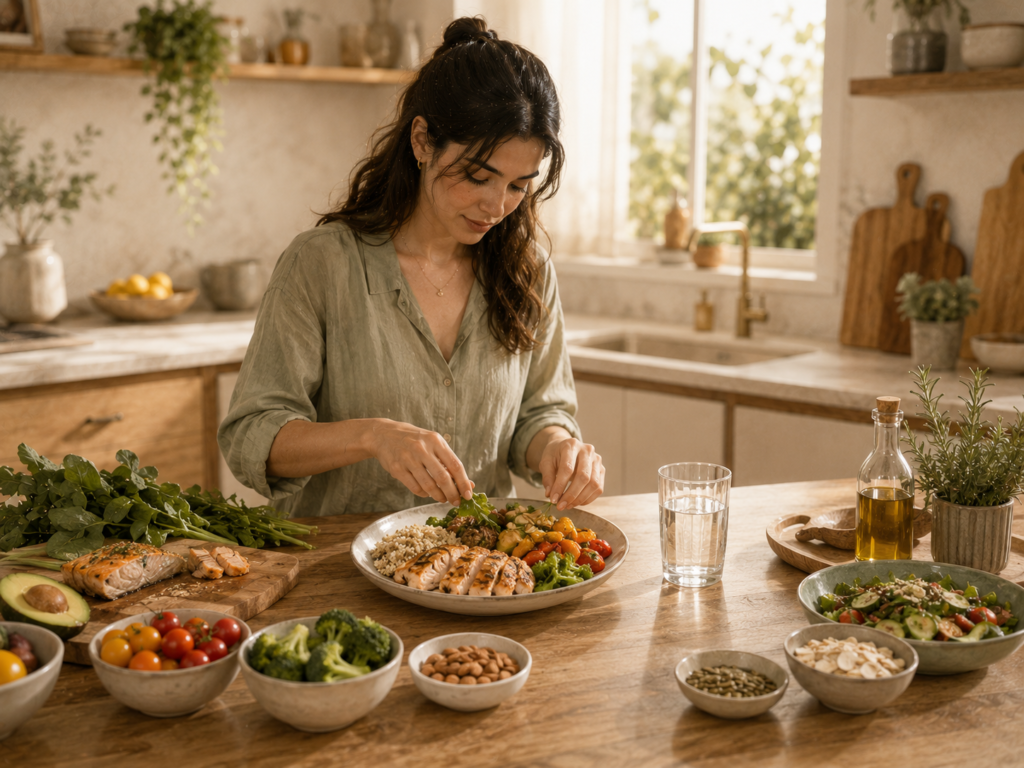
What Is the Best Diet for PCOS?
The best diet for PCOS is not necessarily the most restrictive one.
Current international evidence-based guidance does not support one particular diet composition as being superior to all others for PCOS-related metabolic, hormonal, reproductive, psychological, or body-composition outcomes. Instead, healthy eating should be sustainable and personalized.
That means a healthy PCOS diet can look different from one person to another.
For example, one person may prefer:
- Mediterranean-style meals
- Traditional South Asian food
- A higher-fiber balanced diet
- Vegetarian meals
- A diet that includes animal protein
- Home-cooked meals based on their cultural foods
The important question isn’t:
“Which trendy PCOS diet should I follow?”
A better question is:
“What healthy eating pattern can I realistically maintain while meeting my nutritional needs?”
That approach is more consistent with current PCOS guidance.
Why Does Diet Matter in PCOS?
PCOS is more than a reproductive condition.
It can also be associated with metabolic health concerns, including increased risk of insulin resistance, abnormal blood lipids, and type 2 diabetes.
Insulin resistance is one of the biological features associated with PCOS, although it should not be reduced to a simple explanation for every symptom. The 2023 international guideline emphasizes broader metabolic risk assessment rather than relying on routine insulin measurements alone.
A healthy eating pattern can support overall metabolic health and may be part of a broader PCOS management plan that also includes physical activity, sleep, medical care, and psychological well-being.
Diet is therefore one part of PCOS management—not a cure for PCOS.
Does Diet Cure PCOS?
No.
There is currently no diet that cures PCOS.
PCOS is a chronic condition with reproductive, hormonal, and metabolic features.
However, healthy eating can help support overall health and may improve certain metabolic and weight-related outcomes.
Depending on the individual, PCOS management may also involve:
- Medical treatment
- Ovulation treatment
- Menstrual-cycle management
- Metabolic risk management
- Physical activity
- Sleep management
- Mental-health support
- Fertility care
Diet should be viewed as one component of a larger management strategy.
What Should You Eat on a PCOS Diet?
Rather than creating a rigid list of “good” and “bad” foods, focus on building meals around nutrient-dense foods you actually enjoy and can maintain long term.
A balanced PCOS diet can include:
Protein-rich foods
- Eggs
- Fish
- Chicken
- Lean meat
- Greek yogurt
- Plain yogurt
- Cottage cheese
- Tofu
- Tempeh
- Lentils
- Beans
- Other legumes
Fiber-rich foods
- Vegetables
- Fruits
- Whole grains
- Beans
- Lentils
- Nuts
- Seeds
Healthy fats
- Nuts
- Seeds
- Avocado
- Olive oil
- Fatty fish
High-fiber carbohydrate sources
- Oats
- Brown rice
- Whole-grain bread
- Barley
- Quinoa
- Whole-wheat foods
- Beans
- Lentils
- Fruit
You don’t have to eat every food on this list.
The goal is to create a pattern that fits your nutritional needs, culture, preferences, budget, and lifestyle.
The international PCOS guideline specifically recommends tailoring dietary changes to individual preferences and avoiding unnecessarily restrictive or nutritionally unbalanced diets.
1. Prioritize Protein
Protein is an important part of a balanced eating pattern.
Including a protein source with meals can make meals more satisfying and can help you build a balanced plate.
Good options include:
- Eggs
- Chicken
- Fish
- Lean meat
- Greek yogurt
- Cottage cheese
- Tofu
- Lentils
- Beans
- Chickpeas
Instead of thinking:
“I need a high-protein PCOS diet.”
Think:
“Can I include a meaningful protein source in most of my main meals?”
That’s a much more practical long-term approach.

2. Choose High-Fiber Carbohydrates
One of the biggest misconceptions about a PCOS diet is that carbohydrates must be eliminated.
They don’t.
Carbohydrates are an important source of energy and can be part of a healthy diet.
The quality of carbohydrate foods matters.
Current PCOS guidance notes that carbohydrate quality—particularly foods higher in fiber and with a lower glycemic index—can be beneficial for cardiovascular and metabolic health. Examples include whole grains, legumes, and fruit.
Better choices may include:
- Oats
- Barley
- Brown rice
- Whole-grain bread
- Whole-wheat pasta
- Quinoa
- Beans
- Lentils
- Fruit
This doesn’t mean you can never eat white rice, regular bread, potatoes, or other refined carbohydrate foods.
It means your overall eating pattern should prioritize nutrient-dense, fiber-rich carbohydrate sources more often.
Do You Need to Avoid Carbs With PCOS?
No.
There is no evidence that every person with PCOS needs to eliminate carbohydrates.
The 2023 international guideline specifically found insufficient evidence that one particular dietary composition—including a specific macronutrient ratio—is superior for PCOS outcomes.
A better strategy is often to pay attention to:
- Portion size
- Fiber content
- Food quality
- Overall meal balance
- Personal tolerance
- Total dietary pattern
For example, instead of eating a large serving of refined carbohydrates by itself, you might combine a moderate portion of a carbohydrate food with protein, vegetables, and healthy fats.
3. Eat Plenty of Vegetables
Vegetables are an important part of a healthy eating pattern because they provide:
- Fiber
- Vitamins
- Minerals
- Plant compounds
- Water
- Volume and variety
Try to include a variety of colors throughout the week.
Examples include:
- Broccoli
- Cauliflower
- Bell peppers
- Carrots
- Cucumber
- Tomatoes
- Leafy greens
- Eggplant
- Zucchini
- Green beans
- Cabbage
Fresh, frozen, and appropriately prepared vegetables can all fit into a healthy diet.
You don’t need expensive “superfoods.”
4. Include Fruit
Another common PCOS diet myth is that fruit should be avoided because it contains natural sugar.
For most people, whole fruit can absolutely be part of a healthy eating pattern.
Whole fruits provide fiber, vitamins, minerals, and other beneficial compounds.
Examples include:
- Berries
- Apples
- Oranges
- Pears
- Kiwi
- Peaches
- Plums
- Melons
- Guava
- Pomegranate
Rather than fearing the natural sugar in whole fruit, focus on the overall dietary pattern and portion appropriate to your individual needs.
Fruit juice is different from whole fruit because it generally contains less fiber and can be easier to consume in large amounts.

5. Include Healthy Fats
Healthy fats can be part of a balanced PCOS diet.
Good sources include:
- Avocado
- Olive oil
- Walnuts
- Almonds
- Chia seeds
- Flaxseeds
- Pumpkin seeds
- Fatty fish
Fat is energy-dense, so portion size can still matter depending on your individual nutritional needs.
But there is no reason to eliminate healthy fats simply because you’re following a PCOS diet.
A balanced meal can contain all three major macronutrients:
Protein + carbohydrates + fat
along with vegetables or fruit and adequate fiber.
6. Choose High-Fiber Foods
Fiber deserves special attention because it can help make meals more filling and is an important part of a healthy eating pattern.
Fiber-rich foods include:
- Vegetables
- Fruits
- Beans
- Lentils
- Whole grains
- Nuts
- Seeds
If your current diet is low in fiber, increase fiber gradually and drink enough fluid to help your digestive system adapt.
What Foods Should You Avoid With PCOS?
There is no universal list of foods that every person with PCOS must completely eliminate.
Instead, current guidance favors a flexible and sustainable healthy eating pattern rather than unnecessarily restrictive diets.
However, some foods and drinks are generally worth limiting, particularly when they provide lots of added sugar, refined carbohydrates, saturated fat, or calories with relatively little nutritional value.
These may include:
- Sugary soft drinks
- Sweetened energy drinks
- Excessive sweets
- Highly processed snack foods
- Frequent deep-fried foods
- Highly refined baked goods
- Large amounts of added sugar
- Highly processed meats
The key word is limit, not necessarily “never eat.”
A sustainable diet leaves room for flexibility.
Do You Need to Avoid Sugar Completely With PCOS?
No.
You don’t necessarily need to eliminate every gram of sugar from your diet.
However, regularly consuming large amounts of foods and drinks high in added sugar can make it harder to maintain an overall healthy eating pattern.
Examples include:
- Soft drinks
- Sweetened tea and coffee
- Candy
- Cakes
- Cookies
- Pastries
- Sugary cereals
- Sweetened desserts
You can enjoy occasional treats without turning your entire diet into a list of forbidden foods.
Do You Need to Avoid Dairy With PCOS?
Not necessarily.
There is no general recommendation that everyone with PCOS must eliminate dairy.
Dairy foods can provide useful nutrients, including protein and calcium.
Examples include:
- Plain yogurt
- Greek yogurt
- Milk
- Cottage cheese
- Other dairy foods that fit your nutritional needs
If you have lactose intolerance, a milk allergy, or another reason to avoid dairy, there are alternatives.
The best diet is the one that meets your nutritional needs while fitting your individual circumstances.
Do You Need to Avoid Gluten With PCOS?
Not unless you have a medical reason to do so.
PCOS itself does not automatically mean that you need a gluten-free diet.
People with celiac disease or certain other conditions may need to avoid gluten, but unnecessarily eliminating grains can make a diet more restrictive than necessary.
If you suspect gluten is causing symptoms, discuss your concerns with a healthcare professional before making major dietary changes.

PCOS Diet and Insulin Resistance
Insulin resistance is commonly associated with PCOS and can contribute to metabolic problems.
However, it’s important not to oversimplify the relationship between food, insulin, and PCOS.
You do not need to eliminate every carbohydrate to “control insulin.”
Instead, a balanced pattern can emphasize:
- High-fiber foods
- Vegetables
- Whole grains
- Legumes
- Fruit
- Protein-rich foods
- Unsaturated fats
- Fewer highly processed foods and sugar-sweetened drinks
The international PCOS guideline recommends healthy lifestyle behaviors for metabolic health and emphasizes that no single dietary composition has been shown to be superior for PCOS.
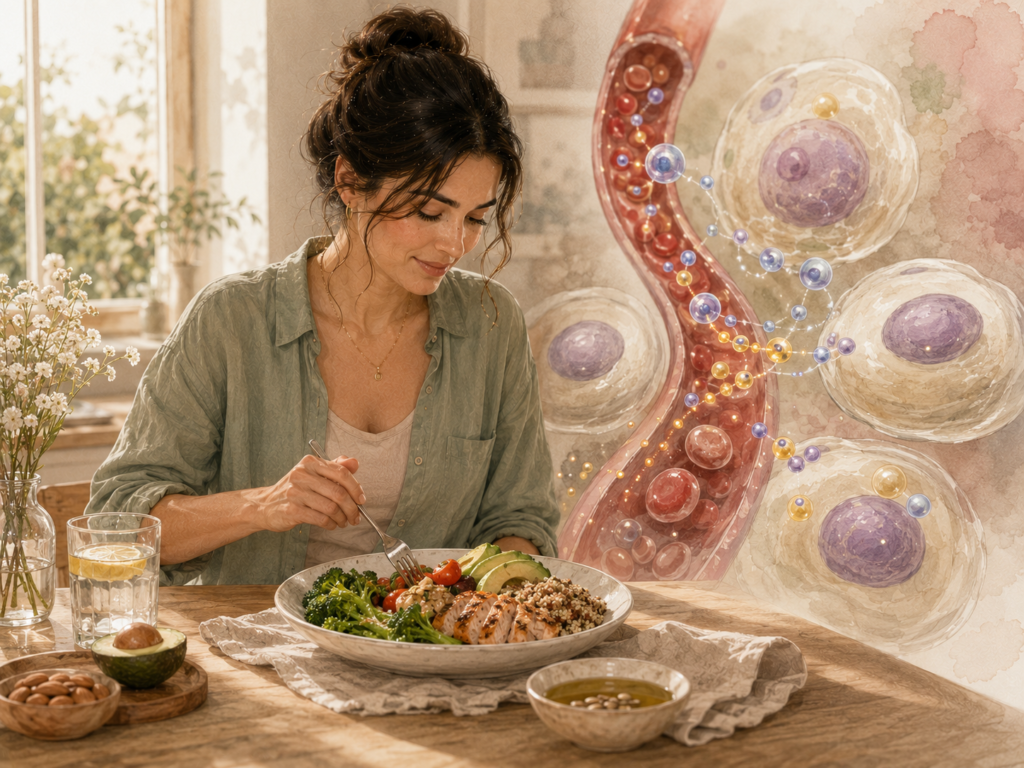
What About Weight Loss and PCOS?
Weight and PCOS can be a complicated topic.
If you have a higher body weight, even modest changes in weight or body composition may be associated with improvements in some metabolic and reproductive features for some people.
But weight loss should not be treated as the only measure of whether your PCOS management is working.
The international guideline emphasizes that healthy lifestyle changes can provide benefits even without weight loss and recommends avoiding weight stigma.
If weight management is one of your goals, an individualized approach may include:
- Nutritionally balanced meals
- Appropriate energy intake
- Physical activity
- Adequate sleep
- Behavioral strategies
- Medical support when appropriate
And if you are not trying to lose weight, healthy eating still matters.
Can You Lose Weight With PCOS?
Yes, people with PCOS can lose weight.
However, PCOS can make weight management more complicated for some individuals, and results vary.
There is no single diet composition proven to be universally superior for weight management in PCOS.
The 2023 guideline recommends tailoring dietary and lifestyle approaches to the individual’s needs and emphasizes sustainable strategies rather than prescribing one specific diet.
The goal should be a realistic eating pattern that you can maintain—not a crash diet that works for a few weeks and becomes impossible to continue.
The Best Foods for PCOS
There is no single food that treats PCOS, and there is no required list of “PCOS superfoods.”
Instead, focus on foods that make it easier to build a balanced, nutritious eating pattern.
A practical PCOS diet can regularly include:
- Vegetables
- Whole fruits
- Beans and lentils
- Whole grains
- Eggs
- Fish
- Chicken and other lean proteins
- Plain yogurt or Greek yogurt
- Nuts and seeds
- Avocado
- Olive oil
- Other minimally processed foods
The goal is not perfection.
It’s to make nutritious foods the foundation of your meals most of the time.
Current international PCOS guidance supports sustainable healthy eating tailored to individual preferences rather than recommending one specific diet composition for everyone.
How to Build a PCOS-Friendly Plate
One of the easiest ways to improve your meals is to stop thinking about individual “PCOS foods” and start thinking about meal composition.
A simple plate can contain:
½ plate: Vegetables
Choose several colorful vegetables you enjoy.
¼ plate: Protein
Examples include chicken, fish, eggs, tofu, lentils, beans or yogurt.
¼ plate: High-fiber carbohydrate
Examples include whole grains, brown rice, oats, quinoa, potatoes, beans or lentils.
Add a small source of healthy fat
Such as olive oil, avocado, nuts or seeds.
This isn’t a strict medical formula.
You can adjust portions and food choices according to your nutritional requirements, hunger, activity level, culture and health goals.
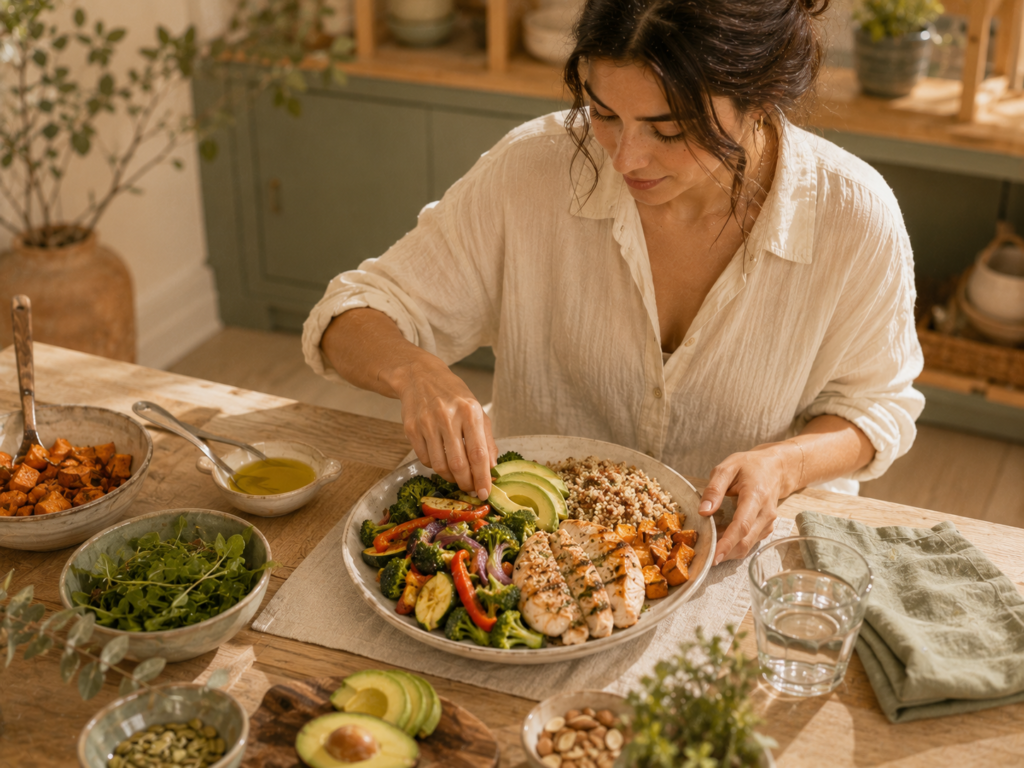
PCOS-Friendly Breakfast Ideas
Breakfast does not need to be complicated.
Try combinations such as:
Option 1
Eggs + whole-grain toast + vegetables + fruit
Option 2
Plain Greek yogurt + berries + nuts + seeds
Option 3
Oatmeal + berries + chia seeds + plain yogurt
Option 4
Vegetable omelet + whole-grain toast
Option 5
Overnight oats + plain yogurt + fruit + nuts
The important principle is to combine foods rather than relying on a breakfast made mostly from refined carbohydrates or added sugar.
PCOS-Friendly Lunch Ideas
A balanced lunch might include:
Option 1
Grilled chicken + brown rice + mixed vegetables + olive oil-based dressing
Option 2
Lentil soup + whole-grain bread + vegetables
Option 3
Grilled fish + roasted vegetables + potatoes
Option 4
Chickpea and vegetable bowl + whole-grain pita + yogurt
Option 5
Chicken or tofu wrap with whole-grain flatbread + vegetables + yogurt-based sauce
Traditional foods can absolutely fit into a PCOS meal plan.
You don’t need to replace your cultural cuisine with salads and “diet foods.”
PCOS-Friendly Dinner Ideas
Dinner can follow the same basic principle:
Protein + vegetables + fiber-rich carbohydrate + healthy fat
Examples include:
- Grilled fish + vegetables + brown rice
- Chicken + roasted vegetables + potatoes
- Lentil curry + vegetables + whole-grain roti
- Chicken and vegetable stir-fry + brown rice
- Tofu + mixed vegetables + quinoa
- Bean stew + vegetables + whole-grain bread
The exact meal doesn’t matter as much as the overall dietary pattern.
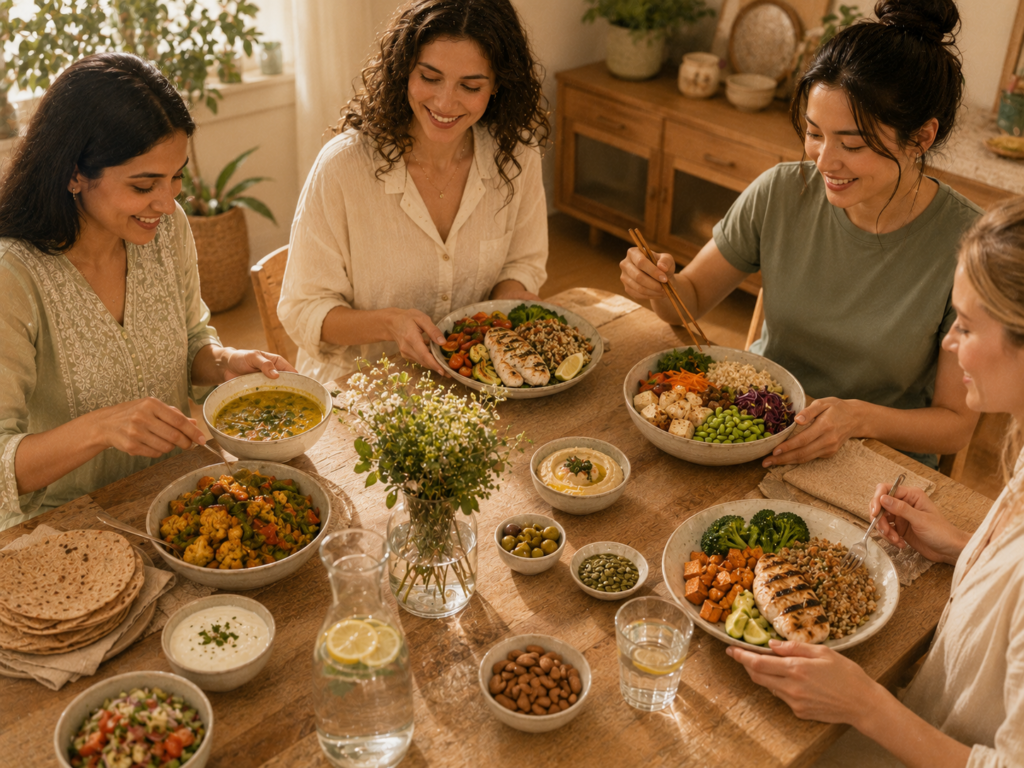
Healthy PCOS Snack Ideas
If you need a snack between meals, choose something that provides useful nutrition rather than simply eating because a food is marketed as a “PCOS snack.”
Examples include:
- Apple + peanut butter
- Plain Greek yogurt + berries
- A small handful of nuts + fruit
- Carrots or cucumber + hummus
- Boiled egg + vegetables
- Cottage cheese + fruit
- Whole-grain crackers + cheese
- Roasted chickpeas
You don’t have to snack if you’re not hungry.
Your meal frequency should fit your individual needs and lifestyle.
Is Keto Good for PCOS?
A ketogenic diet is not required to manage PCOS.
Some people may choose a lower-carbohydrate eating pattern for personal or medical reasons, but current PCOS guidelines do not establish keto or another specific macronutrient ratio as universally superior.
Very restrictive diets can also be difficult to maintain.
If you are considering a ketogenic or very-low-carbohydrate diet, particularly if you have diabetes, take glucose-lowering medication, are pregnant, or are trying to conceive, discuss the approach with your healthcare professional or registered dietitian.
Is Intermittent Fasting Good for PCOS?
Intermittent fasting is another popular approach frequently promoted online for PCOS.
However, it should not be presented as a universally proven PCOS treatment.
The current international guideline does not recommend one specific diet pattern as superior for PCOS outcomes.
If intermittent fasting helps someone maintain a healthy eating pattern and meets their nutritional needs, it may be one approach they choose.
But it isn’t necessary for everyone.
People who are pregnant, breastfeeding, have a history of eating disorders, take certain medications, or have other medical conditions should get individualized advice before fasting.
Common PCOS Diet Mistakes
1. Cutting out all carbohydrates
Carbohydrates aren’t automatically unhealthy.
Prioritize higher-fiber choices and balance portions rather than eliminating the entire food group.
2. Eating too little
Severely restricting food can make a diet difficult to sustain and may leave you short of important nutrients.
3. Treating fruit as “bad”
Whole fruit can be part of a healthy diet.
4. Eliminating dairy without a reason
There is no universal requirement for people with PCOS to avoid dairy.
5. Following every PCOS food trend online
One influencer’s experience isn’t the same as clinical evidence.
6. Focusing only on weight
Metabolic health, nutrition, physical activity, sleep, reproductive health and quality of life all matter.
7. Expecting food alone to cure PCOS
Diet is one component of PCOS management—not a replacement for medical care.
A Simple 7-Day PCOS Meal Plan
The following is an example meal-planning framework, not an individualized prescription.
Portion sizes should be adjusted according to your age, body size, activity level, nutritional needs, medical conditions and goals.
If you have diabetes, are pregnant, are breastfeeding, or have another condition requiring dietary management, ask a qualified healthcare professional for individualized advice.
DAY 1
Breakfast
Vegetable omelet + whole-grain toast + berries
Lunch
Grilled chicken + brown rice + mixed vegetables
Snack
Plain Greek yogurt + walnuts
Dinner
Baked fish + roasted vegetables + potatoes
DAY 2
Breakfast
Oatmeal + berries + chia seeds + plain yogurt
Lunch
Lentil soup + whole-grain bread + cucumber and vegetable side
Snack
Apple + peanut butter
Dinner
Chicken and vegetable stir-fry + brown rice
DAY 3
Breakfast
Greek yogurt + berries + oats + mixed seeds
Lunch
Chickpea and vegetable bowl + whole-grain pita + yogurt
Snack
Boiled egg + cucumber
Dinner
Grilled chicken + quinoa + roasted vegetables
DAY 4
Breakfast
Eggs + whole-grain toast + avocado + vegetables
Lunch
Grilled fish + potatoes + large vegetable portion
Snack
Fruit + small handful of almonds
Dinner
Lentil curry + vegetables + whole-grain roti
DAY 5
Breakfast
Overnight oats + plain yogurt + fruit + chia seeds
Lunch
Chicken whole-grain wrap + vegetables + yogurt-based dressing
Snack
Cottage cheese + fruit
Dinner
Baked salmon + brown rice + broccoli and other vegetables
DAY 6
Breakfast
Vegetable omelet + whole-grain toast + fruit
Lunch
Bean and vegetable bowl + quinoa + avocado
Snack
Greek yogurt + nuts
Dinner
Chicken + roasted vegetables + whole-grain carbohydrate of choice
DAY 7
Breakfast
Oatmeal + apple + cinnamon + nuts + plain yogurt
Lunch
Lentil and vegetable meal + whole-grain roti + yogurt
Snack
Fruit + nut butter
Dinner
Grilled fish or tofu + vegetables + brown rice or potatoes
Simple PCOS Grocery List
A simple grocery list can make it easier to maintain your eating pattern.
Protein
- Eggs
- Chicken
- Fish
- Tofu
- Plain Greek yogurt
- Cottage cheese
- Lentils
- Beans
- Chickpeas
Vegetables
- Broccoli
- Cabbage
- Bell peppers
- Carrots
- Cucumber
- Tomatoes
- Zucchini
- Spinach or other leafy greens
- Cauliflower
- Green beans
Fruit
- Apples
- Berries
- Oranges
- Pears
- Kiwi
- Guava
- Melon
High-fiber carbohydrates
- Oats
- Brown rice
- Quinoa
- Whole-grain bread
- Whole-wheat pasta
- Whole-grain roti
- Potatoes
- Barley
Healthy fats
- Olive oil
- Avocado
- Almonds
- Walnuts
- Chia seeds
- Flaxseeds
- Pumpkin seeds
You don’t need to buy every item.
Choose foods that fit your budget, culture, availability and preferences.
How to Make a PCOS Diet Easier to Follow
The healthiest eating plan is often the one you can actually maintain.
Try these practical strategies:
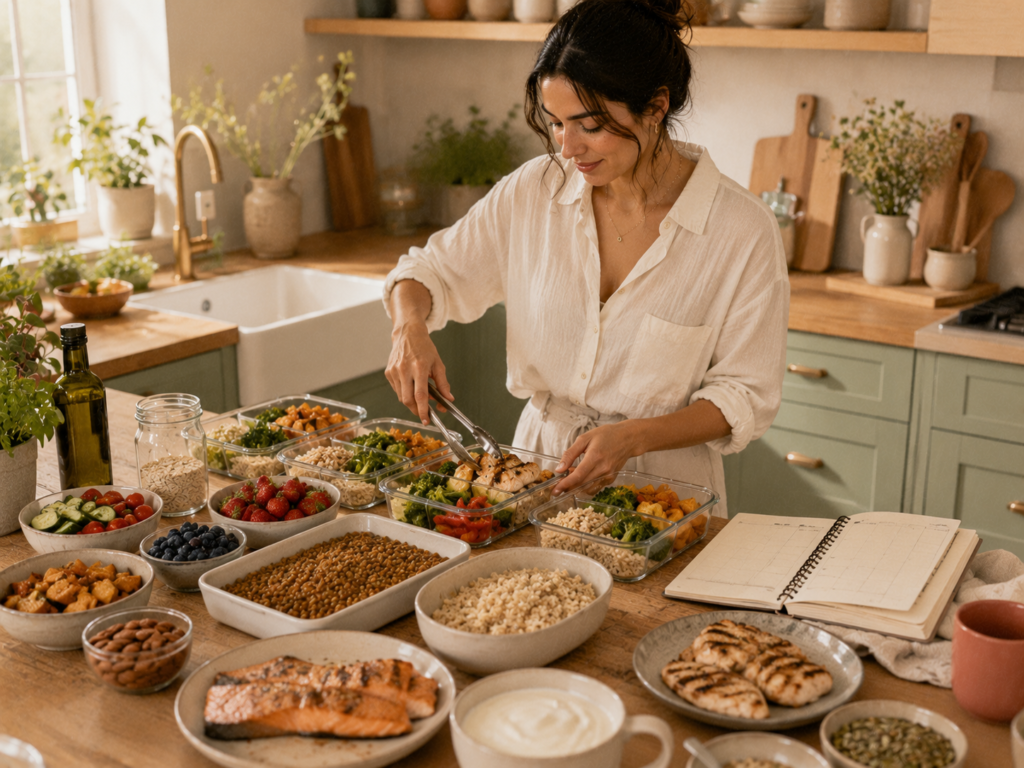
Plan a few meals ahead
You don’t need to meal-prep every meal for an entire week.
Even preparing two or three protein sources and several vegetables can make busy days easier.
Keep nutritious foods visible
Keep fruit, yogurt, nuts and prepared vegetables where they’re easy to reach.
Don’t wait until you’re extremely hungry
Extreme hunger can make it harder to make choices that feel satisfying and balanced.
Make gradual changes
You don’t need to completely change your diet overnight.
Keep your favorite foods
A sustainable PCOS diet should still include foods you genuinely enjoy.
Don’t turn food into a moral issue
Eating dessert doesn’t mean you’ve “failed.”
One meal does not determine your health.
Your overall pattern matters much more.

What If You Can’t Follow a “Perfect” PCOS Diet?
You don’t need to.
PCOS management is a long-term process.
A diet that looks perfect for two weeks but becomes impossible to maintain isn’t necessarily better than a flexible eating pattern you can follow consistently.
Current international PCOS guidance specifically recommends sustainable healthy eating tailored to individual preferences and goals and advises against unnecessarily restrictive or nutritionally unbalanced diets.
Think about your diet over weeks and months—not one meal.
If most of your meals are built around nutritious foods, occasional restaurant meals, desserts, celebrations or convenience foods can still fit into an overall healthy pattern.
Can Diet Alone Manage PCOS?
Sometimes lifestyle changes can meaningfully improve aspects of PCOS, particularly metabolic health and weight-related outcomes.
But diet alone isn’t enough for everyone.
Depending on your symptoms and goals, PCOS management may require medical treatment.
For example, someone may need treatment for:
- Irregular or absent periods
- Acne
- Excess hair growth
- Fertility problems
- Diabetes or prediabetes
- High cholesterol
- High blood pressure
- Other PCOS-related health concerns
The best approach is usually individualized care combined with sustainable lifestyle habits.
PCOS Diet and Fertility
If you’re trying to conceive with PCOS, nutrition is one part of preparing for pregnancy—but there is no specific “fertility diet” that guarantees pregnancy.
A balanced eating pattern can support overall health and help address metabolic risk factors that may be relevant to PCOS.
However, if irregular ovulation is preventing pregnancy, changing your diet alone may not be enough. PCOS-related infertility can require medical evaluation and, when appropriate, fertility treatment.
If you’re preparing for pregnancy, discuss your diet, medications, supplements, medical conditions, and PCOS management with your healthcare professional. ACOG recommends prepregnancy care to identify health factors that could affect pregnancy.
A practical approach:
- Eat a varied, nutrient-dense diet.
- Include adequate protein.
- Choose high-fiber carbohydrate sources.
- Eat vegetables and whole fruits.
- Include healthy fats.
- Limit excess added sugar and highly processed foods.
- Avoid extreme or crash diets.
- Take recommended prenatal supplements, including folic acid, according to medical advice.
- Seek appropriate fertility care if you’re having difficulty conceiving.
What Should You Eat if You Have PCOS and Insulin Resistance?
If you have PCOS with insulin resistance or another glucose-related condition, your eating pattern should be individualized.
A useful foundation is to combine fiber-rich carbohydrates with protein, vegetables and healthy fats rather than relying heavily on refined carbohydrates or sugary drinks.
For example:
Instead of:
Sweetened cereal + sugary drink
Try:
Oatmeal + plain Greek yogurt + berries + nuts
Instead of:
Large portion of white rice by itself
Try:
A moderate rice portion + chicken or fish + vegetables + lentils
Instead of:
Pastry + sweetened coffee
Try:
Eggs + whole-grain toast + vegetables + unsweetened tea or coffee
These aren’t “PCOS cures.”
They’re simply examples of how to create more balanced meals.
If you have diabetes or take medication that affects blood glucose, speak with your healthcare professional before making major changes to carbohydrate intake.
PCOS Diet During Pregnancy
If you become pregnant, your nutritional needs change.
A PCOS diet should not become a weight-loss diet during pregnancy unless specifically directed and monitored by your maternity-care team.
During pregnancy, focus on adequate nutrition and appropriate prenatal care rather than trying to restrict food to control your weight.
Your healthcare professional may discuss:
- Prenatal vitamins
- Folic acid
- Iron
- Calcium
- Vitamin D
- Protein
- Adequate calories
- Blood glucose screening
- Healthy pregnancy weight gain
PCOS is associated with increased pregnancy-related metabolic risks, so appropriate prenatal monitoring is important. The international PCOS guideline recommends attention to preconception risk factors and pregnancy monitoring.
If you’re pregnant or planning pregnancy, don’t start a restrictive diet or supplements without discussing them with your healthcare professional.
Do You Need a Special PCOS Diet if You’re Trying to Get Pregnant?
Not necessarily.
There is no single diet proven to dramatically increase fertility for everyone with PCOS.
The most useful approach is to support your overall health and address the specific reason you’re having difficulty conceiving.
If irregular ovulation is the main issue, fertility treatment may be more important than following increasingly restrictive food rules.
And if you’re already eating a balanced diet, you don’t need to completely overhaul your meals simply because you have PCOS.
When Should You Talk to a Doctor or Dietitian?
Consider professional guidance if:
- You have PCOS and diabetes or prediabetes.
- You have significant difficulty managing your diet.
- You’re following an extremely restrictive diet.
- You’re losing weight unintentionally.
- You’re pregnant or planning pregnancy.
- You have a history of an eating disorder.
- You’re taking medication that affects blood glucose.
- You’re trying to conceive and need individualized nutrition advice.
- You want help creating a sustainable weight-management plan.
A registered dietitian or appropriately qualified nutrition professional can help translate general PCOS nutrition recommendations into meals that fit your culture, budget, food preferences and medical needs.
The international guideline specifically notes that referral to appropriately trained allied health professionals can be considered when women with PCOS need help optimizing their diet.
Frequently Asked Questions About the PCOS Diet
There isn’t one diet proven to be best for everyone with PCOS. Current international guidelines recommend sustainable healthy eating tailored to individual preferences and goals rather than one specific diet composition.
A balanced PCOS diet can include vegetables, whole fruits, protein-rich foods, legumes, whole grains, nuts, seeds, healthy fats and other minimally processed foods.
There is no universal list of foods that everyone with PCOS must completely avoid. It’s generally more useful to limit foods and drinks high in added sugar and highly processed foods while building an overall nutritious eating pattern.
Yes. Rice can be part of a healthy diet for someone with PCOS. Consider portions, choose higher-fiber varieties when practical, and combine rice with protein, vegetables and other nutrient-dense foods.
No. PCOS does not automatically require a carbohydrate-free diet. Current guidelines do not support one specific macronutrient composition as universally superior for PCOS.
Whole fruit can be part of a healthy PCOS diet. Fruit provides fiber, vitamins, minerals and other beneficial nutrients.
Yes, unless you have a medical reason to avoid it. Dairy foods can provide protein and other nutrients. There is no general recommendation that everyone with PCOS eliminate dairy.
A ketogenic diet is not required for PCOS. Current international guidelines do not identify one particular diet composition as superior for PCOS outcomes.
Intermittent fasting may be suitable for some adults, but it isn’t a required PCOS treatment and isn’t appropriate for everyone. If you’re pregnant, breastfeeding, have an eating-disorder history, take certain medications, or have another medical condition, seek individualized medical advice before fasting.
A healthy eating pattern can support weight management when appropriate. However, PCOS does not mean everyone needs to lose weight, and healthy lifestyle benefits can occur even without weight loss.
No. There is currently no diet that cures PCOS. Healthy eating can support overall health and form an important part of PCOS management.
A balanced breakfast might include eggs with whole-grain toast and vegetables, Greek yogurt with berries and nuts, or oatmeal with fruit, seeds and plain yogurt.
Try combining a protein source with vegetables, a high-fiber carbohydrate and a source of healthy fat. Examples include grilled fish with vegetables and potatoes or chicken with brown rice and vegetables.
Occasional sweets can fit into an overall healthy diet. The bigger goal is to avoid regularly consuming large amounts of added sugar and sugar-sweetened drinks.
Some people with PCOS experience greater challenges with weight management. However, individual experiences vary. Current guidelines emphasize sustainable lifestyle strategies and avoiding weight stigma rather than blaming people for their weight.
The Bottom Line: What Should You Actually Eat With PCOS?
You don’t need a perfect diet to manage PCOS.
You don’t need to eliminate every carbohydrate.
You don’t automatically need to avoid dairy.
You don’t need to stop eating fruit.
And you don’t need to follow the newest diet trend on social media.
Instead, build your meals around a simple foundation:
Protein + vegetables + high-fiber carbohydrates + healthy fats
Choose mostly nutrient-dense foods.
Limit excessive added sugar and highly processed foods.
Make changes that fit your culture, budget, preferences and lifestyle.
And remember that PCOS management is much bigger than food.
Physical activity, sleep, mental health, metabolic health, reproductive health and appropriate medical treatment can all be important parts of care.
The current international guideline emphasizes that there is no single superior PCOS diet and recommends sustainable healthy eating tailored to the individual.
Medical Disclaimer
This article is for educational purposes only and does not provide individualized medical or nutritional advice.
PCOS affects people differently. Your nutritional needs may also differ depending on your age, health conditions, medications, pregnancy status, activity level, body size, food access and personal goals.
Do not use this article to diagnose or treat PCOS, diabetes, insulin resistance, infertility, or another medical condition.
If you’re pregnant, trying to conceive, have diabetes, take glucose-lowering medication, have a history of an eating disorder, or need help with weight management, speak with an appropriately qualified healthcare professional.
Sources & References
1. 2023 International Evidence-Based Guideline for PCOS
The international PCOS guideline recommends healthy lifestyle behaviors for all people with PCOS and states that no single diet composition has been shown to be superior for anthropometric, metabolic, hormonal, reproductive or psychological outcomes. It recommends sustainable healthy eating tailored to individual preferences and goals.
2. ACOG — PCOS
The American College of Obstetricians and Gynecologists provides patient information about PCOS, including lifestyle management, fertility and pregnancy considerations.
3. ACOG — Prepregnancy Care
ACOG recommends discussing diet, lifestyle, medications and health conditions during prepregnancy care.
4. International PCOS Guideline — Lifestyle Management
The guideline emphasizes individualized lifestyle management, sustainable healthy eating, physical activity, weight-stigma awareness and benefits of healthy lifestyle even when weight loss does not occur.