

Testosterone is an important hormone involved in sexual function, sperm production, muscle and bone health, red blood cell production, and other aspects of men’s health.
When testosterone production is consistently too low and a man has compatible symptoms or signs, doctors may diagnose a condition called testosterone deficiency, or male hypogonadism.
But feeling tired, gaining weight, having a lower sex drive, or experiencing changes in mood does not automatically mean you have low testosterone.
These symptoms are common and can have many possible causes.
That distinction is important because testosterone treatment is not something that should be started simply because a single blood test comes back below a laboratory reference range.
Current guidance from the Endocrine Society recommends diagnosing hypogonadism only when compatible symptoms or signs occur together with consistently and unequivocally low testosterone concentrations, with the diagnosis confirmed using repeat morning testing.
In this complete guide, we’ll explain:
- What low testosterone actually means
- The most common low testosterone symptoms
- What causes testosterone deficiency
- How testosterone levels are tested
- What is considered a low testosterone level
- Why testing is usually done in the morning
- Whether testosterone naturally decreases with age
- How low testosterone affects erections and sex drive
- The relationship between testosterone and fertility
- Lifestyle factors that can affect testosterone
- Testosterone replacement therapy
- Potential risks and important precautions
- When to see a doctor

What Is Low Testosterone?
Low testosterone means the body is producing less testosterone than expected for an individual, in a clinical context where symptoms and laboratory testing support the diagnosis.
The medical term commonly used is male hypogonadism or testosterone deficiency.
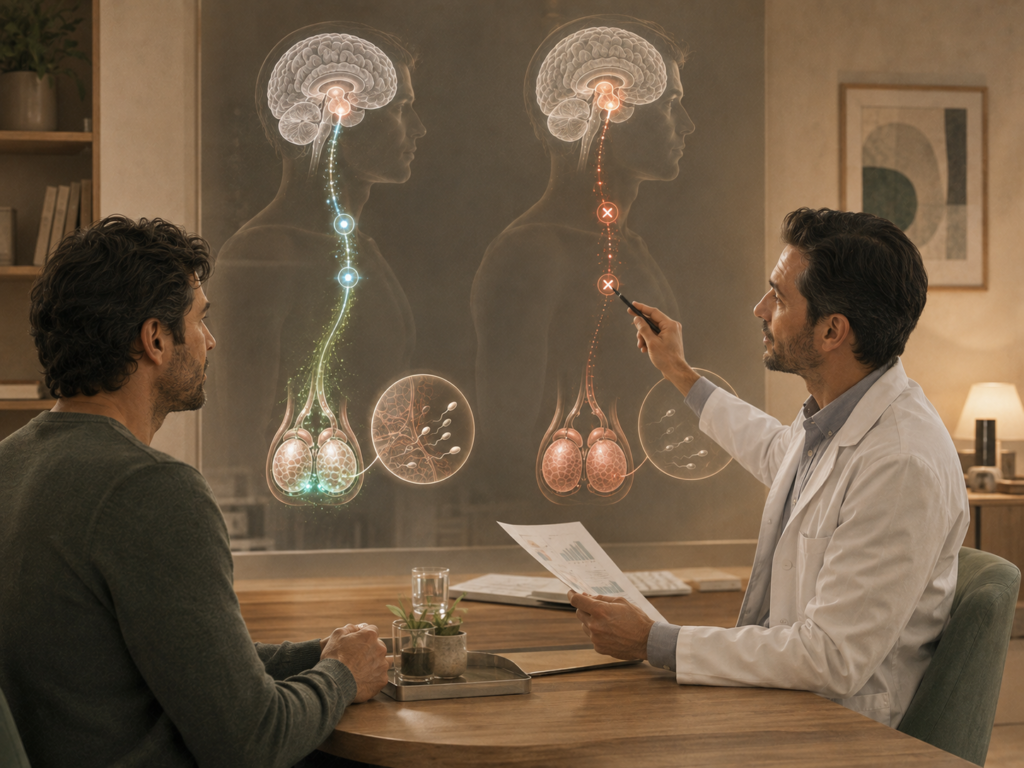
Testosterone is primarily produced by the testes after signals from the brain and pituitary gland stimulate testosterone production.
The process involves a hormonal communication system:
Hypothalamus → pituitary gland → testes → testosterone
The pituitary gland releases hormones including luteinizing hormone (LH), which signals the testes to produce testosterone.
Problems at different points in this pathway can lead to testosterone deficiency.
This is why doctors don’t simply ask:
“Is your testosterone low?”
They also try to determine why it is low.
What Are the Symptoms of Low Testosterone?
Low testosterone symptoms can vary considerably from person to person.
Some men primarily notice sexual symptoms.
Others may experience changes in energy, mood, muscle mass, fertility, or physical health.
Common signs and symptoms can include:
- Reduced sex drive
- Fewer spontaneous or morning erections
- Erectile difficulties
- Reduced energy
- Fatigue
- Reduced muscle mass
- Reduced strength
- Changes in mood
- Difficulty concentrating
- Reduced body or facial hair
- Infertility or reduced sperm production
- Breast enlargement or tenderness
- Loss of bone density
- Anemia in some cases
Severe testosterone deficiency can also cause hot flashes.
However, having one or more of these symptoms does not prove that testosterone is low.
For example, fatigue can be related to poor sleep, stress, depression, anemia, thyroid problems, medications, obesity, sleep apnea, or many other conditions.
1. Low Sex Drive
A noticeable decrease in sexual desire can be one of the more characteristic symptoms of testosterone deficiency.
You may notice:
- Less interest in sex
- Fewer spontaneous sexual thoughts
- Less sexual motivation
- A noticeable change from your usual libido
A reduced sex drive can have many causes, however.
Relationship difficulties, stress, depression, anxiety, medications, sleep problems and other medical conditions can all affect libido.
So low libido should be considered a reason to investigate, not a diagnosis by itself.
2. Erectile Problems
Testosterone contributes to normal sexual function, but low testosterone isn’t the only—and often isn’t the main—cause of erectile dysfunction.
Erection problems can also be related to:
- Cardiovascular disease
- Diabetes
- High blood pressure
- Obesity
- Certain medications
- Nerve problems
- Smoking
- Alcohol
- Psychological factors
- Relationship difficulties
This distinction becomes important because persistent erectile dysfunction can sometimes be an early sign of underlying cardiovascular or metabolic disease.
LifeMate will cover erectile dysfunction in a separate dedicated Men’s Health article.
3. Persistent Fatigue and Low Energy
Some men with testosterone deficiency report:
- Low energy
- Reduced motivation
- Feeling unusually tired
- Reduced physical stamina
But fatigue alone is not a reliable indicator of low testosterone.
If you’re constantly exhausted, other causes should also be considered.
These can include:
- Poor sleep
- Obstructive sleep apnea
- Stress
- Depression
- Anemia
- Thyroid disorders
- Certain medications
- Chronic illness
- Inadequate nutrition
The Endocrine Society specifically emphasizes ruling out reversible contributors rather than assuming common symptoms are caused by low testosterone.

4. Reduced Muscle Mass and Strength
Testosterone plays a role in maintaining muscle mass.
Some men with clinically significant testosterone deficiency can experience:
- Reduced muscle mass
- Reduced strength
- Changes in body composition
However, muscle loss is not specific to low testosterone.
Aging, inactivity, inadequate protein or calorie intake, illness, certain medications and other hormonal conditions can also contribute.
This is another reason a proper medical evaluation is more useful than trying to diagnose yourself from symptoms.
5. Changes in Body Composition
Low testosterone may be associated with changes in body composition, including increased fat mass and reduced lean mass.
At the same time, excess body fat—particularly obesity—can itself be associated with lower testosterone levels.
This can create a complicated relationship between weight, metabolic health and testosterone.
The Endocrine Society’s 2026 statement notes that when obesity is associated with low testosterone and no other cause is identified, addressing excess weight is generally considered an important first-line approach rather than automatically starting testosterone replacement.
6. Mood and Concentration Changes
Some men with testosterone deficiency experience:
- Irritability
- Low mood
- Difficulty concentrating
- Reduced sense of well-being
But these symptoms are extremely nonspecific.
Stress, depression, anxiety, sleep deprivation, work pressure and many medical conditions can produce similar experiences.
If you notice persistent changes in mood or mental health, discuss them with a healthcare professional rather than assuming testosterone is the cause.
7. Reduced Body or Facial Hair
Long-term testosterone deficiency can reduce the growth of facial, pubic or body hair.
Other causes of hair changes are also possible, so this symptom needs to be interpreted in context.
8. Fertility Problems
Testosterone and sperm production are connected—but there is a crucial detail many online articles leave out.
Taking testosterone replacement can actually reduce sperm production.
The brain normally sends hormonal signals to the testes that support sperm production.
External testosterone can suppress those signals.
For that reason, men who are actively trying to have children should not start testosterone replacement without discussing fertility with a fertility specialist or appropriate healthcare professional. The Endocrine Society recommends against testosterone therapy in men planning fertility in the near term.

What Causes Low Testosterone in Men?
Low testosterone can have many causes.
Doctors generally distinguish between two broad categories:
Primary hypogonadism
The problem originates mainly in the testes.
Secondary hypogonadism
The problem originates in the hypothalamus or pituitary gland, which normally signal the testes to produce testosterone.
Some men can also have multiple contributing factors.
Causes of Primary Hypogonadism
Potential causes include:
- Testicular injury
- Testicular infection
- Testicular cancer or treatment for cancer
- Chemotherapy
- Radiation treatment
- Certain genetic conditions
- Undescended testes
- Some chronic illnesses
For example, cancer treatment involving chemotherapy or radiation can affect testosterone and sperm production.
Causes of Secondary Hypogonadism
Secondary hypogonadism can result from problems affecting the hypothalamus or pituitary gland.
Possible causes include:
- Pituitary disorders
- Certain tumors
- High prolactin levels
- Severe illness
- Certain medications
- Opioid use
- Corticosteroid use
- Obesity
- Sleep disorders
- Some inflammatory diseases
The specific cause matters because treatment should address the underlying problem whenever possible.
Can Obesity Cause Low Testosterone?
Obesity is associated with lower testosterone levels in some men.
The relationship can work in both directions:
Excess body fat → metabolic and hormonal changes → lower testosterone
while low testosterone may also be associated with:
Lower muscle mass + changes in body composition → increased fat mass
This does not mean every man with obesity has low testosterone.
And it does not mean testosterone treatment should automatically be used for weight loss.
The Endocrine Society’s current statement emphasizes addressing reversible contributors such as obesity when appropriate.
Does Testosterone Naturally Decrease With Age?
Testosterone levels generally decline as men get older, but aging alone does not automatically mean a man has testosterone deficiency.
Some older men maintain testosterone levels within the normal range.
The Endocrine Society emphasizes that terms such as “age-related low testosterone” should not blur the distinction between normal aging and medically diagnosed hypogonadism. Diagnosis still requires compatible symptoms/signs together with consistently low testosterone levels.
So:
Getting older ≠ automatically needing testosterone.

How Is Low Testosterone Diagnosed?
Low testosterone cannot be diagnosed reliably from symptoms alone.
A proper diagnosis generally combines:
- Compatible symptoms or signs
- Consistently low testosterone on blood testing
- Further evaluation to determine the underlying cause
The Endocrine Society recommends confirming suspected testosterone deficiency with repeat morning testosterone testing, while the American Urological Association (AUA) uses a total testosterone level below 300 ng/dL as a reasonable cutoff supporting the diagnosis when symptoms and signs are also present.
This is why getting one unexpectedly low testosterone result does not automatically mean you have hypogonadism.
What Is a Normal Testosterone Level for Men?
There isn’t one testosterone number that applies perfectly to every man.
Testosterone levels are affected by:
- Age
- Time of day
- Sleep
- Illness
- Food intake
- Medications
- Laboratory testing methods
- Individual biological variation
The AUA guideline uses total testosterone below 300 ng/dL as a reasonable cutoff to support a diagnosis, but the diagnosis still requires compatible symptoms and/or signs and confirmation with two separate early-morning measurements.
The Endocrine Society likewise emphasizes that testosterone should be measured using accurate assays and interpreted alongside symptoms and clinical findings rather than relying on a number alone.
So if your testosterone result is:
280 ng/dL
that does not mean you should automatically start treatment.
Your doctor will consider the result alongside your symptoms, repeat testing, medical history, physical examination and possible underlying causes.
Why Is Testosterone Testing Done in the Morning?
Testosterone follows a daily rhythm.
Levels are generally higher earlier in the day and can change throughout the day.
That’s why guidelines recommend early-morning testing, particularly when evaluating suspected testosterone deficiency.
The Endocrine Society recommends morning fasting testosterone measurements and confirmation with a repeat morning measurement.
The AUA similarly recommends two total testosterone measurements obtained on separate occasions, both performed in the early morning.
A test taken at an inappropriate time can therefore make interpretation more difficult.

Why Do You Usually Need Two Testosterone Tests?
Testosterone can fluctuate from day to day.
A single low result can therefore be misleading.
The AUA recommends that the diagnosis of testosterone deficiency be based on two separate early-morning total testosterone measurements.
The Endocrine Society similarly recommends repeating the morning testosterone measurement to confirm the diagnosis.
For example, if your first test shows a low testosterone level, your doctor may recommend repeating the test on another morning before deciding whether you actually have testosterone deficiency.
This helps distinguish a persistent problem from a temporary or misleading result.
What Is Free Testosterone?
Most testosterone in the bloodstream is attached to proteins.
A smaller portion circulates as free testosterone, which is not bound to those proteins.
Doctors may consider measuring free testosterone when:
- Total testosterone is close to the lower end of the normal range
- A condition affecting sex hormone-binding globulin (SHBG) is suspected
- The total testosterone result doesn’t clearly match the clinical picture
The Endocrine Society recommends obtaining free testosterone in appropriate situations, using an accurate measurement method or a validated calculation.
Free testosterone isn’t necessarily something every man needs tested.
Your doctor can determine whether it adds useful information in your particular situation.
What Other Tests May Be Needed?
Once low testosterone is confirmed, the next question becomes:
Why is testosterone low?
Doctors may order additional tests depending on your symptoms and medical history.
These can include:
- LH
- FSH
- Prolactin
- Other hormone testing
- Thyroid testing when appropriate
- Complete blood count
- Metabolic testing
- Iron studies in selected situations
- Pituitary imaging when clinically indicated
LH and FSH can help distinguish between primary testicular problems and secondary problems involving the hypothalamus or pituitary gland.
Not everyone with low testosterone needs every test.
The evaluation should be individualized.
Primary vs Secondary Hypogonadism
Understanding this distinction helps explain why finding the cause matters.
Primary hypogonadism
The problem is mainly in the testes.
The brain may be sending appropriate hormonal signals, but the testes aren’t producing enough testosterone.
Secondary hypogonadism
The problem involves the hypothalamus or pituitary gland, which normally regulate testosterone production.
In this situation, the testes may not be receiving the appropriate hormonal signals.
Doctors can use hormone testing, including LH and FSH, to help distinguish these patterns.
Can Low Testosterone Cause Erectile Dysfunction?
It can contribute to sexual difficulties, but low testosterone is not the only cause of erectile dysfunction (ED).
Testosterone plays a role in sexual desire and normal sexual function, but erections also depend on:
- Healthy blood vessels
- Nerve function
- Psychological health
- Hormonal balance
- Cardiovascular health
- Medication effects
Conditions such as diabetes, hypertension, obesity and cardiovascular disease can contribute to erectile dysfunction.
If you have persistent ED, don’t assume you simply need testosterone.
A medical evaluation can help identify the actual cause.
Can Low Testosterone Affect Fertility?
Yes—but the relationship is more complicated than many people realize.
Testosterone is important for male reproductive function, but taking testosterone medication does not necessarily improve fertility.
In fact, external testosterone can suppress the hormonal signals that stimulate sperm production.
As a result, testosterone replacement therapy can substantially reduce sperm production in some men.
The Endocrine Society recommends against starting testosterone therapy in men who are planning fertility in the near term.
If you’re experiencing low testosterone symptoms and want to have children, tell your doctor before starting any testosterone treatment.
Your fertility goals can significantly change which treatment options are appropriate.
Can Low Testosterone Be Caused by Poor Sleep?
Sleep and testosterone are closely connected.
Sleep deprivation and sleep disorders can affect hormone regulation, energy, sexual function and overall health.
Obstructive sleep apnea is particularly important because it can contribute to symptoms that may resemble testosterone deficiency.
If you snore heavily, wake up gasping, experience morning headaches, or feel excessively sleepy during the day, discuss these symptoms with a healthcare professional.
Treating an underlying sleep disorder may be an important part of improving your overall health.
Can Stress Lower Testosterone?
Chronic psychological and physical stress can affect many aspects of health, including sleep, libido, mood and hormonal function.
However, you should not assume that every period of stress means your testosterone is clinically low.
If you have persistent symptoms, appropriate testing is more useful than guessing based on how stressed you feel.
Improving sleep, physical activity, stress management and overall health can still be valuable regardless of your testosterone level.
Can Exercise Increase Testosterone?
Regular physical activity is an important part of overall men’s health.
Resistance training and other forms of exercise can support:
- Muscle strength
- Cardiovascular health
- Metabolic health
- Body composition
- Physical fitness
- Mental well-being
Exercise can also be part of a healthy approach to weight management.
But be cautious of claims promising that a particular workout will dramatically increase testosterone.
There is no single exercise routine that should be presented as a guaranteed treatment for testosterone deficiency.

Can Losing Weight Improve Testosterone?
For men with obesity-associated low testosterone, improving metabolic health and reducing excess weight may help testosterone levels in some cases.
The relationship isn’t as simple as:
“Lose X kilograms = testosterone increases by Y.”
Individual responses vary.
If weight management is appropriate for you, focus on sustainable habits rather than extreme diets.
These can include:
- Regular physical activity
- Adequate protein and nutritious foods
- Appropriate calorie intake
- Good sleep
- Limiting excessive alcohol
- Managing underlying medical conditions
The Endocrine Society’s 2026 statement emphasizes addressing reversible causes such as obesity rather than automatically treating low testosterone with testosterone replacement.
Can Alcohol Affect Testosterone?
Excessive alcohol consumption can negatively affect several aspects of men’s health and may interfere with normal reproductive and hormonal function.
Heavy alcohol use is also associated with:
- Liver disease
- Sleep problems
- Cardiovascular disease
- Sexual dysfunction
- Fertility problems
If you drink alcohol, moderation and overall health considerations matter more than searching for a particular “testosterone-boosting” beverage or supplement.
Can Medications Cause Low Testosterone?
Yes.
Certain medications can affect testosterone production or the hormonal pathways involved in testosterone regulation.
Examples can include:
- Opioid pain medications
- Certain corticosteroids
- Some other medications that affect hormonal function
This doesn’t mean you should stop a prescribed medication if you suspect it is affecting testosterone.
Instead, speak with the prescribing clinician.
Your doctor can determine whether the medication could be contributing and whether an alternative is appropriate.
Are Testosterone Boosters Safe?
Be careful with products marketed as “testosterone boosters.”
Many supplements make claims such as:
- “Boost testosterone naturally”
- “Increase testosterone fast”
- “Build muscle without effort”
- “Increase male performance”
Marketing claims are not the same as high-quality clinical evidence.
Some supplements may contain ingredients that have limited evidence, inconsistent dosing, contaminants, or interactions with medications.
A product being sold as a supplement does not automatically mean it is effective or appropriate for treating testosterone deficiency.
If you believe you have low testosterone, proper medical evaluation is much safer than trying to diagnose yourself with an over-the-counter testosterone booster.
What Is Testosterone Replacement Therapy?
Testosterone replacement therapy (TRT) is prescription treatment designed to restore testosterone levels in appropriately diagnosed men with testosterone deficiency.
Depending on the country and formulation, testosterone may be available in forms such as:
- Gels
- Injections
- Patches
- Other prescription formulations
The choice depends on medical factors, availability, cost, convenience and patient preference.
TRT is not appropriate for every man with a low testosterone result.
The Endocrine Society recommends treatment for appropriately diagnosed symptomatic hypogonadism after discussing benefits, risks and monitoring requirements.
What Are the Potential Benefits of TRT?
In men with confirmed testosterone deficiency, treatment may improve some symptoms and clinical outcomes, depending on the underlying cause and individual circumstances.
Potential benefits can include improvement in:
- Sexual desire
- Some sexual-function symptoms
- Lean body mass
- Bone health
- Symptoms related to testosterone deficiency
But TRT isn’t a general-purpose treatment for:
- Normal aging
- Building muscle in healthy men
- Losing weight
- Improving athletic performance
- Preventing every age-related health problem
The goal is treatment of confirmed testosterone deficiency, not creating unusually high testosterone levels.
What Are the Risks and Side Effects of Testosterone Therapy?
Testosterone therapy requires medical supervision.
Potential concerns include:
- Increased red blood cell count
- Acne or oily skin
- Breast tenderness or enlargement
- Reduced sperm production
- Infertility
- Worsening of certain urinary symptoms
- Possible worsening of untreated severe sleep apnea
- Need for prostate-related monitoring
- Other formulation-specific adverse effects
The Endocrine Society recommends against testosterone therapy in several situations, including men planning fertility in the near term, certain prostate or breast cancers, elevated hematocrit, untreated severe obstructive sleep apnea, and certain serious cardiovascular or clotting conditions.
The decision to use TRT should therefore be individualized.
Does TRT Cause Infertility?
It can significantly suppress sperm production.
This is one of the most important things men should understand before starting testosterone replacement therapy.
External testosterone can signal the brain to reduce production of LH and FSH.
With less stimulation of the testes, sperm production can decline.
For a man who wants children soon, TRT may therefore be the wrong treatment strategy.
If fertility is a priority, tell your doctor before beginning testosterone therapy so the underlying problem can be evaluated and fertility-preserving options can be considered.

Who Should Not Start Testosterone Therapy Without Medical Evaluation?
You should not self-start testosterone if you:
- Haven’t had appropriate testing
- Only have nonspecific symptoms such as tiredness
- Are trying to conceive
- Have untreated severe sleep apnea
- Have certain prostate or breast conditions
- Have an elevated hematocrit
- Have certain serious cardiovascular conditions
- Are taking medications that could be contributing to low testosterone
These are not reasons to ignore symptoms.
They are reasons to get proper medical evaluation first.
How Is Testosterone Therapy Monitored?
If TRT is prescribed, monitoring is an important part of treatment.
Your healthcare professional may monitor:
- Testosterone levels
- Symptoms
- Treatment response
- Hematocrit/red blood cell levels
- Adverse effects
- Prostate-related risk when appropriate
The Endocrine Society recommends a standardized monitoring plan that includes evaluating symptoms and adverse effects, measuring testosterone and hematocrit, and assessing prostate cancer risk when indicated.
TRT isn’t something that should simply be started and forgotten about.
When Should You See a Doctor About Low Testosterone?
Make an appointment if you have persistent symptoms such as:
- A significant decrease in sex drive
- Persistent erectile difficulties
- Loss of spontaneous or morning erections
- Unexplained fatigue accompanied by other symptoms
- Reduced muscle mass or strength
- Infertility
- Reduced body or facial hair
- Breast enlargement or tenderness
- Recurrent hot flashes
- Symptoms that began after an injury, illness or medication change
You should also mention symptoms such as severe headaches, vision changes, or other neurological symptoms because these can sometimes indicate a problem involving the pituitary gland and require medical evaluation.
The Bottom Line
Low testosterone is real and treatable when it is properly diagnosed.
But not every man who feels tired, gains weight, has erectile problems, or experiences a lower sex drive has low testosterone.
The most reliable approach is:
Symptoms → appropriate morning blood testing → repeat confirmation → identify the cause → individualized treatment
If testosterone deficiency is confirmed, treatment depends on the cause and your goals.
And if you’re planning to have children, tell your doctor before starting testosterone replacement therapy because TRT can suppress sperm production.
The goal isn’t to achieve the highest possible testosterone level.
The goal is to identify whether a genuine deficiency exists, understand why it is happening, and choose treatment that is appropriate for your health and future goals.
Frequently Asked Questions About Low Testosterone
Common symptoms can include reduced sex drive, fewer spontaneous erections, erectile difficulties, reduced energy, decreased muscle mass, infertility, mood changes, difficulty concentrating and reduced body or facial hair.
However, these symptoms can have many causes. A diagnosis requires appropriate symptoms or signs together with consistently low testosterone measurements.
The American Urological Association uses less than 300 ng/dL as a reasonable cutoff that supports the diagnosis of testosterone deficiency. However, the number alone does not establish the diagnosis. The AUA recommends two separate early-morning measurements plus compatible symptoms or signs.
Laboratory reference ranges can also vary depending on the testing method and laboratory.
You cannot reliably determine this from symptoms alone.
If you have persistent symptoms that could indicate testosterone deficiency, a healthcare professional can evaluate your medical history and order an appropriate blood test.
If the result is low, testing is generally repeated on another morning before a diagnosis is made.
Testosterone testing is generally performed early in the morning, when testosterone levels are typically higher.
The Endocrine Society recommends morning fasting testing and confirmation with a repeat morning measurement when diagnosing hypogonadism.
Not necessarily.
Testosterone levels can vary from day to day, and temporary factors such as illness, inadequate nutrition and certain medications can affect levels.
That’s why guidelines recommend confirming an initially low result with repeat testing rather than diagnosing testosterone deficiency from one measurement.
Low testosterone can contribute to sexual difficulties, but it is not the only possible cause of erectile dysfunction.
Blood-vessel disease, diabetes, high blood pressure, medications, neurological conditions, psychological factors and other health problems can also contribute.
Persistent erectile dysfunction deserves medical evaluation rather than automatically being treated as low testosterone.
Testosterone deficiency can be associated with reduced sperm production and infertility.
However, testosterone replacement therapy itself can suppress sperm production.
If you are trying to have children, tell your healthcare professional before starting testosterone therapy.
Testosterone therapy can significantly reduce sperm production by suppressing the hormonal signals that normally stimulate the testes.
For this reason, the Endocrine Society recommends against starting testosterone therapy in men who are planning fertility in the near term.
A man with low testosterone who wants children may need a different evaluation and treatment strategy.
Low testosterone can be associated with changes in body composition, including increased fat mass and reduced lean mass.
However, weight gain has many possible causes.
Obesity can also be associated with lower testosterone, creating a complex relationship between body weight, metabolic health and testosterone.
The appropriate approach is to identify the underlying factors rather than assuming testosterone medication is the answer.
For men with obesity-associated low testosterone, weight loss and improvements in metabolic health may help improve testosterone levels.
The Endocrine Society’s 2026 statement emphasizes addressing obesity as an important first-line approach when obesity is the likely reversible contributor and no other cause of hypogonadism has been identified.
The amount of improvement varies from person to person.
Exercise is important for overall men’s health and can support muscle strength, cardiovascular health, metabolic health and healthy body composition.
However, claims that a particular workout will dramatically increase testosterone are not supported as a general treatment strategy.
If you have medically confirmed testosterone deficiency, exercise should complement—not replace—appropriate medical care.
Poor sleep and sleep disorders can affect hormonal health and may contribute to symptoms such as fatigue and reduced libido.
Sleep apnea is particularly important because it can affect sleep quality and overall health.
If you regularly snore loudly, wake up gasping, experience interrupted breathing during sleep or feel excessively sleepy during the day, discuss these symptoms with a healthcare professional.
Stress can affect sleep, libido, mood, energy and overall well-being, which can create symptoms that resemble low testosterone.
Persistent symptoms should not automatically be attributed to stress or testosterone.
A medical evaluation can help determine whether an underlying hormonal or other health condition is present.
Heavy alcohol consumption can negatively affect reproductive, hormonal and general health.
If you drink heavily and are experiencing sexual, fertility or hormonal symptoms, discuss this with your healthcare professional.
Reducing excessive alcohol consumption can benefit men’s health regardless of testosterone levels.
Many over-the-counter products are marketed as “testosterone boosters,” but marketing claims don’t establish that a supplement effectively treats testosterone deficiency.
Some products may have limited evidence, inconsistent formulations or potential interactions.
If you think you have low testosterone, proper medical testing is a much more reliable approach than self-treating with supplements.
TRT can be appropriate for men with properly diagnosed testosterone deficiency, but it isn’t risk-free.
Potential concerns include increased red blood cell count, reduced sperm production, acne, breast tenderness and the need for appropriate prostate and other health monitoring.
The Endocrine Society emphasizes individualized assessment, discussion of benefits and risks, and ongoing monitoring.
The relationship between testosterone therapy and cardiovascular health remains an area of ongoing research.
The Endocrine Society’s July 2026 statement notes that the large TRAVERSE trials did not find a meaningful increase in heart attack or stroke over the study period, while also noting other safety findings and uncertainty about long-term risks.
This is one reason TRT should be prescribed and monitored by a healthcare professional rather than used for performance enhancement or general anti-aging purposes.
The relationship between testosterone therapy and cardiovascular health remains an area of ongoing research.
The Endocrine Society’s July 2026 statement notes that the large TRAVERSE trials did not find a meaningful increase in heart attack or stroke over the study period, while also noting other safety findings and uncertainty about long-term risks.
This is one reason TRT should be prescribed and monitored by a healthcare professional rather than used for performance enhancement or general anti-aging purposes.
The relationship between testosterone therapy and prostate cancer remains an important consideration.
Current guidance recommends assessing prostate-related risk before treatment in appropriate men and monitoring during treatment according to age, risk factors and clinical circumstances.
Men with known or suspected prostate cancer should not start testosterone therapy without appropriate specialist evaluation.
Age alone is not enough to diagnose testosterone deficiency or automatically justify testosterone therapy.
Older men who have compatible symptoms and consistently low testosterone may be considered for treatment on an individualized basis after discussing potential benefits and risks.
Normal aging should not automatically be treated as a hormone deficiency.
What doctor should I see for low testosterone?
You can initially discuss symptoms with a primary-care doctor.
Depending on your situation, you may be referred to:
- An endocrinologist
- A urologist
- An andrologist or male reproductive specialist
- A fertility specialist
The appropriate specialist depends on the suspected cause and your goals, particularly whether fertility is important.
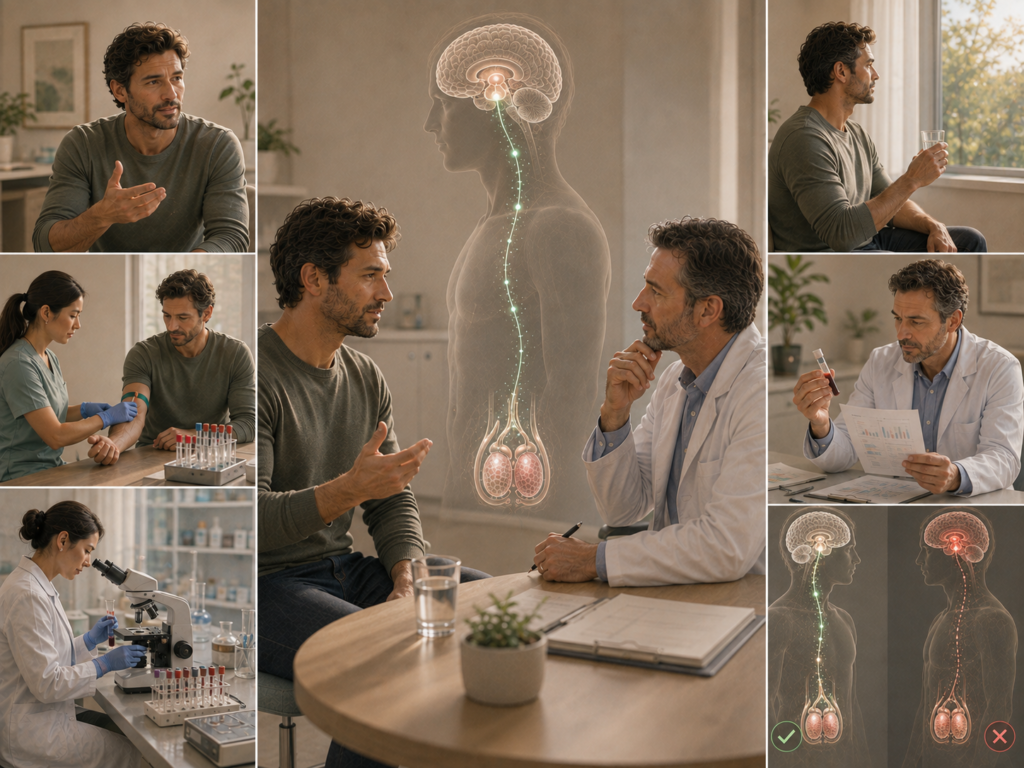
Questions to Ask Your Doctor About Low Testosterone
If you’re concerned about testosterone deficiency, consider asking:
- Could my symptoms have another cause?
- Should I have my testosterone tested?
- What time should I have the blood test?
- Do I need a second testosterone test?
- What testosterone measurement method is being used?
- Do I need free testosterone testing?
- Why might my testosterone be low?
- Should my LH and FSH levels be checked?
- Could any of my medications be contributing?
- Could sleep apnea or another sleep disorder be involved?
- Could my weight or metabolic health be contributing?
- How could treatment affect my fertility?
- What are the benefits and risks of TRT for me?
- What monitoring would I need if I start treatment?
Bringing these questions to an appointment can help make the discussion more productive.
When Low Testosterone Needs More Urgent Evaluation
Most testosterone-related concerns can be evaluated through a routine medical appointment.
However, some symptoms can indicate a problem beyond testosterone deficiency.
Seek prompt medical evaluation if hormonal symptoms occur together with:
- Severe or persistent headaches
- New vision problems
- Significant unexplained testicular pain or swelling
- A new testicular lump
- Severe unexplained weakness
- Sudden neurological symptoms
These symptoms should not simply be attributed to low testosterone.
Medical Disclaimer
This article is intended for general educational purposes and does not replace professional medical advice, diagnosis or treatment.
Symptoms such as fatigue, reduced libido, erectile difficulties, weight changes and mood changes can have many possible causes. Low testosterone should be diagnosed using appropriate clinical assessment and laboratory testing rather than symptoms alone.
Do not start testosterone replacement therapy, testosterone boosters or other hormone treatments without appropriate medical evaluation.
If you have concerns about testosterone, fertility, erectile function or other symptoms, speak with a qualified healthcare professional.
Sources & References
Endocrine Society — Testosterone Therapy for Hypogonadism
The Endocrine Society recommends diagnosing hypogonadism only when compatible symptoms/signs occur alongside consistently and unequivocally low testosterone, with confirmation using repeat morning testing. It also provides recommendations for treatment, fertility considerations and monitoring.
Endocrine Society — 2026 Statement on Testosterone Replacement Therapy
The Society’s July 2026 statement addresses accurate diagnosis, obesity and reversible causes, testosterone replacement, cardiovascular findings from recent trials, and the importance of long-term monitoring.
American Urological Association — Testosterone Deficiency Guideline
The AUA recommends using total testosterone below 300 ng/dL as a reasonable diagnostic cutoff, with two separate early-morning measurements and compatible symptoms/signs.
Endocrine Society — Hypogonadism in Men
Provides patient-focused information about symptoms, causes, diagnosis, testing and testosterone treatment.