

Bloating after meals. Abdominal cramps that seem to come and go. Constipation one week and diarrhea another. A sudden need to use the bathroom when you’re away from home.
Digestive symptoms like these can be frustrating, especially when you don’t know what is causing them.
One possible explanation is irritable bowel syndrome (IBS).
IBS is a common disorder of the digestive system that can cause recurring abdominal pain together with changes in bowel habits. Those changes may involve constipation, diarrhea, or both.
But IBS is more complicated than simply having a “sensitive stomach.”
It is considered a disorder of gut-brain interaction, meaning communication between the digestive tract and nervous system can affect how the gut functions and how strongly digestive sensations are experienced.
IBS does not mean that your symptoms are imaginary, and it does not mean your digestive tract is necessarily being damaged.
At the same time, symptoms such as abdominal pain, bloating, diarrhea and constipation can occur with many other digestive conditions. That’s why persistent or concerning symptoms should not automatically be labeled as IBS without appropriate medical evaluation.
This complete guide explains IBS symptoms, what IBS feels like, the different types of IBS, possible causes and triggers, how IBS is diagnosed, food and diet considerations, treatment options, how to manage flare-ups, and when symptoms may require further medical investigation.
What Is IBS?
Irritable bowel syndrome, or IBS, is a chronic disorder of gut-brain interaction that affects the way the digestive system functions.
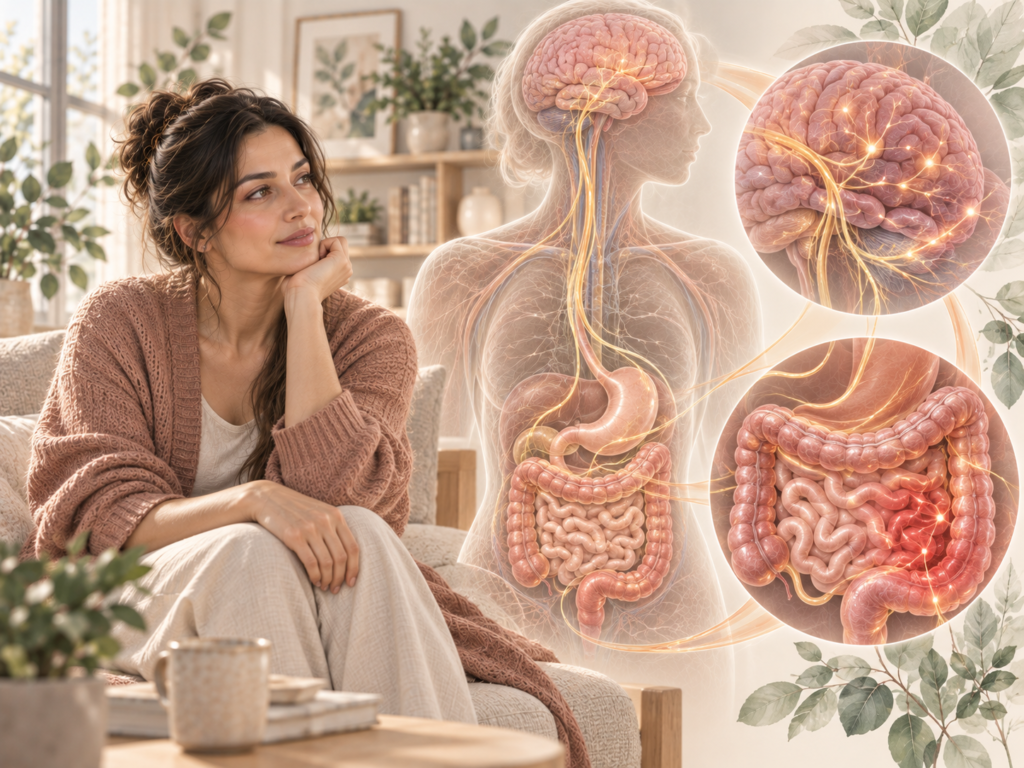
The digestive tract and brain constantly communicate through nerves, hormones and other signaling systems.
In IBS, this communication can become altered.
The gut may become more sensitive to normal digestive activity, while bowel movements may also become faster, slower or otherwise irregular.
This can lead to symptoms such as:
- Abdominal pain
- Cramping
- Bloating
- Diarrhea
- Constipation
- Urgency to have a bowel movement
- Changes in stool appearance
- Feeling that your bowel movement was incomplete
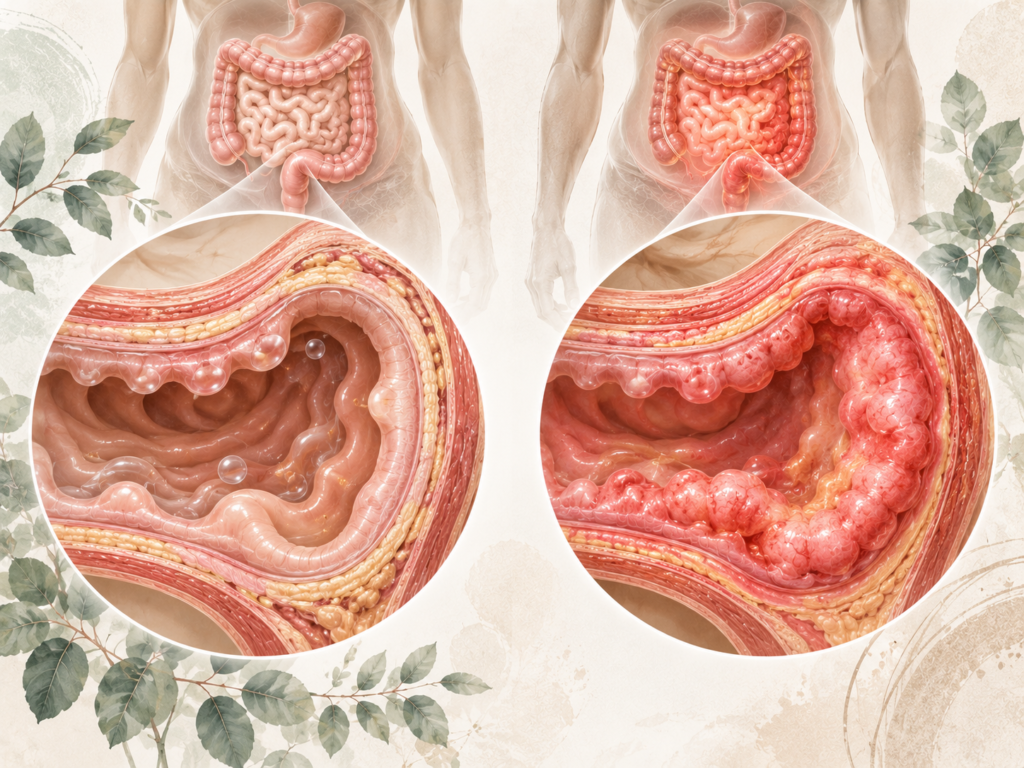
IBS does not cause the type of visible intestinal inflammation and tissue damage seen in inflammatory bowel diseases such as Crohn’s disease and ulcerative colitis.
However, IBS symptoms can still significantly affect quality of life.
People may change what they eat, avoid social situations, worry about finding bathrooms or experience anxiety about when symptoms will return.
How the Gut and Brain Communicate
Your digestive system is not simply a tube that moves food through the body.
It contains an extensive nervous system and communicates continuously with the brain.
Signals travel in both directions.
The brain can influence digestion, while sensations and activity in the digestive tract can influence the brain.
In IBS, this gut-brain communication can become altered, contributing to increased sensitivity, changes in bowel movement and abdominal discomfort.
What Are the Symptoms of IBS?
The main IBS symptoms involve abdominal pain and changes in bowel habits.
However, symptoms vary considerably from person to person.
Some people mainly struggle with constipation.
Others have frequent loose stools.
Some alternate between constipation and diarrhea.
Others experience abdominal pain and bloating as their most disruptive symptoms.
1. Abdominal Pain or Cramping
Abdominal pain is one of the defining symptoms associated with IBS.
The discomfort may feel like:
- Cramping
- Aching
- Pressure
- Burning
- Sharp or dull pain
- A feeling of fullness
IBS-related abdominal pain is often associated with bowel movements.
For some people, having a bowel movement improves the pain.
For others, the pain may become worse or change as bowel habits change.
The location and intensity can also vary.
Persistent or severe abdominal pain should not automatically be assumed to be IBS.
2. Bloating
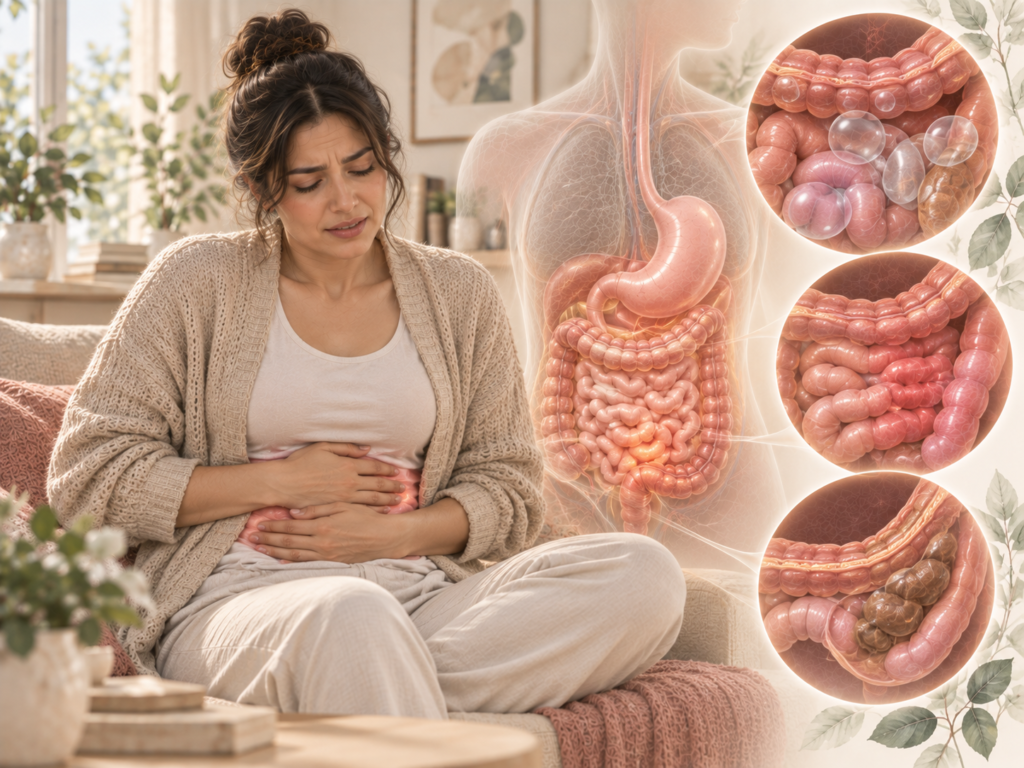
Bloating is one of the most commonly reported IBS symptoms.
Your abdomen may feel:
- Full
- Tight
- Swollen
- Uncomfortable
- Larger than usual
Some people notice bloating particularly after eating.
Bloating can occur with IBS, but it is not specific to IBS. Constipation, food intolerance, gastrointestinal infections and other digestive conditions can also cause it.
3. Constipation
Some people with IBS have constipation as their dominant bowel problem.
You may experience:
- Fewer bowel movements
- Hard or lumpy stools
- Straining
- A feeling that stool is difficult to pass
- A sensation that you have not completely emptied your bowel
IBS-related constipation is not necessarily the same as ordinary occasional constipation.
The overall pattern of abdominal pain and bowel changes is important when evaluating IBS.
4. Diarrhea
Other people primarily experience diarrhea.
IBS-related diarrhea may involve:
- Loose or watery stools
- Urgency
- Frequent bowel movements
- Abdominal cramping
- Needing to use the bathroom soon after eating
Sudden severe diarrhea, diarrhea accompanied by blood, or persistent diarrhea should be medically evaluated rather than automatically attributed to IBS.
5. Alternating Constipation and Diarrhea
Some people experience both.
You may have several days of constipation followed by loose stools, or the pattern may change repeatedly.
This type of IBS is called IBS with mixed bowel habits, or IBS-M.
The pattern can be frustrating because strategies that help constipation may not be appropriate when diarrhea is occurring.
6. Changes in Stool Appearance
IBS can be associated with changes in stool consistency and appearance.
Stools may become:
- Hard and pellet-like
- Soft
- Loose
- Watery
Some people also notice mucus in their stool.
However, blood in the stool should not simply be attributed to IBS and deserves medical assessment.
7. Urgency to Have a Bowel Movement
Some people with IBS feel an intense need to use the bathroom quickly.
This can be particularly disruptive when:
- Traveling
- Working
- Shopping
- Eating at restaurants
- Attending social events
The urgency may occur alongside diarrhea or abdominal cramping.
8. Feeling Like You Haven’t Fully Emptied Your Bowel
A feeling of incomplete evacuation can occur with IBS, particularly when constipation is present.
You may finish a bowel movement but still feel that you need to go again.
This can lead to repeated trips to the bathroom and increased frustration.
What Does IBS Feel Like?
There is no single way that IBS feels.
For one person, it may feel like recurring abdominal cramps and bloating.
For another, the main problem may be diarrhea and urgency.
Someone else may experience constipation, pressure and incomplete bowel movements.
IBS symptoms can also fluctuate.
You might have:
Several relatively comfortable days → a flare → improvement → another flare later.
Symptoms may also be influenced by:
- Certain foods
- Stress
- Menstrual cycles
- Changes in sleep
- Illness
- Changes in routine
- Other individual triggers
This variability is one reason IBS can be difficult to manage.
What Are the Different Types of IBS?
IBS is often categorized according to the person’s predominant stool pattern.
| IBS Type | Main Pattern |
|---|---|
| IBS-C | IBS with constipation |
| IBS-D | IBS with diarrhea |
| IBS-M | IBS with mixed bowel habits |
| IBS-U | Symptoms do not consistently fit the other patterns |
IBS-C
Constipation is the dominant bowel pattern.
IBS-D
Diarrhea is the dominant bowel pattern.
IBS-M
Both constipation and diarrhea occur.
IBS-U
The symptoms do not consistently fit the criteria for the other categories.
The type can help healthcare professionals individualize treatment.
What Causes IBS?
There is no single cause of IBS.
Researchers believe that several factors can contribute.
These may include:
- Altered gut-brain communication
- Increased sensitivity of the digestive tract
- Changes in intestinal movement
- Previous gastrointestinal infections
- Food-related factors
- Changes in the gut microbiome
- Genetic susceptibility
- Stress and psychological factors
Importantly, IBS is not simply caused by stress, and saying that symptoms are “just anxiety” is an oversimplification.
Stress can influence gut function and worsen symptoms in some people, but IBS involves complex interactions between the brain, nervous system, immune system and digestive tract.
Can Stress Cause IBS Symptoms?
Stress can worsen IBS symptoms in some people.
The digestive system and brain communicate continuously, so changes in emotional state can influence:
- Intestinal movement
- Digestive sensitivity
- Pain perception
- Bowel urgency
This does not mean IBS symptoms are imaginary.
The pain and digestive changes are real.
Stress management may simply be one component of a broader IBS treatment plan.
Helpful approaches can include:
- Regular physical activity
- Adequate sleep
- Relaxation exercises
- Breathing techniques
- Mindfulness
- Cognitive behavioral therapy when appropriate
- Professional mental-health support
IBS Symptoms in Women
Women can experience all of the major IBS symptoms, including:
- Abdominal pain
- Bloating
- Constipation
- Diarrhea
- Urgency
- Changes in stool
- Incomplete bowel movements
Some women notice that digestive symptoms change around their menstrual period.
Hormonal fluctuations may influence gastrointestinal symptoms, and NIDDK notes that women with IBS often report more symptoms during menstruation.
However, pelvic pain, severe period pain, abnormal bleeding and persistent abdominal symptoms should not automatically be blamed on IBS.
Conditions such as endometriosis, ovarian disorders and other gynecological conditions can overlap with digestive symptoms.
IBS Symptoms in Men
Men can also experience IBS.
Common symptoms include:
- Abdominal pain
- Bloating
- Diarrhea
- Constipation
- Urgency
- Changes in stool consistency
- Incomplete evacuation
The symptoms themselves do not necessarily differ dramatically by sex, although individual experiences and associated conditions can vary.

How Is IBS Diagnosed?
There is no single test that simply says “you have IBS.”
Instead, healthcare professionals generally look at:
- Your symptoms
- How long they have been occurring
- Your bowel pattern
- Medical history
- Family history
- Physical examination
- Whether warning signs suggest another condition
IBS is diagnosed using a characteristic pattern of symptoms after considering other possible explanations.
What Are the Rome IV Criteria for IBS?
The Rome IV criteria are commonly used when evaluating functional gastrointestinal disorders.
For IBS, the criteria involve:
Recurrent abdominal pain, on average, at least one day per week during the previous three months, associated with at least two of the following:
- Related to defecation
- Associated with a change in stool frequency
- Associated with a change in stool form or appearance
The symptoms should have started at least six months before diagnosis.
These criteria help clinicians identify a characteristic IBS pattern.
They are not intended to encourage people to diagnose themselves online.
What Tests Are Used for IBS?
Depending on your symptoms and medical history, your healthcare professional may order tests to rule out other conditions.
Possible tests can include:
Blood Tests
Blood testing may help look for conditions that can produce similar symptoms.
For example, people with certain digestive symptoms may be evaluated for anemia or celiac disease.
Stool Tests
Stool testing may be used when doctors need to investigate infection, inflammation or other digestive problems.
Celiac Disease Testing
Celiac disease can cause abdominal discomfort, bloating and diarrhea and may resemble IBS.
Testing may therefore be appropriate in selected patients.
Colonoscopy
A colonoscopy is not automatically required for everyone with IBS.
It may be recommended when age, symptoms, family history or other findings indicate that another condition needs to be investigated.
NIDDK notes that additional tests depend on the person’s symptoms and whether another disorder needs to be ruled out.
IBS Red Flags: When It May Not Be IBS
This is one of the most important sections of this article.
IBS is common, but not every digestive symptom is IBS.
You should speak with a healthcare professional if you have warning signs such as:
- Blood in your stool
- Black or tarry stools
- Unexplained weight loss
- Anemia
- Persistent fever
- Severe or progressively worsening abdominal pain
- Persistent vomiting
- Symptoms that repeatedly wake you from sleep
- A strong family history of colorectal cancer
- A strong family history of inflammatory bowel disease
- New or unusual symptoms that don’t fit your usual pattern
NIDDK specifically identifies symptoms such as anemia, rectal bleeding, bloody or black stools and weight loss as reasons to investigate other conditions rather than simply assuming IBS.
If you have severe abdominal pain, significant bleeding, fainting or another acute medical emergency, seek urgent medical care.
IBS vs IBD: What’s the Difference?
The names sound similar, but IBS and IBD are different conditions.
IBS
IBS is a disorder of gut-brain interaction.
It can cause:
- Abdominal pain
- Bloating
- Constipation
- Diarrhea
- Bowel urgency
IBS does not cause the type of visible intestinal inflammation and tissue damage characteristic of IBD.
IBD
Inflammatory bowel disease (IBD) includes conditions such as:
- Crohn’s disease
- Ulcerative colitis
IBD involves inflammation of the digestive tract and can cause tissue damage and complications.
Symptoms can include abdominal pain and diarrhea, which is why the two conditions can sometimes be confused.
IBS vs Food Intolerance
Digestive symptoms after eating do not automatically mean IBS.
For example:
Lactose intolerance can cause symptoms after consuming lactose-containing foods.
Celiac disease is an immune-mediated condition triggered by gluten in genetically susceptible people.
Other food intolerances or sensitivities can also produce digestive symptoms.
IBS can involve food-related symptom triggers, but a person’s symptoms should be assessed in context.
Avoid removing large numbers of foods from your diet without a clear reason.
Excessive restriction can make it difficult to maintain adequate nutrition.
What Foods Can Trigger IBS Symptoms?
Food triggers vary considerably between people.
Some commonly reported triggers include:
- Large meals
- High-fat meals
- Certain fermentable carbohydrates
- Some dairy products
- Certain legumes
- Some fruits
- Wheat-containing foods in some individuals
- Caffeine
- Alcohol
- Carbonated drinks
- Sugar alcohols
But there is an important distinction:
A food that triggers one person’s IBS may be completely tolerable for another person.
There is no universal IBS food blacklist.
Instead, identifying personal patterns can be much more useful.
Keeping a short food-and-symptom diary may help you notice whether certain foods consistently precede symptoms.
What Is the Low-FODMAP Diet?
The low-FODMAP diet is one dietary approach that may improve IBS symptoms for some people.
FODMAP stands for fermentable oligosaccharides, disaccharides, monosaccharides and polyols.
These are carbohydrates that can be poorly absorbed in the small intestine in some circumstances and can be fermented by gut bacteria.
For some people with IBS, reducing FODMAP intake can decrease symptoms such as:
- Bloating
- Gas
- Abdominal discomfort
- Diarrhea
But a low-FODMAP diet is not intended to become an unnecessarily restrictive lifelong diet.
A structured approach commonly involves:
1. Short-term reduction
Higher-FODMAP foods are temporarily reduced.
2. Reintroduction
Foods are gradually tested again.
3. Personalization
The goal is to identify which foods and amounts are actually tolerated.
NIDDK recognizes dietary approaches including a low-FODMAP diet as potential treatment options for IBS.
A registered dietitian experienced in IBS can be particularly helpful when following a structured elimination and reintroduction approach.

How to Manage an IBS Flare-Up
An IBS flare can feel overwhelming, particularly if symptoms appear suddenly.
There is no single strategy that works for everyone, but several approaches may help.
Identify Recent Changes
Think about what changed before symptoms began.
Consider:
- New foods
- Larger meals
- Alcohol
- Caffeine
- Stress
- Poor sleep
- Travel
- Illness
- Medication changes
- Menstrual cycle
You may eventually identify a personal pattern.
Stay Hydrated
Diarrhea can increase fluid loss.
Drink fluids regularly, particularly if you are having frequent loose stools.
If diarrhea is severe or prolonged, medical advice may be needed because dehydration and electrolyte disturbances can occur.
Choose Simpler Meals Temporarily
During a flare, some people find smaller and simpler meals easier to tolerate.
Avoid assuming that you need to stop eating altogether.
If symptoms are severe or you cannot maintain adequate food and fluid intake, seek medical advice.
Adjust Fiber Carefully
Fiber can be helpful, particularly for constipation-predominant IBS.
But suddenly consuming a large amount of fiber can increase:
- Gas
- Bloating
- Abdominal discomfort
NIDDK recommends increasing fiber gradually to reduce the likelihood of these effects.
Manage Stress
Stress management does not mean IBS is psychological.
Instead, it recognizes the strong connection between the brain and digestive system.
Regular movement, adequate sleep, relaxation exercises and psychological therapies can be useful components of IBS care.
How Is IBS Treated?
There is no single treatment that works for everyone.
Treatment is usually based on the person’s predominant symptoms.
It may involve:
- Dietary changes
- Fiber adjustment
- Low-FODMAP strategies
- Physical activity
- Stress management
- Sleep improvement
- Medicines
- Probiotics in selected situations
- Psychological therapies
NIDDK recommends individualized treatment because IBS symptoms and triggers differ from person to person.
Treatment for IBS With Constipation
For IBS-C, treatment may focus on:
- Gradual fiber adjustment
- Adequate fluids
- Regular physical activity
- Dietary modification
- Appropriate constipation medicines when recommended
- Prescription medications when indicated
The correct treatment depends on severity and individual circumstances.
Treatment for IBS With Diarrhea
For IBS-D, management may involve:
- Identifying food triggers
- Dietary modification
- Low-FODMAP strategies when appropriate
- Stress management
- Anti-diarrheal medicines in selected patients
- Prescription treatments when clinically appropriate
Persistent diarrhea should not automatically be treated as IBS without considering other causes.
Can Probiotics Help IBS?
Probiotics are live microorganisms that may influence the gut microbiome.
Some people with IBS report improvement with particular probiotic products, but the evidence is mixed and benefits can vary depending on the strain and individual.
There is no single probiotic that works for everyone with IBS.
If you want to try a probiotic, discuss the choice with a healthcare professional, particularly if you have another medical condition or a weakened immune system.
Can Psychological Therapies Help IBS?
Yes.
Because IBS involves gut-brain interaction, some psychological therapies may improve symptoms for certain people.
These can include:
- Cognitive behavioral therapy
- Gut-directed hypnotherapy
- Other structured psychological approaches
This does not mean IBS is “all in your head.”
These therapies can influence the brain-gut communication pathways involved in pain perception, stress responses and digestive symptoms.
Can Exercise Help IBS?
Regular physical activity can support overall digestive and mental health.
Walking, cycling, swimming, strength training and other activities can be incorporated according to your fitness level and health status.
You do not need an extreme exercise program.
Consistency is generally more useful than intensity.
Can IBS Be Cured?
IBS is generally considered a chronic condition, meaning symptoms can persist or return over time.
However, symptoms often fluctuate.
Some people experience long periods with minimal symptoms.
Others have more frequent flares.
Although there is no universal cure for IBS, appropriate treatment can significantly improve symptoms and quality of life.
The goal is usually effective symptom management, not finding one miracle treatment.
When Should You See a Doctor About IBS Symptoms?
Make an appointment with a healthcare professional if:
- Abdominal pain keeps returning
- Diarrhea or constipation persists
- Bloating significantly affects your daily life
- You frequently need to rush to the bathroom
- Your bowel habits have changed substantially
- Symptoms interfere with work, sleep or social activities
- You are losing weight without trying
- You have blood in your stool
- You have black stools
- You have persistent vomiting
- You have anemia
- Symptoms are progressively worsening
Do not assume persistent digestive symptoms are IBS simply because someone else has similar symptoms.
When Should IBS Symptoms Be Urgent?
Seek urgent medical attention for symptoms such as:
- Severe or rapidly worsening abdominal pain
- Significant gastrointestinal bleeding
- Black or tarry stools
- Fainting or severe weakness
- Severe dehydration
- Persistent vomiting with inability to keep fluids down
- Severe abdominal swelling accompanied by concerning symptoms
If symptoms feel like a medical emergency, seek emergency care rather than waiting for a routine appointment.
IBS Symptoms: Key Takeaways
IBS can affect the digestive system in several different ways.
The most important symptoms include:
- Recurring abdominal pain
- Cramping
- Bloating
- Constipation
- Diarrhea
- Alternating constipation and diarrhea
- Bowel urgency
- Changes in stool consistency
- Feeling of incomplete bowel evacuation
IBS is a disorder of gut-brain interaction, not simply a problem caused by eating one particular food.
Stress can influence symptoms, but IBS is not imaginary or “just stress.”
Food triggers vary between individuals, and dietary strategies such as a structured low-FODMAP approach may help some people.
Most importantly, persistent digestive symptoms should be properly assessed because conditions such as inflammatory bowel disease, celiac disease, infections and other disorders can resemble IBS.
Frequently Asked Questions About IBS
The most common IBS symptoms include recurring abdominal pain, bloating, constipation, diarrhea, changes in stool consistency, bowel urgency and a feeling of incomplete bowel movements.
IBS can feel like abdominal cramping, pressure, bloating or discomfort accompanied by changes in bowel habits. Some people mainly experience constipation, while others have diarrhea or alternating constipation and diarrhea.
You cannot reliably diagnose IBS from one symptom. Healthcare professionals consider the pattern, duration and relationship between abdominal pain and bowel changes and may perform tests to rule out other conditions.
Yes. People with IBS-M, or mixed IBS, experience both constipation and diarrhea. The pattern can change over time.
Food triggers vary. Some people report symptoms after high-FODMAP foods, large meals, fatty foods, caffeine, alcohol, carbonated drinks or particular individual foods. There is no universal list of foods that every person with IBS needs to avoid.
A low-FODMAP diet can improve symptoms for some people with IBS. It is generally best approached as a structured process of reducing, reintroducing and personalizing foods rather than following a highly restrictive diet indefinitely.
IBS is diagnosed using a characteristic symptom pattern and medical evaluation. Depending on the person’s symptoms and risk factors, doctors may use blood tests, stool tests or other investigations to rule out other conditions.
See a healthcare professional for persistent or disruptive digestive symptoms, particularly if you have unexplained weight loss, blood or black stools, anemia, persistent vomiting, severe pain, fever or other unusual symptoms. These can indicate that another condition needs to be investigated.
Conclusion
IBS can affect almost every part of daily life—from what you eat and when you travel to how comfortable you feel leaving the house.
The condition commonly causes recurring abdominal pain together with changes in bowel habits, including constipation, diarrhea or both.
But IBS is not simply “a sensitive stomach.”
It involves complex communication between the digestive system and the brain, and symptoms can be influenced by food, bowel function, stress, previous infections and other factors.
There is also no universal IBS diet or single treatment that works for everyone.
Some people benefit from dietary adjustments or a structured low-FODMAP approach. Others need medication, fiber modification, psychological therapies or a combination of approaches.
And because IBS symptoms overlap with many other digestive conditions, persistent symptoms should not automatically be self-diagnosed as IBS.
If your digestive symptoms keep returning, interfere with daily life or include warning signs such as bleeding, unexplained weight loss or severe pain, getting medically evaluated is the safest next step.
Medical Disclaimer
This article is provided for general educational and informational purposes only and is not a substitute for professional medical advice, diagnosis or treatment.
IBS symptoms can overlap with other digestive and medical conditions. Do not diagnose yourself based solely on this article.
Do not begin a highly restrictive elimination diet, stop medication or start supplements or other treatments without appropriate professional guidance.
If you experience severe abdominal pain, significant bleeding, black stools, severe dehydration, persistent vomiting, fainting or another potentially serious symptom, seek urgent medical care.
Sources & References
- National Institute of Diabetes and Digestive and Kidney Diseases (NIDDK) — Irritable Bowel Syndrome: Definition & Facts
- NIDDK — IBS Symptoms & Causes
- NIDDK — Diagnosis of IBS
- NIDDK — Eating, Diet & Nutrition for IBS
- NIDDK — Treatment for IBS
- American College of Gastroenterology — Clinical Guideline: Management of Irritable Bowel Syndrome