

Eating healthy does not mean following a perfect diet, avoiding every food you enjoy, or surviving on salads and smoothies.
Healthy eating means giving your body a varied combination of foods that provides the energy, protein, healthy fats, carbohydrates, vitamins, minerals, fiber and fluids it needs while keeping foods high in excess sugar, sodium and unhealthy fats in moderation.
A healthy diet can look different from one person, family or culture to another. Your age, activity level, health conditions, nutritional needs, food availability and cultural eating habits can all influence what is appropriate for you. However, the basic principles are consistent: adequacy, balance, moderation and variety. World Health Organization
In this complete LifeMate guide, you’ll learn what healthy eating actually means, which food groups matter, how to build a balanced meal, what foods to eat more often, what foods to limit, and how to make healthier choices without following an extreme diet.
What Is Healthy Eating?
Healthy eating is a pattern of eating that provides enough essential nutrients and energy while including a wide variety of nutritious foods and limiting excessive amounts of nutrients or foods that can negatively affect health.
A healthy diet generally emphasizes:
- Vegetables and fruits
- Whole grains and other high-fiber carbohydrate sources
- Beans, lentils and other legumes
- Protein-rich foods
- Nuts and seeds
- Healthy sources of unsaturated fats
- Dairy foods or suitable fortified alternatives
- Adequate fluids, especially water
At the same time, a healthy eating pattern generally limits excessive intake of:
- Free or added sugars
- Sodium and salt
- Saturated fat
- Industrial trans fat
- Highly processed foods that are high in these nutrients
WHO describes four broad principles of a healthy diet: adequacy, balance, moderation and diversity. It also emphasizes that a healthy diet should be safe and adapted to individual circumstances and cultural context. World Health Organization
Healthy eating is not the same as dieting
A diet can mean simply the foods someone regularly eats. It does not automatically mean weight loss.
Healthy eating also does not require:
- skipping meals
- eliminating carbohydrates
- completely avoiding fat
- eating very small portions
- cutting out all desserts
- following detoxes
- buying expensive “superfoods”
- taking supplements instead of eating nutritious food
For many people, a sustainable eating pattern is more useful than a highly restrictive diet.

What Does a Balanced Diet Include?
There is no single meal plan that everyone must follow.
Instead, think about building dietary variety across the day and week.
A balanced eating pattern can include several major food groups.
1. Vegetables and Fruits
Vegetables and fruits provide fiber, vitamins, minerals and many other beneficial plant compounds.
Examples include:
- Spinach
- Carrots
- Tomatoes
- Bell peppers
- Broccoli
- Cauliflower
- Cucumber
- Pumpkin
- Apples
- Bananas
- Oranges
- Berries
- Guava
- Mango
- Melons
Eating a variety of colors can help you consume a broader range of nutrients.
WHO recommends that adults and children older than 10 aim for at least 400 grams of fruits and vegetables per day, while noting that individual dietary needs can differ. World Health Organization
Fresh produce is not the only option. Frozen and canned fruits and vegetables can also contribute to a healthy diet, particularly when they don’t contain excessive added sugar or sodium. World Health Organization
Fruit juice is different from whole fruit
Whole fruit provides fiber and requires chewing, while juice can provide a concentrated source of free sugars.
That does not mean fruit juice is automatically “bad,” but it is generally better not to treat juice as nutritionally identical to whole fruit.
2. Whole Grains and High-Fiber Carbohydrates
Carbohydrates are an important source of energy.
The goal is not to eliminate carbohydrates. Instead, the quality and overall amount of carbohydrate matter.
Useful sources include:
- Oats
- Whole-wheat bread
- Brown rice
- Whole-grain pasta
- Barley
- Whole-grain corn
- Millet
- Quinoa
- Beans
- Lentils
- Chickpeas
WHO recommends that carbohydrates come primarily from foods such as whole grains, vegetables, fruits and pulses. World Health Organization
Do carbohydrates make you gain weight?
Not automatically.
Body weight is influenced by overall energy intake, energy expenditure, genetics, activity, sleep, medications, health conditions and many other factors.
Carbohydrate-containing foods can absolutely be part of a healthy diet.
The more useful question is:
What type of carbohydrate am I eating, how much am I eating, and what else is included in the meal?
3. Protein-Rich Foods
Protein helps the body build and maintain tissues and performs many other important functions.
Protein-rich foods include:
- Eggs
- Chicken
- Fish
- Lean meats
- Milk
- Yogurt
- Cottage cheese
- Beans
- Lentils
- Chickpeas
- Soy foods
- Nuts
- Seeds
Protein needs vary considerably according to age, body size, activity, pregnancy status and health circumstances.
Instead of assuming everyone needs the same amount, focus on including an appropriate protein source throughout your meals.
Our upcoming LifeMate article “30 High-Protein Foods: Best Protein-Rich Foods to Add to Your Diet” will explore this topic in much greater depth.
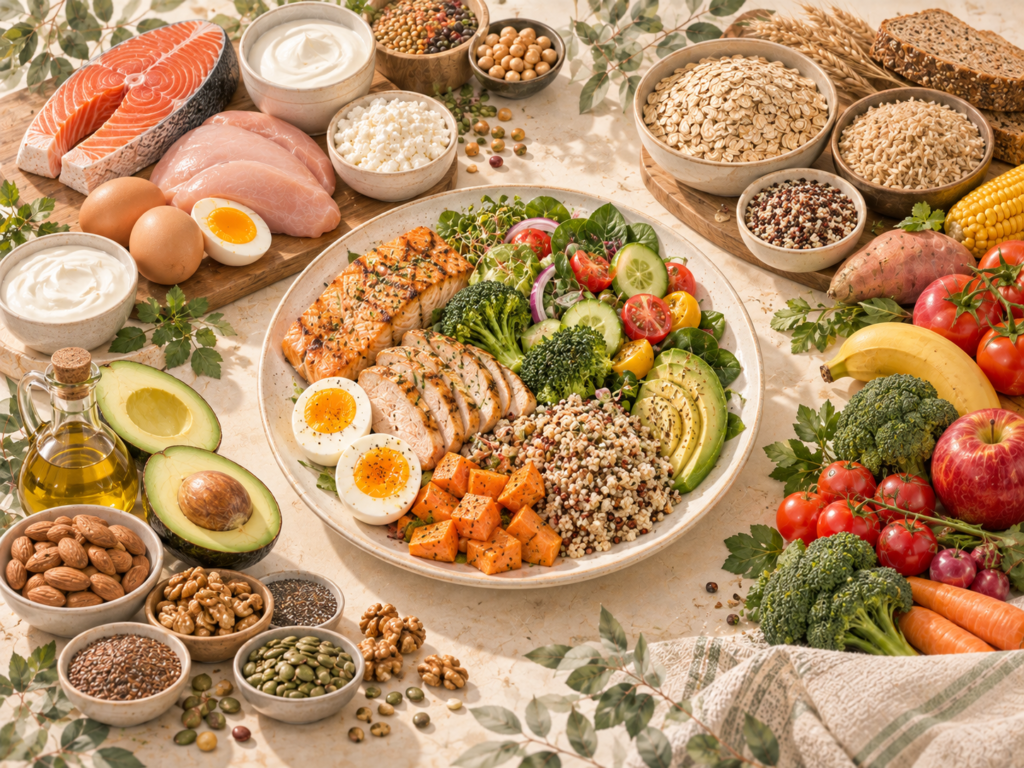
4. Healthy Fats
Fat is an essential nutrient. Your body needs dietary fat for normal cell function and for absorbing certain fat-soluble vitamins.
The type of fat matters.
Sources of unsaturated fats include:
- Avocado
- Nuts
- Seeds
- Olive oil
- Canola oil
- Sunflower oil
- Soybean oil
- Fatty fish
WHO recommends replacing saturated and trans fats with unsaturated fats where possible. Industrially produced trans fats are not part of a healthy diet and should be avoided. World Health Organization
What about saturated fat?
Saturated fat is found in foods such as fatty meats, butter, ghee, cream, some cheeses and certain tropical oils.
The goal is generally to limit excessive intake, rather than assuming every food containing saturated fat must never be eaten.
5. Dairy Foods and Fortified Alternatives
Milk, yogurt and other dairy foods can provide nutrients such as protein and calcium.
People who don’t consume dairy can choose suitable fortified alternatives, depending on their nutritional needs.
Examples may include:
- Fortified soy beverages
- Fortified plant-based alternatives
- Calcium-fortified foods
The nutritional composition of plant-based alternatives varies substantially, so checking the nutrition label can be useful.
6. Water and Hydration
Water is essential for normal body function.
Your fluid needs aren’t identical every day. They can change according to:
- Temperature
- Physical activity
- Sweating
- Illness
- Pregnancy
- Breastfeeding
- Diet
- Individual health circumstances
For everyday hydration, water is generally a simple choice.
Sugary beverages can add substantial amounts of free sugar without providing the same nutritional value as a balanced meal. WHO recommends limiting free sugar intake. World Health Organization
What Nutrients Does Your Body Need?
Healthy eating is ultimately about obtaining the nutrients your body needs.
These include macronutrients and micronutrients.
Macronutrients
Protein
Important for maintaining and repairing tissues and supporting numerous body functions.
Carbohydrates
A major source of energy, particularly when obtained from nutritious foods such as whole grains, fruits, vegetables and legumes.
Fat
Provides energy, supports cell function and helps the body absorb certain vitamins.
Water
Essential for numerous physiological processes.
Micronutrients
Vitamins and minerals are needed in smaller quantities but are essential for health.
Examples include:
- Iron
- Calcium
- Vitamin D
- Vitamin B12
- Folate
- Vitamin C
- Vitamin A
- Vitamin E
- Vitamin K
- Zinc
- Iodine
- Magnesium
- Potassium
A varied diet helps improve the likelihood of obtaining a broad range of essential nutrients. WHO specifically recommends dietary variety and nutrient-dense foods to help meet micronutrient needs.

How to Build a Healthy, Balanced Meal
One of the easiest ways to make healthy eating practical is to stop thinking about individual foods and start thinking about the overall meal.
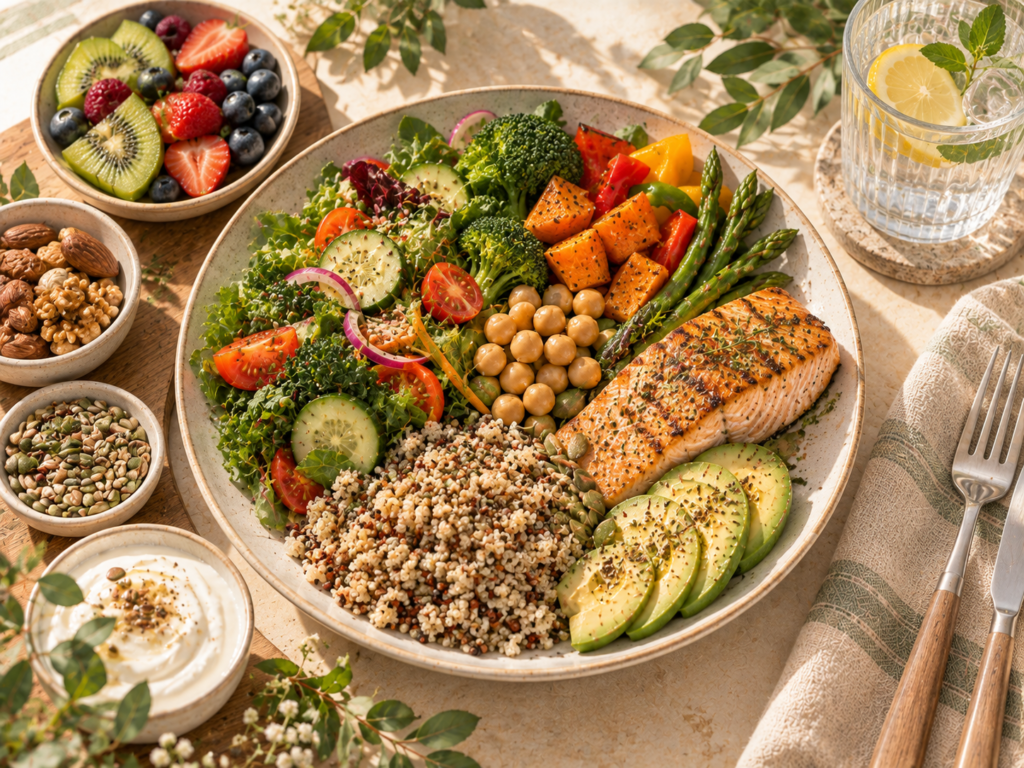
A balanced meal can combine:
Vegetables or fruit + protein + a high-quality carbohydrate + a source of healthy fat
For example:
Breakfast
Oatmeal + yogurt + berries + nuts
Lunch
Whole-wheat roti + lentils or chicken + mixed vegetables + yogurt
Snack
Fruit + a handful of nuts
Dinner
Brown rice or another whole grain + fish/chicken/beans + vegetables
These are examples, not mandatory meals.
Your own balanced meal might look completely different depending on your culture, budget, dietary preferences and nutritional requirements.
NIDDK similarly recommends meals built around vegetables, fruits, protein foods and whole grains, while recognizing practical considerations such as food preferences and individual circumstances. NIDDK
A Simple Balanced-Plate Method
When planning a meal, ask:
1. Where are my vegetables or fruit?
2. Where is my protein?
3. What is my high-quality carbohydrate or whole-grain source?
4. Is there a reasonable source of healthy fat?
5. What am I drinking?
You don’t have to make every meal perfect.
The overall pattern matters more than one meal.
15 Healthy Foods to Include in Your Diet
There is no scientifically established single “healthiest food.”
Instead, variety is one of the foundations of healthy eating.
Here are examples of nutritious foods that can contribute to a balanced diet.
1. Leafy Green Vegetables
Spinach, kale and other leafy greens provide fiber and a range of vitamins and minerals.
2. Beans
Beans provide plant protein, fiber and several micronutrients.
3. Lentils
Lentils are a practical source of plant protein and fiber and can be used in soups, curries, salads and other meals.
4. Chickpeas
Chickpeas provide protein, fiber and other nutrients and can be used in many different cuisines.
5. Eggs
Eggs provide high-quality protein and several vitamins and minerals.
6. Fish
Fish provides protein, and some types of fatty fish are rich in omega-3 fatty acids.
7. Yogurt
Yogurt can provide protein, calcium and other nutrients. Choosing varieties with less added sugar can help reduce free sugar intake.
8. Oats
Oats are a whole-grain food and provide dietary fiber.
9. Nuts
Nuts provide unsaturated fats, protein, fiber and various micronutrients.
10. Seeds
Seeds such as chia, flax, pumpkin and sunflower seeds provide nutrients including healthy fats and minerals.
11. Berries
Berries provide fiber and a variety of plant compounds.
12. Citrus Fruits
Oranges, grapefruit and other citrus fruits provide vitamin C and other nutrients.
13. Tomatoes
Tomatoes provide vitamin C, potassium and carotenoid compounds such as lycopene.
14. Whole Grains
Whole grains such as oats, whole wheat, brown rice and other minimally processed grains can provide fiber and nutrients.
15. Colorful Vegetables
Eating a variety of vegetables—including green, orange, red and other colors—helps increase dietary diversity.
The larger principle is more important than the list itself: build variety across food groups instead of relying on one “superfood.” WHO recommends a wide variety of fruits, vegetables, pulses, whole grains, nuts and appropriate protein sources as part of a healthy dietary pattern. World Health Organization
Foods to Limit for Better Nutrition
Healthy eating isn’t about creating a list of foods you’re never allowed to eat.
Instead, focus on frequency, quantity and overall dietary pattern.
1. Foods High in Free or Added Sugars
Examples include:
- Sugary soft drinks
- Sweetened beverages
- Many desserts
- Candy
- Syrups
- Some sweetened cereals
- Sugar-heavy packaged foods
WHO recommends keeping free sugars below 10% of total daily energy intake, with a further reduction to 5% or less potentially providing additional health benefits. World Health Organization
2. Foods High in Sodium
Excessive sodium intake can contribute to elevated blood pressure.
Common sources can include:
- Processed meats
- Salty snacks
- Instant foods
- Some sauces and condiments
- Processed meals
- Large amounts of added salt
WHO recommends adults consume less than 2,000 mg of sodium per day, equivalent to less than 5 grams of salt. World Health Organization
3. Foods High in Saturated Fat
Examples include foods containing substantial amounts of:
- Butter
- Ghee
- Fatty meats
- Cream
- Some cheeses
- Certain tropical oils
The overall dietary pattern matters, but replacing some saturated fat with unsaturated fat can improve the quality of the diet. World Health Organization
4. Industrial Trans Fat
Industrial trans fats are particularly important to avoid.
WHO states that industrially produced trans fats are not part of a healthy diet and should be avoided.

How Much Should You Eat?
There is no single portion size or calorie target that is appropriate for every adult.
Energy and nutrient needs vary according to factors such as:
- Age
- Body size
- Sex
- Physical activity
- Pregnancy or breastfeeding
- Growth
- Health conditions
- Medications
- Individual metabolism
Healthy eating therefore isn’t simply about eating “less.”
It is about eating appropriately for your body and circumstances.
Someone who exercises intensely may need more energy than someone who is sedentary. A pregnant person has different nutritional requirements from someone who is not pregnant. Someone with kidney disease may need dietary modifications that aren’t appropriate for the general population.
If you have a medical condition requiring a specific diet, individualized advice from a qualified healthcare professional or registered dietitian may be appropriate.
Healthy Eating for Different Goals
The basic principles of healthy eating remain similar, but the way you apply them can change.
Healthy Eating for Weight Management
Healthy eating can support weight management when it helps you maintain an appropriate overall energy intake while providing adequate nutrition.
A healthy weight strategy doesn’t necessarily require eliminating carbohydrates or eating extremely low-calorie meals.
Foods containing protein, fiber and minimally processed carbohydrates can help create satisfying meals.
LifeMate’s Weight Loss category will explore energy balance and weight-management strategies in greater depth.
Healthy Eating for Energy
Regular meals containing a combination of carbohydrates, protein and healthy fats can help provide sustained sources of energy.
Adequate sleep, hydration, physical activity and treatment of underlying medical conditions also matter.
Persistent unexplained fatigue should not automatically be blamed on diet.
Healthy Eating for Gut Health
Fiber-rich foods—including vegetables, fruits, legumes and whole grains—can support digestive health.
However, people with conditions such as IBS, inflammatory bowel disease, celiac disease or other digestive disorders may have individual dietary triggers or medical dietary requirements.
Our existing IBS Symptoms article provides more information about IBS and individualized dietary considerations.
Healthy Eating for Women
Women have changing nutritional needs across different life stages.
Iron, folate, calcium, vitamin D and other nutrients can be particularly important depending on age and reproductive stage.
Pregnancy and breastfeeding require specific nutritional considerations and should not simply be treated as a standard adult diet.
Healthy Eating for Men
Men also need a varied dietary pattern containing adequate protein, fiber, vitamins, minerals and healthy fats.
Nutrition needs differ among individuals, so a healthy diet for men isn’t necessarily a completely different diet from a healthy diet for women.
How to Start Eating Healthy: 10 Simple Changes
If your current diet isn’t ideal, you don’t need to change everything tomorrow.
Small, sustainable changes can be easier to maintain.
1. Add vegetables to one more meal
Start with lunch or dinner.
2. Eat fruit regularly
Choose whole fruit more often than fruit-flavored products or sugary drinks.
3. Include a protein source
Eggs, yogurt, fish, chicken, beans, lentils, tofu, nuts and seeds can all contribute protein.
4. Choose whole grains more often
Try oats, brown rice or whole-wheat bread instead of always choosing refined grains.
5. Increase fiber gradually
If your current diet is low in fiber, increase it progressively rather than suddenly eating very large amounts.
6. Drink more water
Especially if sugary beverages are currently a major part of your diet.
7. Reduce excessive salt
Taste your food before automatically adding more salt.
8. Pay attention to added sugars
Check packaged-food labels where available.
9. Use healthier cooking methods more often
Steaming, baking, boiling and grilling can reduce the need for large amounts of added fat compared with deep-frying.
10. Focus on consistency rather than perfection
One restaurant meal, dessert or celebration does not determine whether your overall diet is healthy.

Common Healthy Eating Mistakes
Even people who are trying to eat well can fall into common traps.
Mistake 1: Thinking healthy eating means eating very little
A nutritious diet still needs to provide enough energy and nutrients.
Mistake 2: Eliminating carbohydrates unnecessarily
Carbohydrates are not inherently unhealthy. Whole grains, fruits, vegetables and legumes can all be valuable carbohydrate sources.
Mistake 3: Believing every fat is unhealthy
Fat is an essential nutrient. The type of fat matters.
Mistake 4: Relying on supplements instead of food
Supplements can have an appropriate medical role in certain situations, but they don’t replace dietary variety.
Mistake 5: Thinking expensive foods are automatically healthier
Many nutritious foods are affordable, including:
- Lentils
- Beans
- Chickpeas
- Eggs
- Oats
- Seasonal vegetables
- Seasonal fruit
- Whole grains
Mistake 6: Following extremely restrictive diets
Very restrictive diets can make it harder to obtain adequate nutrition and may be difficult to maintain.
Mistake 7: Trying to make every meal perfect
A healthy dietary pattern is built over time.
Is Healthy Eating Expensive?
It doesn’t have to be.
One of the biggest misconceptions about nutrition is that a healthy diet requires expensive imported foods, supplements or specialty products.
Affordable nutritious options can include:
- Lentils
- Beans
- Chickpeas
- Eggs
- Oats
- Seasonal vegetables
- Seasonal fruit
- Plain yogurt
- Whole-wheat flour
- Brown or other whole grains
- Seeds
- Local fish when available
Frozen and canned foods can also be useful options when they have appropriate nutritional profiles and don’t contain excessive added sugar or sodium. WHO specifically notes that frozen and canned fruits and vegetables can contribute to a healthy diet. World Health Organization
A practical money-saving strategy
Plan several meals around overlapping ingredients.
For example:
Lentils → lunch → leftovers → dinner
Chicken → dinner → next-day wrap
Vegetables → omelet → lunch → soup
This reduces food waste while making healthy meals easier to prepare.
Healthy Eating Example: What Could a Balanced Day Look Like?
The following is an example, not a personalized meal plan.
Breakfast
Oatmeal topped with fruit, plain yogurt and a small portion of nuts.
Why it works:
Provides whole-grain carbohydrate, protein, fiber and healthy fats.
Lunch
Lentils or chicken + whole-wheat roti + mixed vegetables + plain yogurt.
Why it works:
Combines protein, fiber-rich carbohydrate, vegetables and a calcium-containing food.
Snack
A piece of whole fruit with a small handful of nuts.
Dinner
Fish, chicken, beans or another protein source + vegetables + brown rice or another whole grain.
Drinks
Water throughout the day according to thirst and individual needs.
Again, there is no requirement to eat exactly these foods. A healthy eating pattern can be adapted to Pakistani, South Asian, Mediterranean, Middle Eastern, Western and many other cuisines.
When Should You Talk to a Doctor or Registered Dietitian?
General healthy-eating advice isn’t a substitute for individualized medical nutrition care.
Talk with a doctor or qualified dietitian if you have:
- Diabetes
- Kidney disease
- Liver disease
- Celiac disease
- Significant gastrointestinal disease
- Food allergies
- An eating disorder
- Significant unintended weight loss or weight gain
- Nutrient deficiencies
- Pregnancy-related nutritional concerns
- A medically prescribed diet
Some medical conditions require specific restrictions or nutritional targets that differ from general healthy-eating advice.
Frequently Asked Questions About Healthy Eating
Healthy eating means regularly consuming a varied diet that provides adequate energy and essential nutrients while limiting excessive amounts of nutrients such as free sugars, sodium and unhealthy fats. A healthy diet emphasizes variety, balance, moderation and nutrient-dense foods.
There is no single mandatory daily food list for everyone. A healthy pattern generally includes a variety of vegetables, fruits, whole grains or other high-fiber carbohydrate sources, protein foods, healthy fats and appropriate fluids.
A balanced diet includes appropriate amounts and variety of carbohydrates, protein and fats along with vitamins, minerals, fiber and water. The exact balance depends on individual nutritional needs.
Start with small changes: add more vegetables and fruit, choose whole grains more often, include protein with meals, drink water regularly, reduce excessive sugary drinks and limit foods high in sodium and unhealthy fats.
Rather than one “healthiest food,” focus on variety. Vegetables, fruits, legumes, whole grains, nuts, seeds, fish and other nutritious protein foods can all contribute to a healthy dietary pattern.
Yes. Carbohydrates can be part of a healthy diet. Whole grains, fruits, vegetables and legumes are important carbohydrate sources and also provide other nutrients and fiber.
No. Healthy eating describes an overall dietary pattern. A weight-loss diet is a specific approach designed to reduce body weight or energy intake. Healthy eating does not automatically require restrictive dieting.
A nutritious eating pattern can support healthy weight management when combined with an appropriate overall energy intake and other healthy lifestyle behaviors. However, individual weight-management needs vary, and medical conditions and medications can also affect weight.
Conclusion:
What Does Healthy Eating Really Mean?
Healthy eating doesn’t have to be complicated.
You don’t need a perfect diet, expensive superfoods or a completely restrictive meal plan.
Instead, build your diet around variety, balance, moderation and adequate nutrition.
Choose vegetables and fruits regularly. Include protein-rich foods. Make whole grains and other high-fiber foods part of your meals. Choose unsaturated fats more often. Drink water. Limit excessive free sugars, sodium, saturated fats and industrial trans fats.
Most importantly, make your eating pattern realistic enough to maintain.
A healthy diet can look different across cultures, budgets, lifestyles and life stages. What matters is creating an overall pattern that supplies the nutrients your body needs while supporting your long-term health. World Health Organization
Medical Disclaimer
This article is intended for general educational and informational purposes only and does not provide individual medical or nutritional advice.
Nutrition needs vary between individuals. People with medical conditions, food allergies, eating disorders, pregnancy-related nutritional needs, nutrient deficiencies or medically prescribed diets should speak with a qualified healthcare professional or registered dietitian for personalized guidance.
Do not make major dietary changes or stop prescribed treatment based solely on information from this article.
Sources & References
- World Health Organization (WHO). Healthy Diet. Updated January 26, 2026. World Health Organization
- World Health Organization (WHO). Healthy Diet — Health Topic. World Health Organization
- National Institute of Diabetes and Digestive and Kidney Diseases (NIDDK). Diet & Nutrition. NIDDK
- NIDDK. Keep Active & Eat Healthy to Improve Well-being & Feel Great. NIDDK
- NIDDK. Health Tips for Adults. NIDDK