

Morning sickness is one of the most common symptoms of pregnancy, affecting many women during the first trimester. Despite its name, nausea and vomiting can occur at any time of the day or night. For some, symptoms are mild and manageable, while others may experience more frequent nausea that interferes with daily activities.
Although morning sickness can be uncomfortable, it is usually a normal part of early pregnancy and often improves as pregnancy progresses. Understanding why it happens, recognizing common symptoms, and learning practical ways to manage nausea can help make this stage of pregnancy more comfortable.
In this guide, you’ll learn what causes morning sickness, when it typically begins and ends, common symptoms, evidence-based relief strategies, foods that may help, and when it is important to seek medical care.
What Is Morning Sickness?
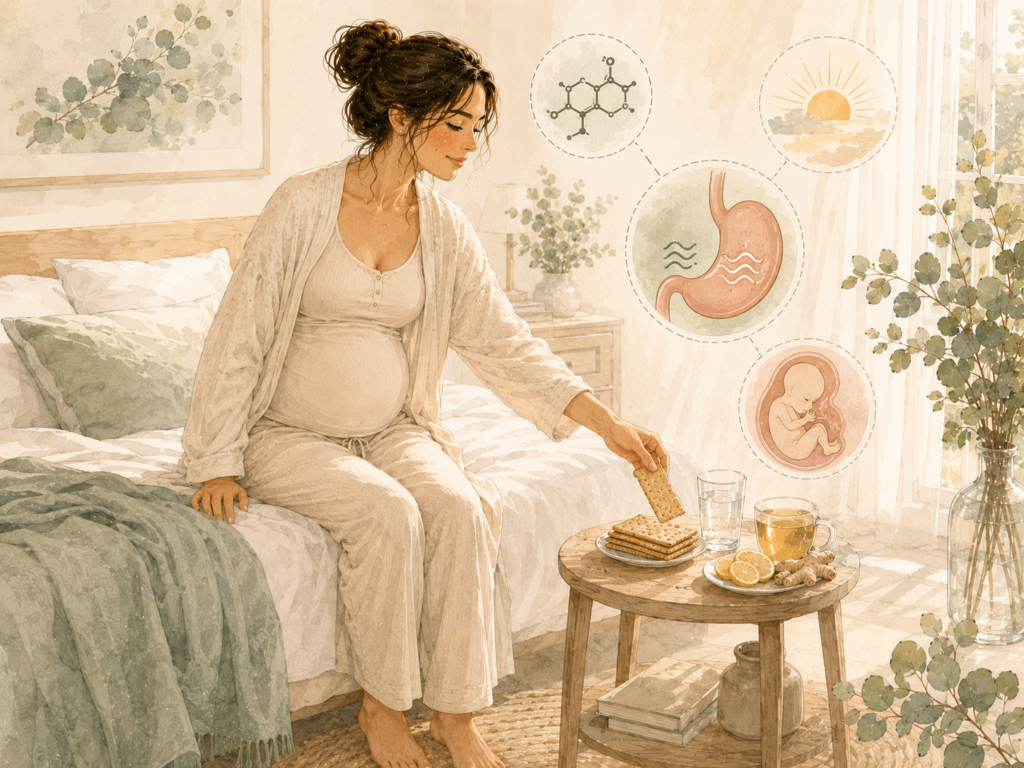
Morning sickness is a common pregnancy symptom characterized by nausea, with or without vomiting, that usually occurs during the first trimester. Although it is often called “morning” sickness, symptoms can happen at any time of the day, including the afternoon, evening, or even during the night.
The severity varies from person to person. Some women experience only mild nausea, while others may vomit several times a day. A small number develop a more severe condition called hyperemesis gravidarum, which requires medical treatment.
Experiencing little or no morning sickness is also normal and does not necessarily indicate a problem with the pregnancy.
Why Does Morning Sickness Happen?
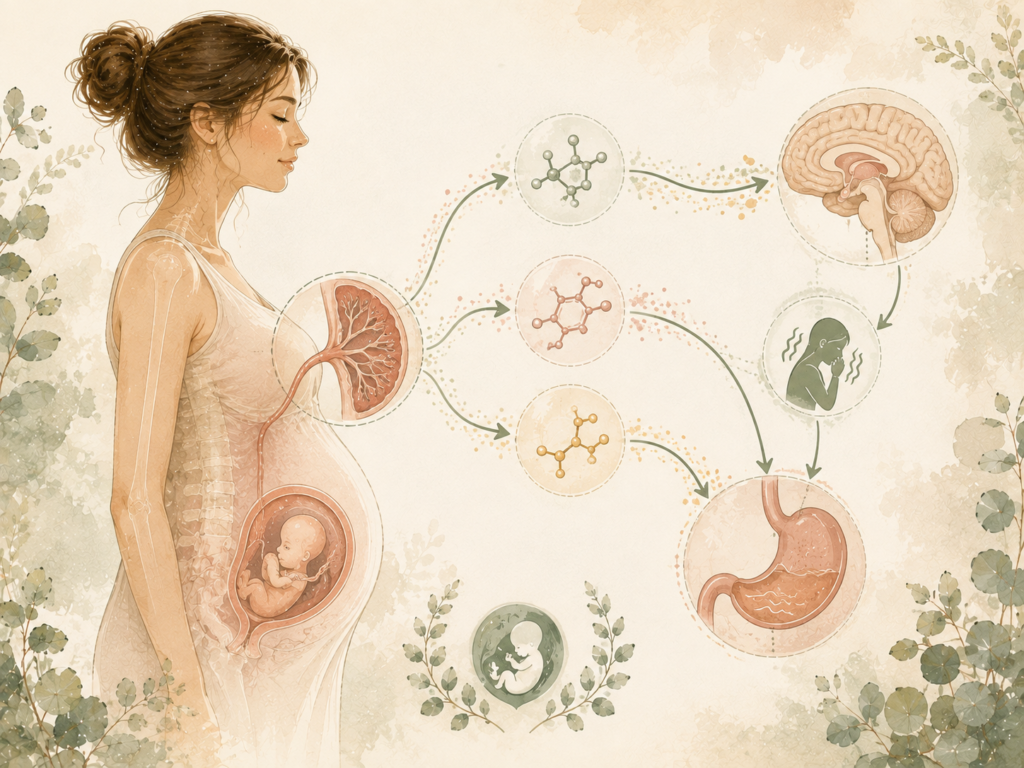
The exact cause of morning sickness is not fully understood, but experts believe it results from several normal changes that occur during early pregnancy.
These include:
- Rapidly increasing pregnancy hormones, especially human chorionic gonadotropin (hCG).
- Rising estrogen levels.
- Higher progesterone levels, which slow digestion.
- A heightened sense of smell.
- Increased sensitivity to certain foods and odors.
- Individual genetic and biological differences.
Rather than being caused by a single factor, morning sickness is likely the result of these changes working together.
When Does Morning Sickness Start?
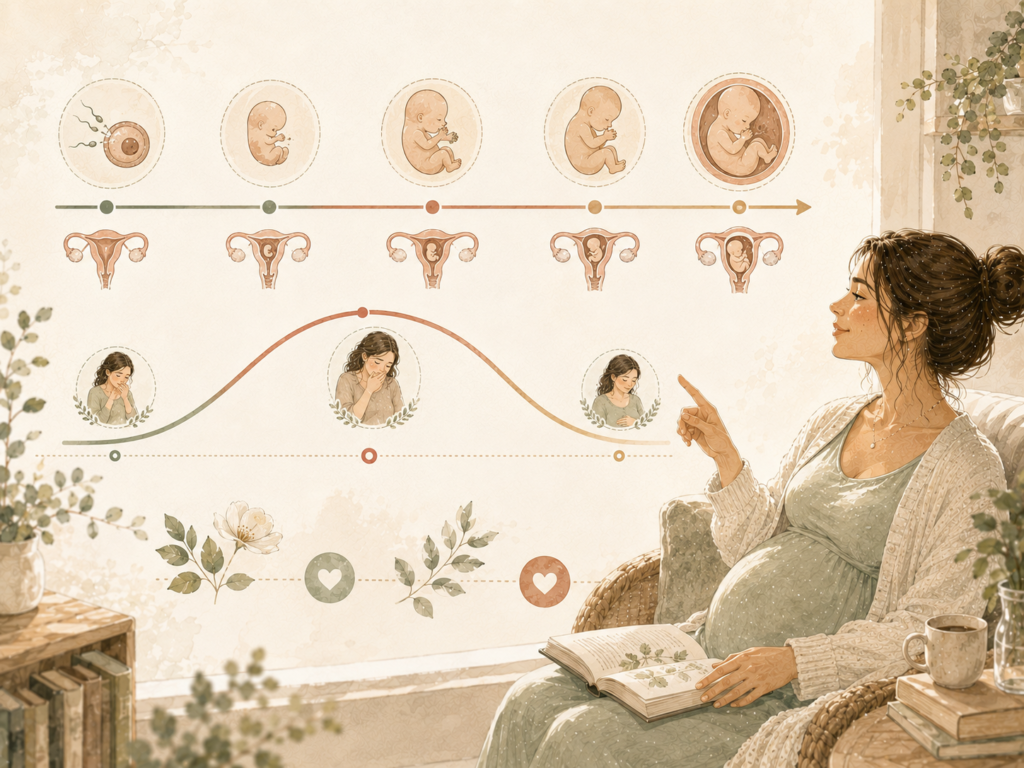
Morning sickness most commonly begins between weeks 5 and 6 of pregnancy, although some women notice symptoms slightly earlier or later.
For many women:
- Mild nausea begins around weeks 5–6.
- Symptoms often become stronger between weeks 8–10.
- Many begin feeling better around weeks 12–16.
- Some continue to experience nausea into the second trimester.
- A smaller number may have symptoms throughout pregnancy.
Every pregnancy is unique, so the timing and intensity of symptoms can vary considerably.
Common Symptoms of Morning Sickness
Morning sickness can affect each woman differently. Symptoms may be mild, moderate, or more intense depending on individual circumstances.
Common symptoms include:
- Feeling nauseated throughout the day.
- Vomiting once or multiple times daily.
- Increased sensitivity to certain smells.
- Food aversions.
- Loss of appetite.
- Excess saliva.
- Feeling worse on an empty stomach.
- Fatigue due to poor food intake.
- Mild dehydration if vomiting occurs frequently.
Most women are still able to eat and drink enough to stay healthy, although some may need additional support from their healthcare provider.

Who Is More Likely to Experience Morning Sickness?
Although anyone who is pregnant can experience morning sickness, some people may be more likely to develop moderate or severe symptoms.
Factors associated with an increased likelihood include:
- Being pregnant for the first time.
- Carrying twins or multiples.
- Having a personal or family history of severe morning sickness.
- Experiencing motion sickness or migraine headaches.
- Having experienced morning sickness in a previous pregnancy.
These factors do not guarantee that morning sickness will occur, but they may increase the likelihood.
Can Morning Sickness Affect Your Baby?
For most women, typical morning sickness does not harm the baby. Even if eating feels difficult for a few weeks, many women continue to have healthy pregnancies.
However, persistent vomiting that prevents you from keeping down food or fluids may lead to dehydration, weight loss, or nutritional deficiencies. In these situations, prompt medical care is important to protect both maternal and fetal health.
15 Effective Ways to Relieve Morning Sickness
Morning sickness cannot always be prevented, but small lifestyle and dietary adjustments can often make symptoms easier to manage. What works for one person may not work for another, so it may take some trial and error to find strategies that help you feel better.
1. Eat Before Getting Out of Bed
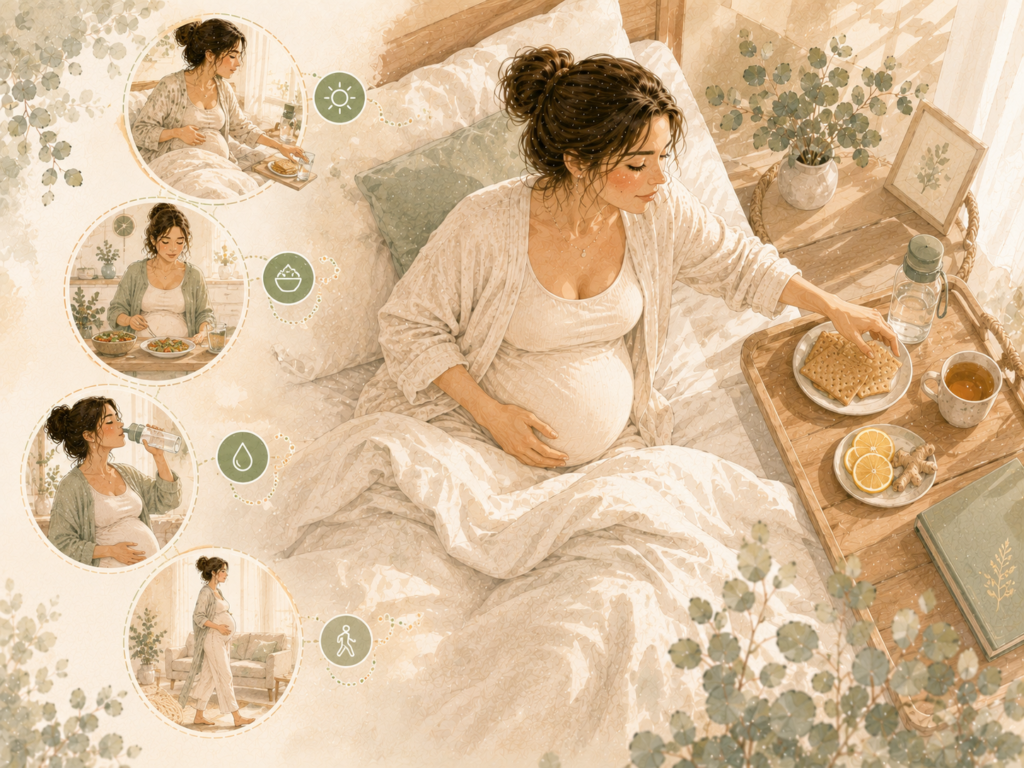
An empty stomach can make nausea feel worse. Keeping a few plain crackers or dry toast beside your bed and eating a small snack before standing up may help reduce early morning nausea.
Take your time getting out of bed rather than standing up suddenly.
2. Eat Small, Frequent Meals
Instead of eating three large meals each day, try eating five or six smaller meals.
Keeping your stomach from becoming completely empty may help reduce nausea and maintain steady energy levels.
Good choices include:
- Plain crackers
- Toast
- Rice
- Oatmeal
- Yogurt
- Fresh fruit
3. Stay Hydrated
Vomiting can increase your risk of dehydration, making nausea feel even worse.
Sip fluids slowly throughout the day instead of drinking large amounts at once.
Helpful choices include:
- Water
- Coconut water
- Oral rehydration solutions (if recommended)
- Clear soups
- Ice chips
- Lemon-infused water
If plain water worsens nausea, try drinking it cold or adding slices of lemon or cucumber.
4. Choose Bland Foods
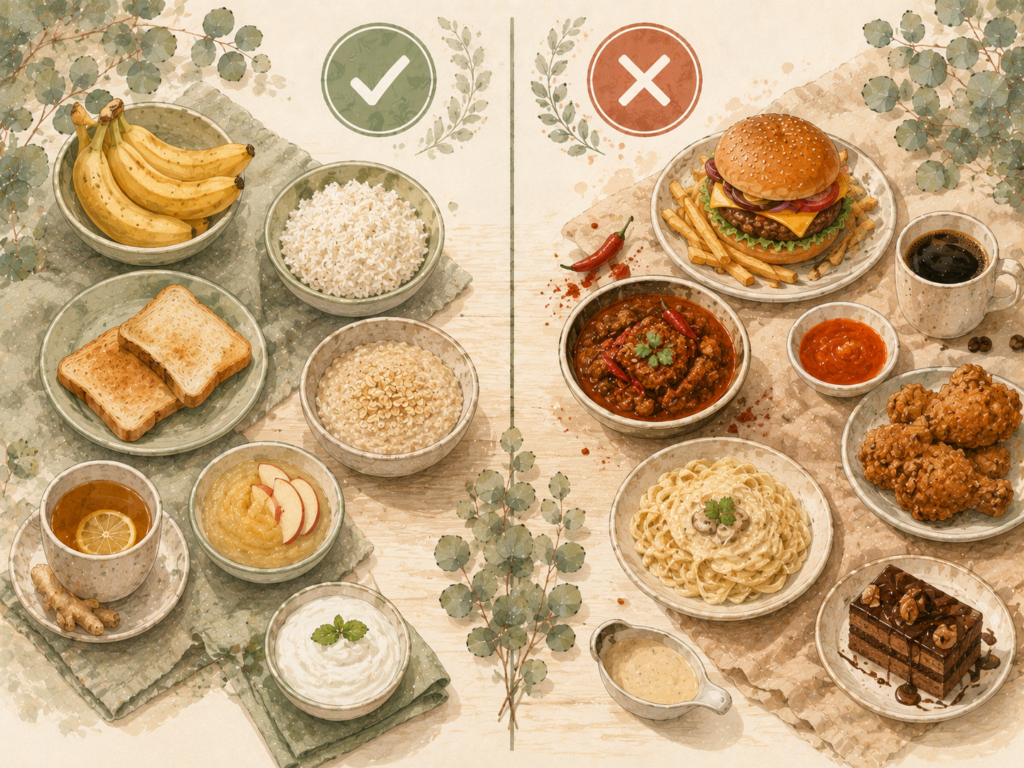
Simple foods are often easier to tolerate than rich, spicy, or greasy meals.
Many women find relief with foods such as:
- Plain toast
- Rice
- Bananas
- Applesauce
- Oatmeal
- Plain potatoes
- Plain pasta
These foods are generally gentle on the stomach and easy to digest.
5. Try Ginger
Ginger has been studied as a possible way to help reduce mild pregnancy-related nausea for some women.
You may enjoy ginger as:
- Ginger tea
- Fresh ginger
- Ginger biscuits
- Ginger candies
- Ginger added to warm water
If you’re considering ginger supplements, discuss them with your healthcare provider first.
6. Identify Foods That Trigger Nausea
Every pregnancy is different.
Some women notice that certain foods or smells trigger nausea, while others have no specific triggers.
Keeping a simple food diary can help identify patterns.
Common triggers include:
- Fried foods
- Greasy meals
- Strong spices
- Heavy sauces
- Strong coffee
- Certain perfumes
- Cooking odors
7. Eat More Protein
Including protein with meals and snacks may help some women feel fuller for longer and reduce nausea.
Healthy protein choices include:
- Eggs
- Greek yogurt
- Cottage cheese
- Chicken
- Turkey
- Beans
- Lentils
- Nuts
Aim to include protein regularly throughout the day rather than consuming it all in one meal.
8. Avoid Strong Smells
During pregnancy, the sense of smell often becomes more sensitive.
Opening windows while cooking, using an exhaust fan, or asking someone else to prepare meals may help if cooking odors trigger nausea.
Fresh air can also make a difference.
9. Get Plenty of Rest
Fatigue can make nausea feel more intense.
Try to:
- Maintain a regular sleep schedule.
- Take short naps if needed.
- Avoid becoming overly tired.
- Ask family members for help when possible.
Listening to your body’s need for rest is an important part of pregnancy self-care.

10. Try Gentle Physical Activity
If your healthcare provider says it’s safe, light activity such as a short walk or gentle stretching may help some women feel better.
Even a few minutes outdoors can provide fresh air and improve overall well-being.
Stop exercising if you feel dizzy, unwell, or uncomfortable, and discuss any concerns with your healthcare provider.
11. Wear Comfortable Clothing
Tight clothing around the waist or abdomen may increase feelings of nausea for some women.
Loose, breathable clothing may feel more comfortable throughout the day.
12. Practice Relaxation Techniques
Stress does not cause morning sickness, but feeling anxious or overwhelmed may make nausea feel harder to manage.
Some women find gentle relaxation techniques helpful, such as:
- Deep breathing
- Meditation
- Prenatal yoga (if approved)
- Listening to calming music
- Spending time outdoors
13. Ask About Vitamin B6
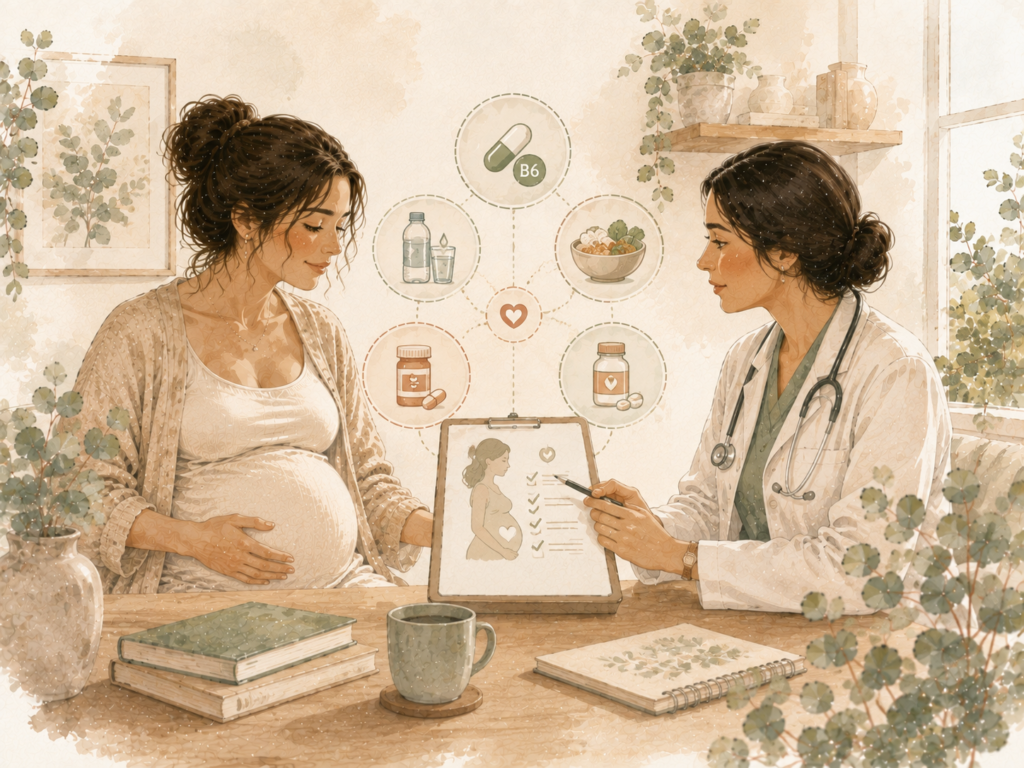
Some healthcare providers may recommend vitamin B6 for pregnancy-related nausea.
Do not start supplements on your own. Always follow the advice of your healthcare provider regarding medications or supplements during pregnancy.
14. Take Prenatal Vitamins at the Right Time
If your prenatal vitamin seems to worsen nausea, ask your healthcare provider whether taking it with food or later in the day might help.
Do not stop taking prescribed prenatal vitamins without medical advice.
15. Know When Medical Treatment May Be Needed
If nausea and vomiting become severe, your healthcare provider may recommend additional treatments or prescribe medications that are considered appropriate during pregnancy.
Never take over-the-counter anti-nausea medicines without consulting a healthcare professional.
Foods and Drinks That May Help Ease Morning Sickness
Certain foods and beverages are often easier to tolerate during periods of nausea.
Many women find relief with:
- Plain crackers
- Dry toast
- Bananas
- Rice
- Applesauce
- Oatmeal
- Ginger tea
- Greek yogurt
- Fresh fruit
- Smoothies (if tolerated)
- Clear soups
- Cold foods with mild aromas
Cold meals may produce less odor than hot meals, making them easier to eat for some women.
Foods That May Make Morning Sickness Worse
While everyone’s triggers are different, some foods commonly worsen nausea.
These include:
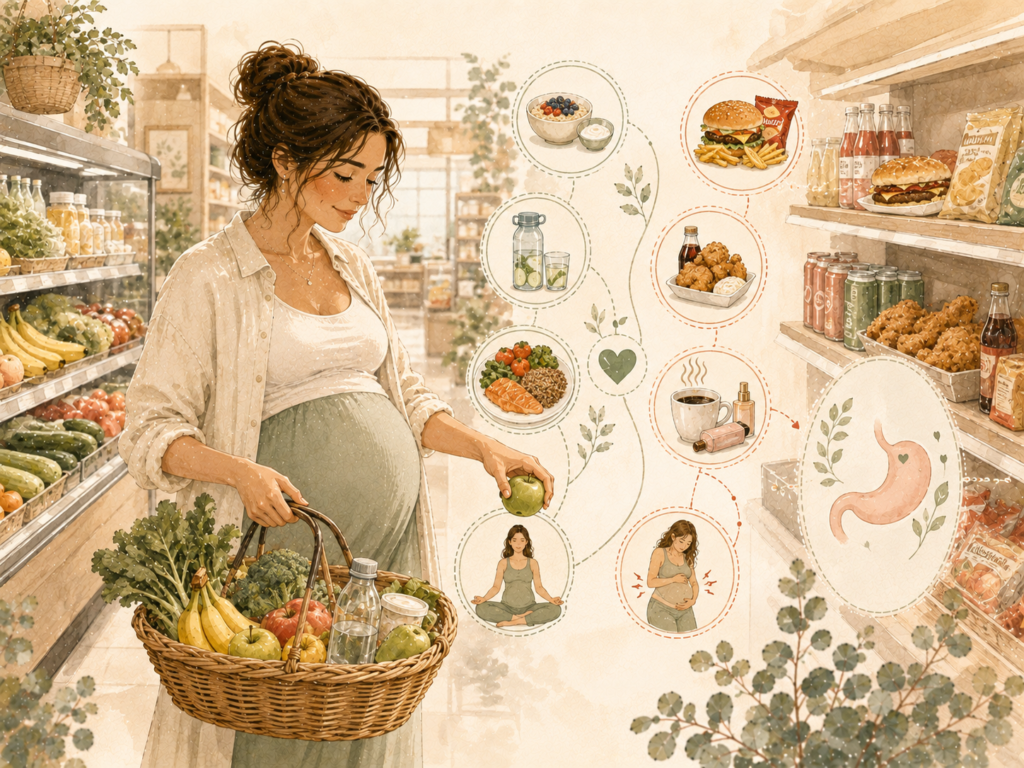
- Fried foods
- Greasy meals
- Very spicy dishes
- Rich creamy sauces
- Strong-smelling foods
- Large heavy meals
- Excess caffeine
- Highly processed snacks
If a food consistently makes your symptoms worse, try avoiding it temporarily and choose gentler alternatives.
What Is Hyperemesis Gravidarum?
While most women experience mild to moderate morning sickness, a small percentage develop a much more severe condition called hyperemesis gravidarum (HG).
Hyperemesis gravidarum is characterized by severe and persistent nausea and vomiting that can make it difficult to keep food or fluids down. Without treatment, it may lead to dehydration, weight loss, and nutritional deficiencies.
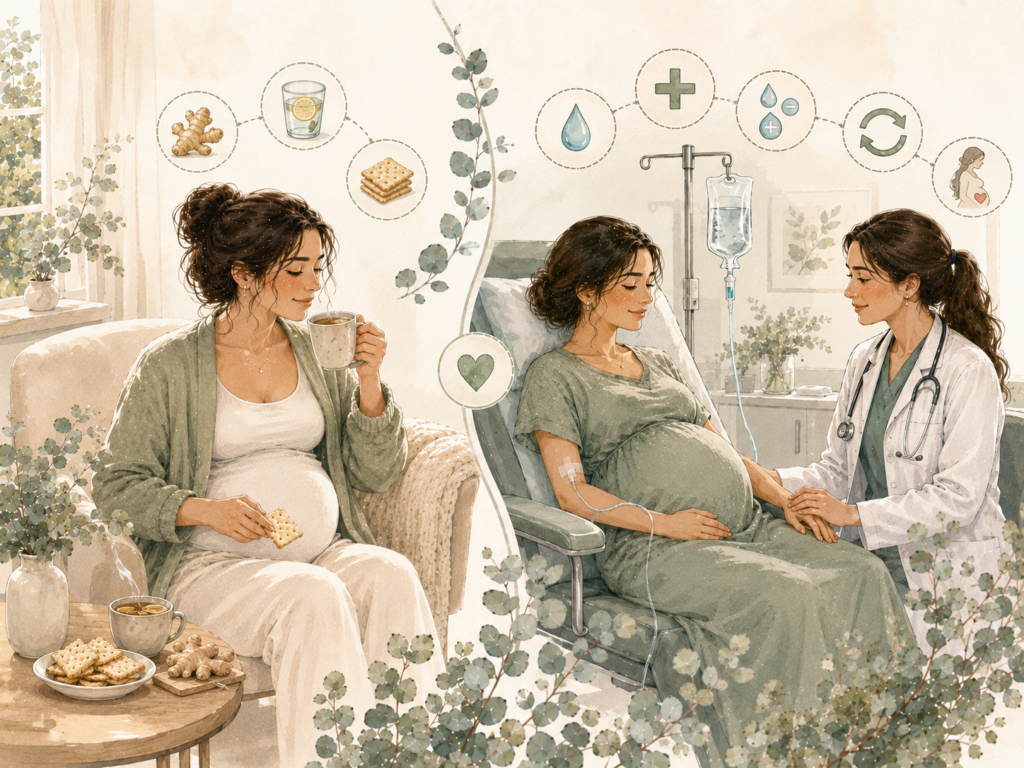
Unlike typical morning sickness, hyperemesis gravidarum often requires medical treatment and, in some cases, hospitalization for intravenous (IV) fluids and medications.
Early treatment can help prevent complications and improve comfort during pregnancy.
When Should You See a Doctor?
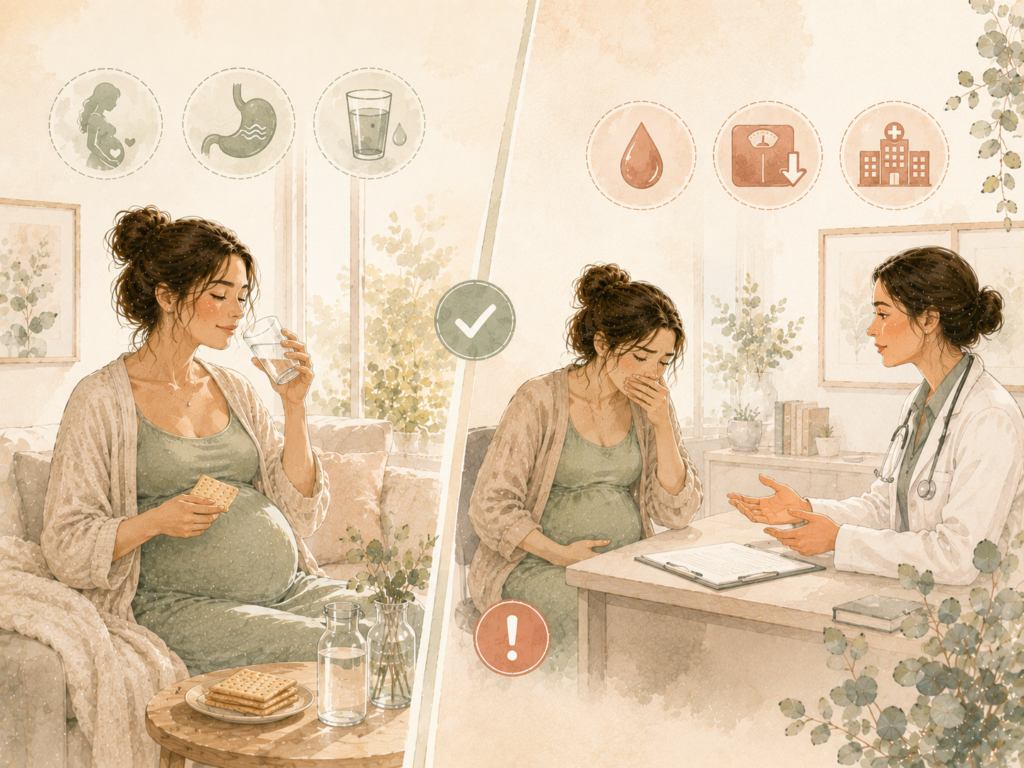
Morning sickness is usually a normal part of pregnancy, but some symptoms require prompt medical attention.
Contact your healthcare provider if you experience:
- Vomiting several times a day and being unable to keep food down.
- Difficulty keeping fluids down for more than 24 hours.
- Signs of dehydration, such as dark urine, dizziness, dry mouth, or very little urination.
- Weight loss during early pregnancy.
- Vomiting blood.
- Severe abdominal pain.
- Fever above 38°C (100.4°F).
- Feeling faint or losing consciousness.
- Symptoms that suddenly become much worse.
Seeking medical advice early can help prevent dehydration and other complications.
How Is Morning Sickness Diagnosed?
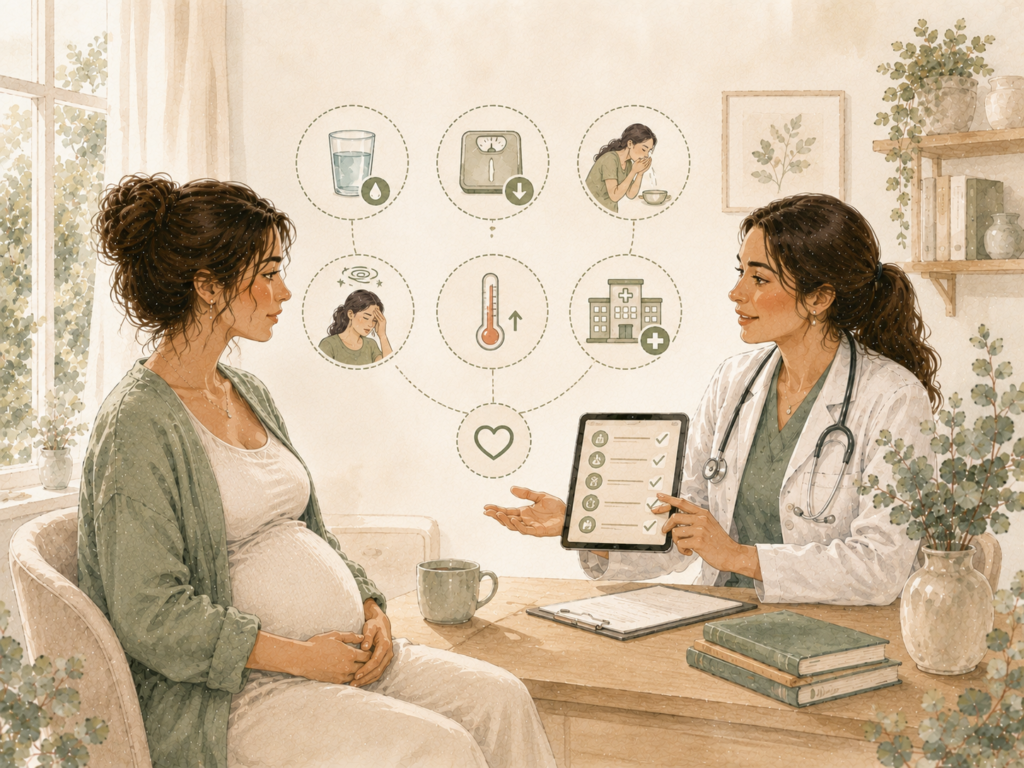
Morning sickness is usually diagnosed based on your symptoms and pregnancy history.
During your appointment, your healthcare provider may:
- Ask when your nausea began.
- Discuss how often you vomit.
- Review your diet and fluid intake.
- Check your weight.
- Assess for signs of dehydration.
- Review your medications and supplements.
- Order urine or blood tests if necessary.
- Perform an ultrasound if additional evaluation is needed.
If symptoms are severe, further testing may help rule out other possible causes of nausea and vomiting.
Can Morning Sickness Be Prevented?
There is no guaranteed way to prevent morning sickness, but healthy habits may reduce its severity.
Helpful strategies include:
- Eating regular small meals.
- Staying hydrated.
- Avoiding foods and smells that trigger nausea.
- Getting enough sleep.
- Managing stress.
- Following your healthcare provider’s advice regarding prenatal vitamins and supplements.
Every pregnancy is different, so what works well for one woman may not work as well for another.

Frequently Asked Questions
Morning sickness is common in healthy pregnancies, but having little or no morning sickness is also normal. Every pregnancy is different.
Yes. Despite the name, nausea and vomiting can occur at any time of the day or night.
Many women begin to feel better between 12 and 16 weeks of pregnancy, although some continue to experience symptoms longer.
Many women tolerate foods such as crackers, toast, rice, bananas, applesauce, oatmeal, yogurt, and ginger tea.
Typical morning sickness usually does not harm the baby. However, severe vomiting leading to dehydration or weight loss requires medical attention.
Some medications may be appropriate during pregnancy, but they should only be taken under the guidance of your healthcare provider.
Some women vomit daily during early pregnancy, but persistent vomiting that prevents you from eating or drinking normally should be discussed with your healthcare provider.
Morning sickness is usually manageable with lifestyle changes and supportive care. Hyperemesis gravidarum is a more severe condition involving persistent vomiting, dehydration, and possible weight loss that often requires medical treatment.
Conclusion
Morning sickness is one of the most common symptoms of early pregnancy and is usually caused by the natural hormonal changes that support your baby’s development. Although nausea and vomiting can be uncomfortable, symptoms often improve as pregnancy progresses.
Simple strategies such as eating small, frequent meals, staying hydrated, getting enough rest, choosing gentle foods, and avoiding known triggers may help many women feel better.
If your symptoms become severe or you are unable to keep food or fluids down, seek medical advice promptly. Early support can help protect both your health and your baby’s well-being throughout pregnancy.
Medical Disclaimer
This article is intended for educational purposes only and should not replace professional medical advice, diagnosis, or treatment. Every pregnancy is unique. If you have persistent nausea, severe vomiting, dehydration, or concerns about your pregnancy, consult a qualified healthcare professional promptly.
Sources & References
This article was prepared using information from trusted medical organizations and evidence-based clinical resources, including:
- World Health Organization (WHO)
- American College of Obstetricians and Gynecologists (ACOG)
- NHS (United Kingdom)
- Mayo Clinic
- Cleveland Clinic
- Office on Women’s Health (U.S. Department of Health & Human Services)
- March of Dimes
- Royal College of Obstetricians and Gynaecologists (RCOG)
LifeMate regularly reviews and updates its health content to reflect current evidence-based medical guidelines.