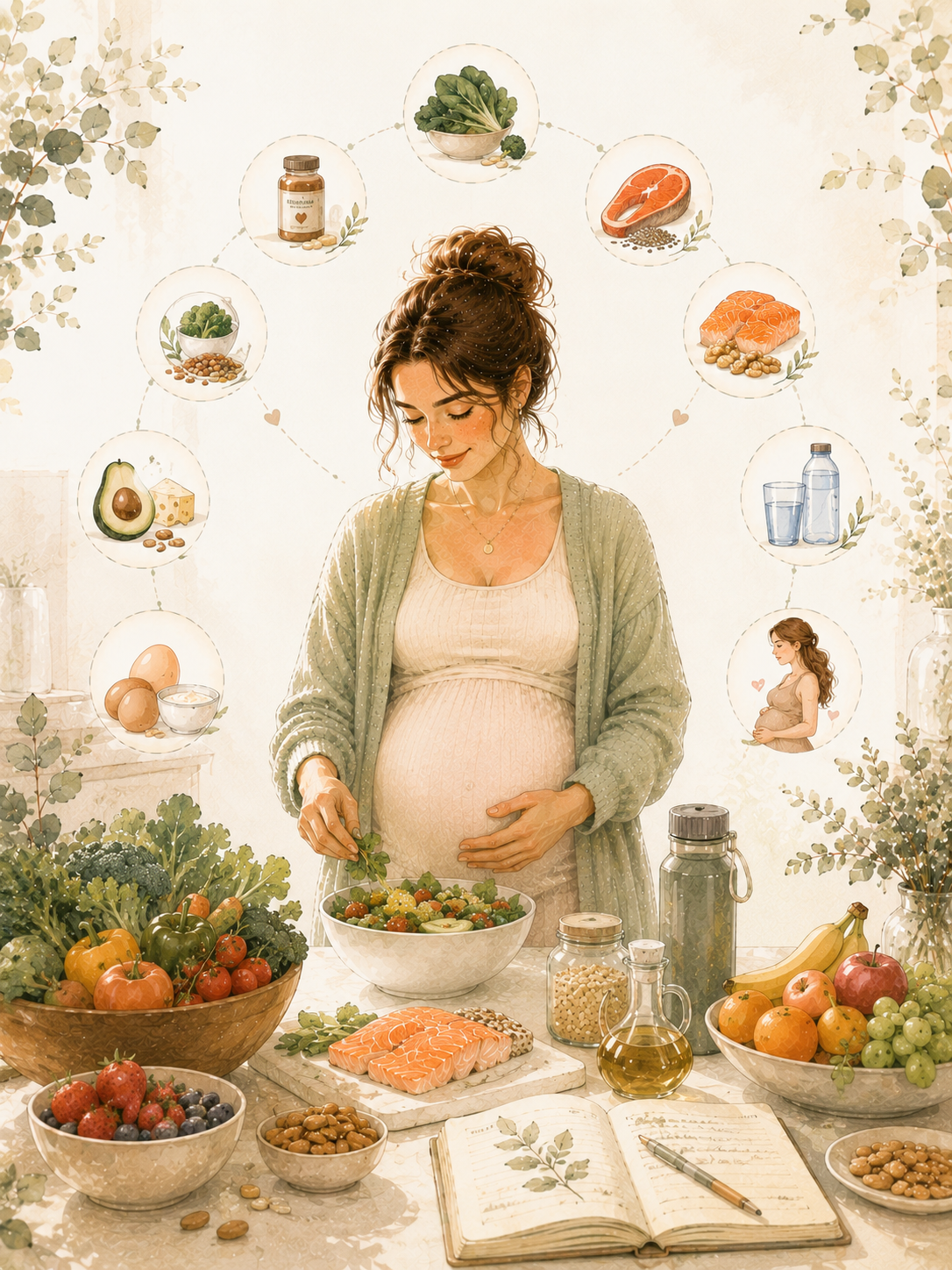
Eating a balanced and nutritious diet during pregnancy is one of the most important ways to support both your health and your baby’s development. Every meal provides essential nutrients that help your baby’s brain, bones, organs, and immune system grow while also supporting your body’s changing nutritional needs.
Pregnancy doesn’t require a perfect diet, but making informed food choices can reduce the risk of nutrient deficiencies, foodborne illnesses, and certain pregnancy complications. Understanding which foods to include—and which to avoid—can help you feel more confident throughout your pregnancy journey.
In this guide, you’ll learn about the healthiest foods to eat during pregnancy, foods to avoid, key nutrients for each trimester, hydration tips, food safety, and practical meal ideas for everyday life.
Why Nutrition Matters During Pregnancy
During pregnancy, your body works continuously to support your growing baby. Every stage of pregnancy requires nutrients that contribute to healthy fetal development while also maintaining your own health.
A balanced pregnancy diet can help support:
- Healthy fetal growth and development
- Brain and nervous system development
- Strong bones and teeth
- Healthy blood production
- Immune system function
- Healthy birth weight
- Maternal energy levels
- Overall pregnancy wellness
Rather than focusing on eating significantly more food, aim to eat more nutritious foods. Quality matters more than quantity.
Essential Nutrients During Pregnancy
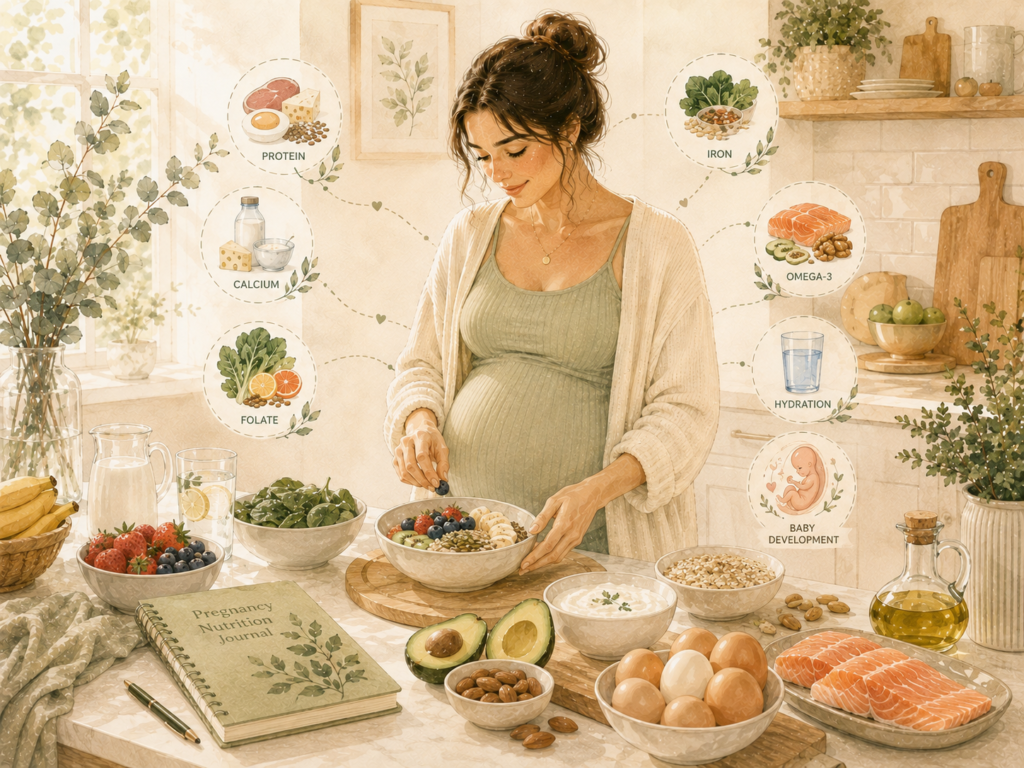
No single food contains every nutrient your body needs. Eating a variety of nutritious foods helps ensure you receive a wide range of vitamins, minerals, healthy fats, and protein.
Folate (Folic Acid)
Folate plays an essential role in your baby’s early brain and spinal cord development and helps reduce the risk of neural tube defects.
Excellent food sources include:
- Spinach
- Broccoli
- Lentils
- Chickpeas
- Asparagus
- Avocados
- Citrus fruits
- Fortified cereals
Most healthcare providers also recommend taking a prenatal vitamin containing folic acid before conception and during early pregnancy.
Iron
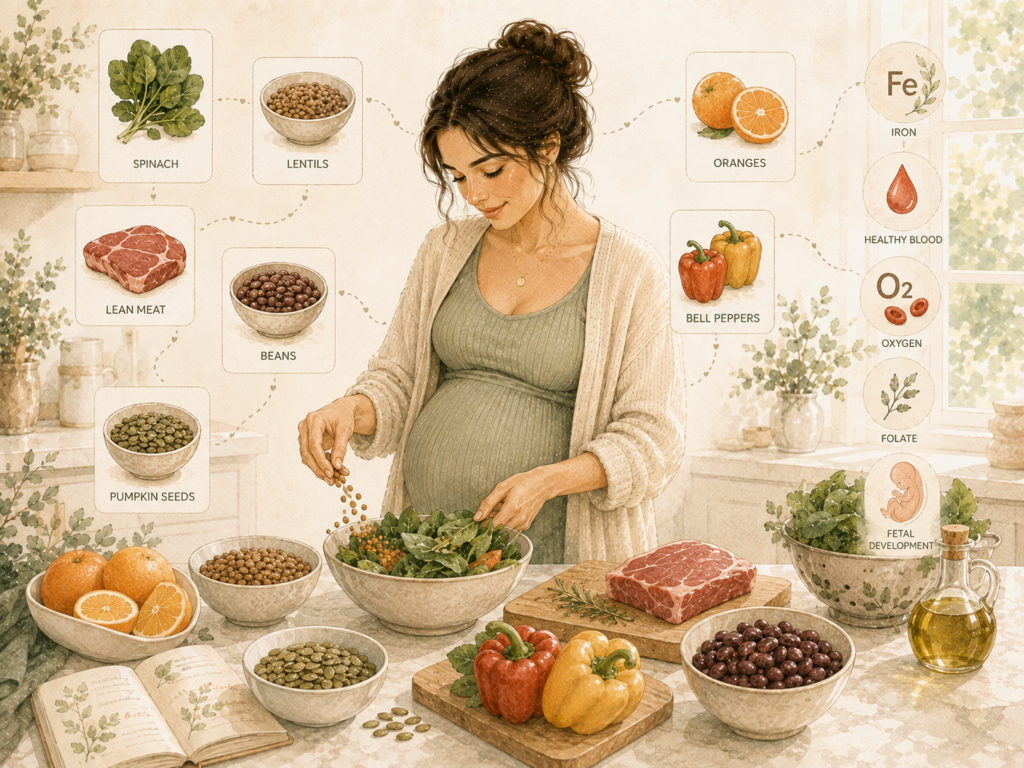
During pregnancy, your body produces more blood to supply oxygen to your growing baby. Iron helps prevent iron deficiency and supports healthy red blood cell production.
Iron-rich foods include:
- Lean beef
- Chicken
- Turkey
- Lentils
- Beans
- Tofu
- Spinach
- Pumpkin seeds
- Iron-fortified cereals
Pair plant-based iron sources with foods rich in vitamin C, such as oranges, strawberries, kiwi, or bell peppers, to improve iron absorption.
Calcium
Calcium helps build your baby’s bones and teeth while supporting healthy muscles, nerves, and heart function.
Good sources include:
- Milk
- Yogurt
- Cheese
- Calcium-fortified plant-based milk
- Tofu made with calcium
- Kale
- Broccoli
If dietary intake is insufficient, your healthcare provider may recommend a calcium supplement.
Vitamin D
Vitamin D helps your body absorb calcium and supports healthy bone development and immune function.
Sources include:
- Fatty fish
- Egg yolks
- Fortified dairy products
- Fortified cereals
- Safe sun exposure, depending on individual circumstances
Your healthcare provider may recommend supplementation if needed.
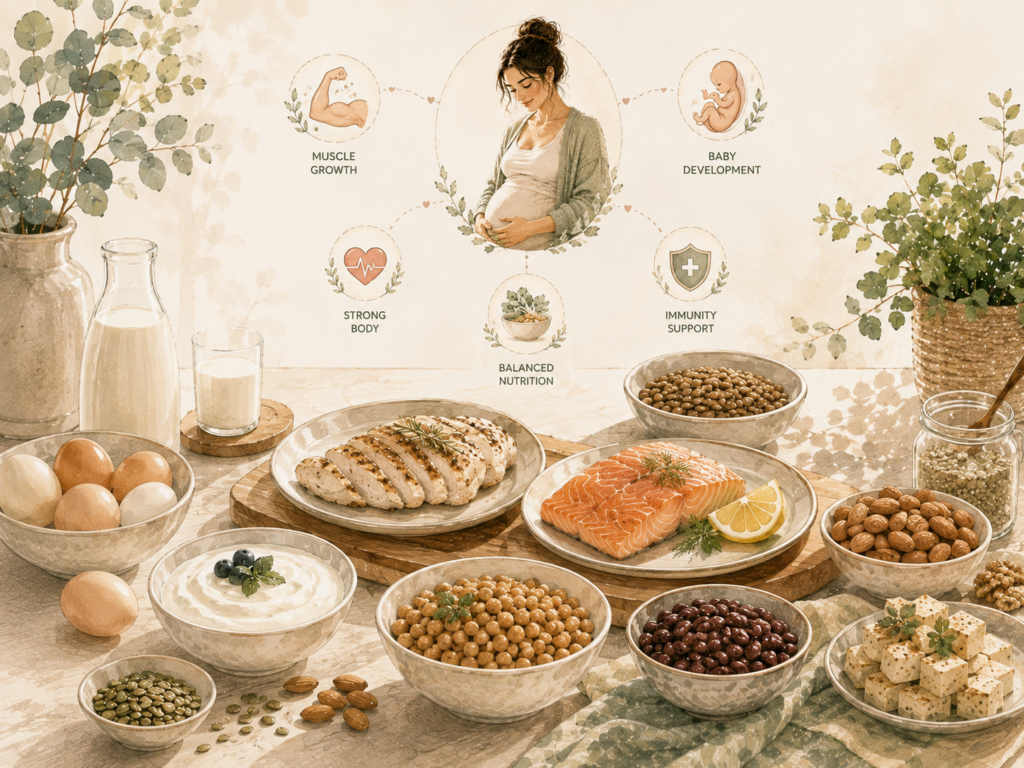
Protein
Protein is essential for the growth of your baby’s organs, muscles, skin, and tissues. It also supports changes in your own body during pregnancy.
Healthy protein sources include:
- Eggs
- Chicken
- Fish that are low in mercury
- Lean beef
- Greek yogurt
- Cottage cheese
- Lentils
- Beans
- Chickpeas
- Tofu
- Nuts and seeds
Aim to include a source of protein with each meal.
Omega-3 Fatty Acids
Omega-3 fatty acids, particularly DHA, support your baby’s brain and eye development.
Good sources include:
- Salmon
- Sardines
- Trout
- Chia seeds
- Flaxseeds
- Walnuts
Choose fish that are low in mercury and follow local recommendations regarding fish consumption during pregnancy.
Fiber
Fiber supports healthy digestion and may help reduce constipation, which is common during pregnancy.
High-fiber foods include:
- Whole grains
- Oats
- Brown rice
- Fruits
- Vegetables
- Beans
- Lentils
- Chia seeds
Drink plenty of water when increasing your fiber intake.
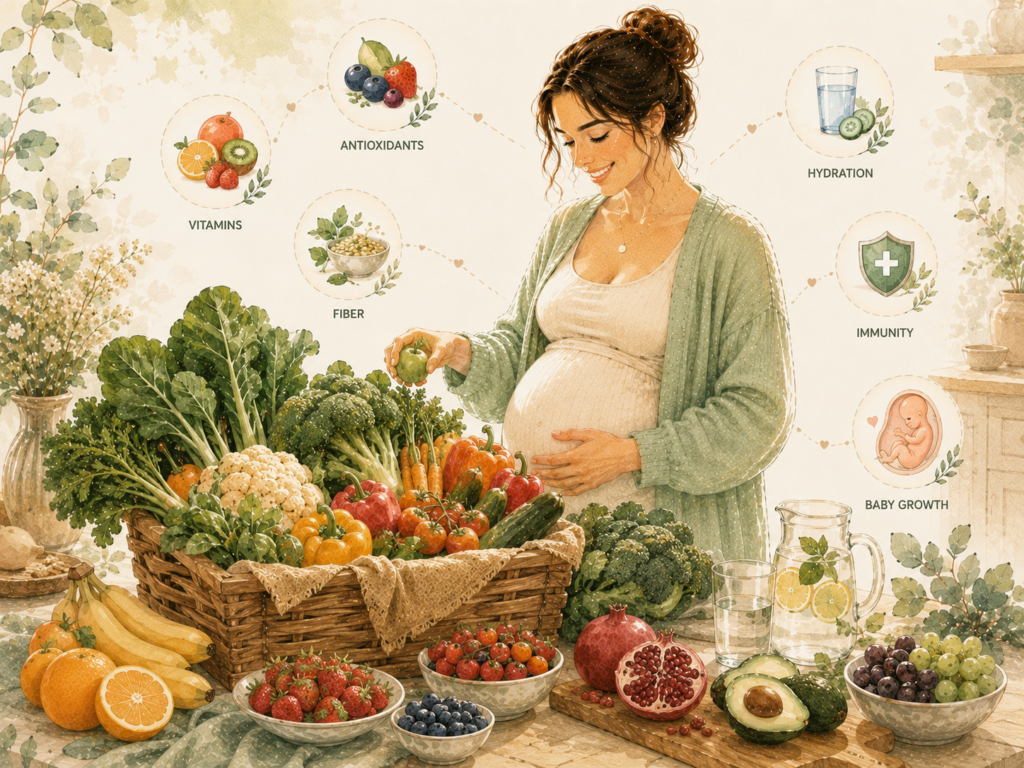
Best Foods to Eat During Pregnancy
Building each meal around a variety of whole, minimally processed foods can help you meet your nutritional needs.
Some of the healthiest choices include:
Fruits
- Bananas
- Apples
- Oranges
- Berries
- Mangoes
- Kiwi
Rich in vitamins, antioxidants, fiber, and hydration.
Vegetables
- Broccoli
- Carrots
- Sweet potatoes
- Bell peppers
- Kale
- Spinach
Provide essential vitamins, minerals, and fiber.
Whole Grains
Whole grains provide complex carbohydrates that supply steady energy throughout the day. They are also rich in fiber, B vitamins, and important minerals.
Healthy options include:
- Oats
- Brown rice
- Whole wheat bread
- Whole wheat pasta
- Quinoa
- Barley
- Millet
Whole grains may also help support healthy digestion and reduce constipation during pregnancy.
Dairy Foods
Dairy products are excellent sources of calcium, protein, vitamin B12, and iodine.
Healthy choices include:
- Milk
- Greek yogurt
- Plain yogurt
- Cheese made from pasteurized milk
- Cottage cheese
If you don’t consume dairy, choose calcium-fortified plant-based alternatives and discuss your nutritional needs with your healthcare provider.
Healthy Fats
Healthy fats are important for your baby’s brain and nervous system development.
Nutritious sources include:
- Avocados
- Olive oil
- Nuts
- Almonds
- Walnuts
- Chia seeds
- Flaxseeds
- Peanut butter (if you are not allergic)
Choose healthy unsaturated fats while limiting foods high in trans fats.
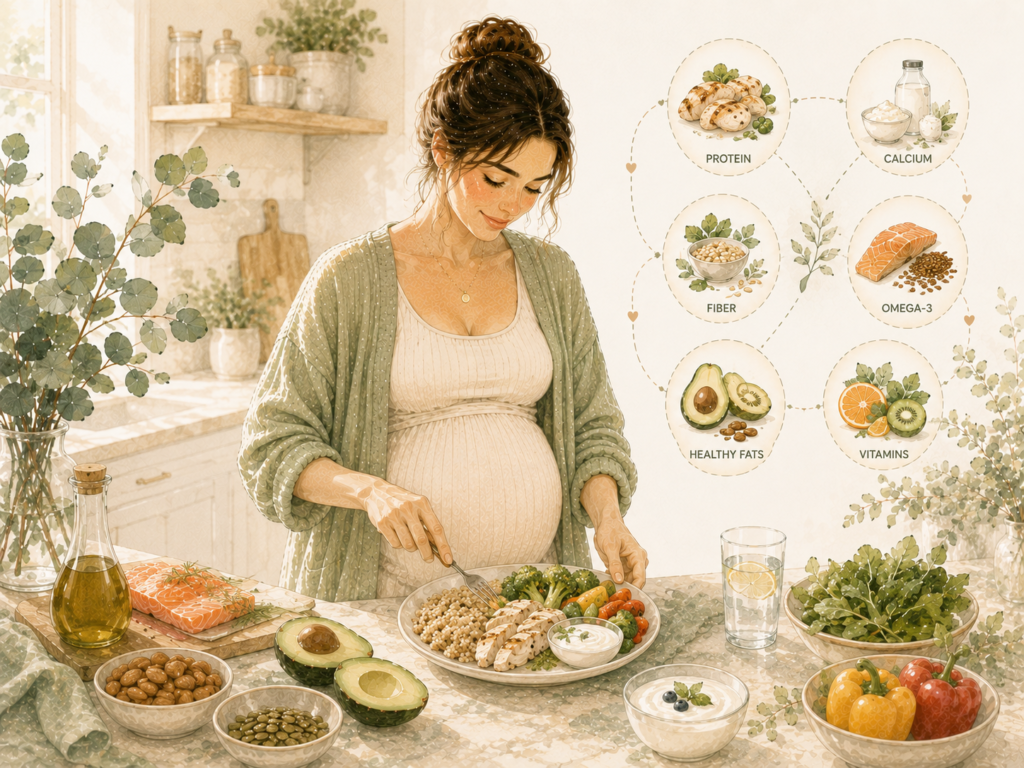
Healthy Pregnancy Snacks
Nutritious snacks can help maintain energy levels between meals and may reduce nausea for some women.
Healthy snack ideas include:
- Greek yogurt with berries
- Apple slices with peanut butter
- Mixed nuts
- Whole-grain crackers with cheese
- Hummus with vegetables
- Boiled eggs
- Cottage cheese with fruit
- Banana with almonds
Aim for snacks that combine protein, fiber, and healthy fats to help keep you satisfied.
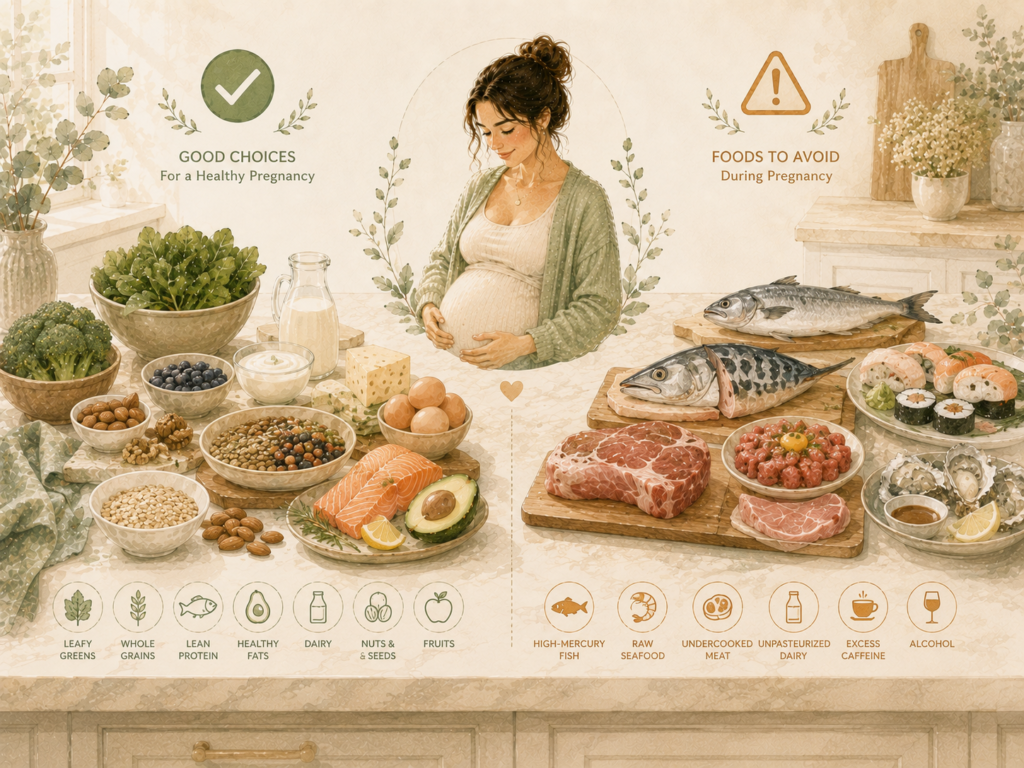
Foods to Avoid During Pregnancy
Some foods carry a higher risk of foodborne illnesses or contain substances that may be harmful during pregnancy. Knowing which foods to avoid can help protect both you and your baby.
High-Mercury Fish
Fish is an excellent source of protein and omega-3 fatty acids, but some large fish contain high levels of mercury.
Avoid fish such as:
- Shark
- Swordfish
- King mackerel
- Marlin
- Tilefish
- Bigeye tuna
Instead, choose lower-mercury options such as salmon, sardines, trout, cod, and anchovies.
Raw or Undercooked Seafood
Raw seafood may contain harmful bacteria or parasites that can increase the risk of foodborne illness.
Avoid:
- Raw sushi made with seafood
- Oysters
- Clams
- Mussels
- Raw shellfish
Always choose thoroughly cooked seafood during pregnancy.
Raw or Undercooked Meat
Undercooked meat may contain bacteria or parasites that can cause serious illness during pregnancy.
Cook meat thoroughly and avoid:
- Rare steaks
- Raw minced meat
- Undercooked poultry
Use a food thermometer when appropriate to ensure meat reaches a safe internal temperature.
Raw or Undercooked Eggs
Raw eggs may contain harmful bacteria such as Salmonella.
Avoid foods containing raw or lightly cooked eggs, including:
- Homemade mayonnaise made with raw eggs
- Raw cookie dough
- Some homemade desserts
- Soft scrambled eggs that are still runny
Choose eggs that are fully cooked until both the yolk and white are firm.
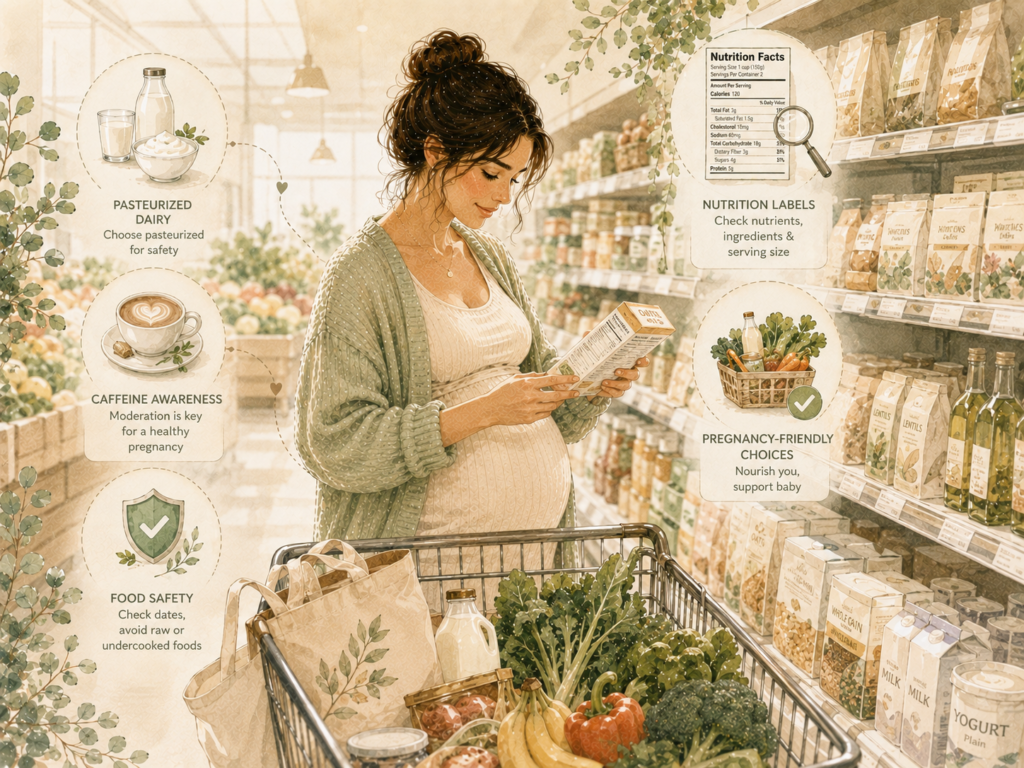
Unpasteurized Milk and Soft Cheeses
Unpasteurized dairy products can contain harmful bacteria such as Listeria, which may cause serious illness during pregnancy.
Avoid:
- Unpasteurized milk
- Soft cheeses made from unpasteurized milk
- Certain artisan dairy products that are not pasteurized
Always check product labels to ensure dairy products are pasteurized.
Processed Meats
Processed meats such as deli meats and hot dogs may occasionally contain harmful bacteria if not handled properly.
If you choose to eat them, heat them until they are steaming hot before consumption.
Examples include:
- Deli meats
- Hot dogs
- Sausages
- Cold cuts
Alcohol
There is no known safe amount of alcohol during pregnancy. Drinking alcohol during pregnancy can affect your baby’s development.
Healthcare organizations recommend avoiding alcohol completely throughout pregnancy.
Excess Caffeine
Caffeine crosses the placenta, and excessive intake during pregnancy has been associated with certain pregnancy risks.
Many healthcare organizations recommend limiting caffeine intake to less than 200 mg per day, but individual recommendations may vary. Speak with your healthcare provider if you have questions about caffeine consumption.
Sources of caffeine include:
- Coffee
- Tea
- Energy drinks
- Cola beverages
- Chocolate
Raw Sprouts
Raw sprouts can harbor bacteria that are difficult to remove through washing alone.
Avoid:
- Alfalfa sprouts
- Clover sprouts
- Radish sprouts
- Mung bean sprouts
Cook sprouts thoroughly before eating.
Food Safety Tips During Pregnancy
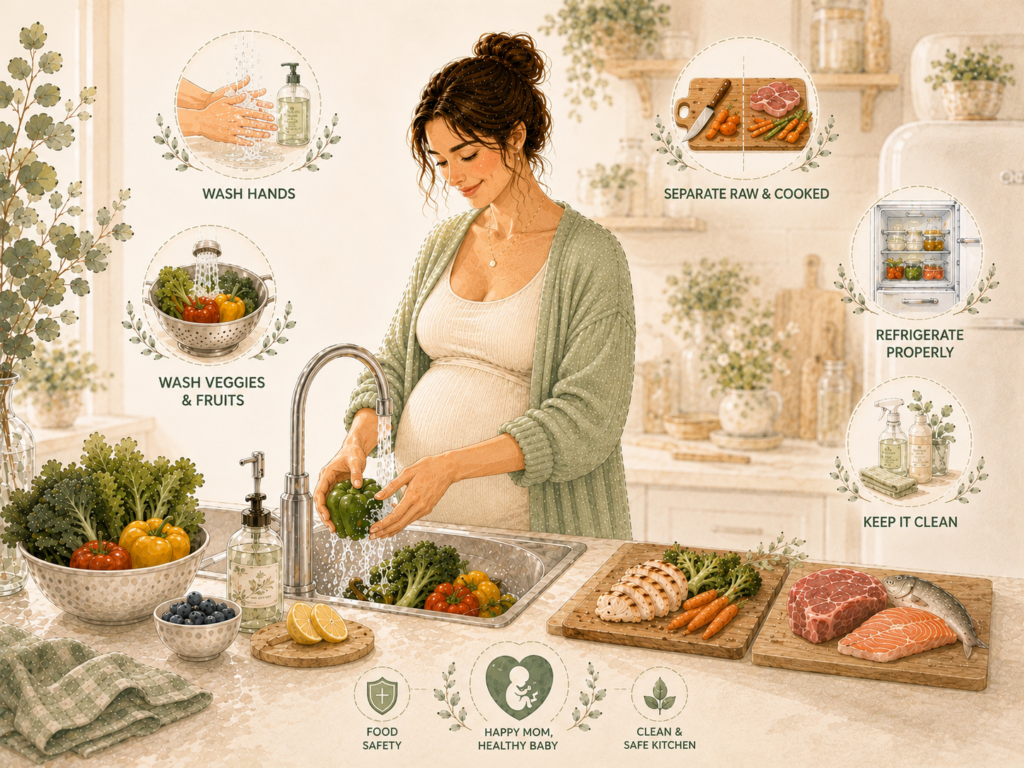
Practicing good food hygiene is just as important as choosing healthy foods.
Follow these simple food safety habits:
- Wash fruits and vegetables thoroughly before eating.
- Cook meat, poultry, seafood, and eggs completely.
- Refrigerate leftovers promptly.
- Avoid cross-contamination by using separate cutting boards for raw meat and fresh produce.
- Wash your hands before preparing food and before eating.
- Check expiration dates before consuming packaged foods.
These habits help reduce the risk of foodborne illnesses during pregnancy.
How Much Water Should You Drink During Pregnancy?
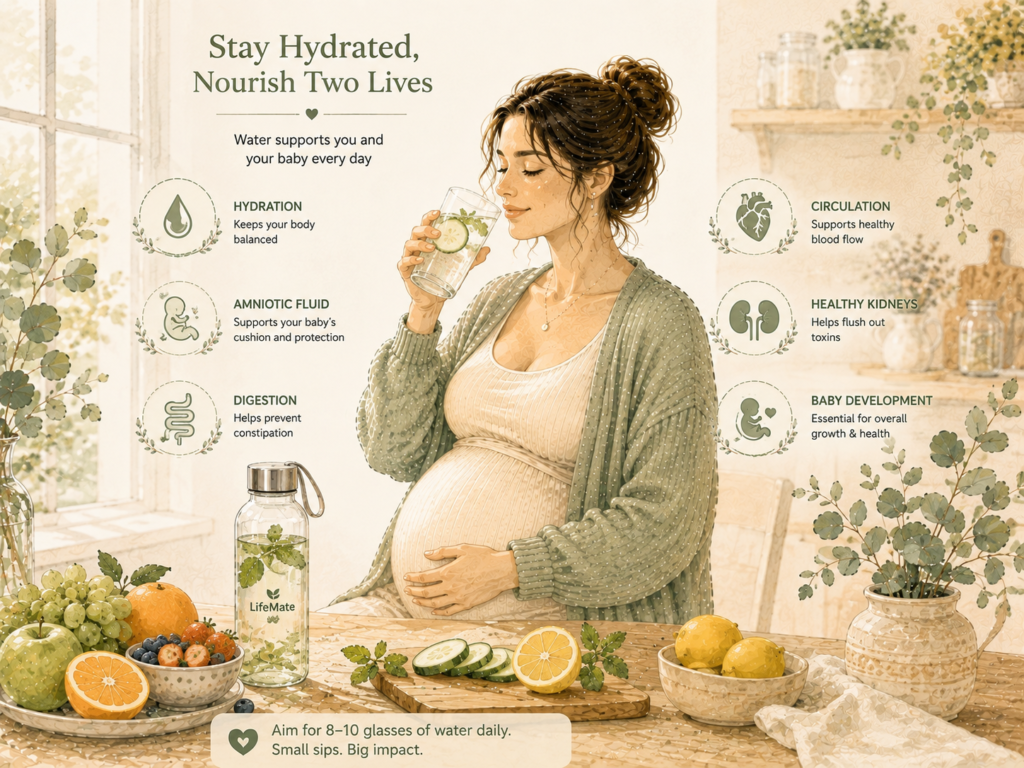
Staying hydrated is just as important as eating nutritious foods during pregnancy. Water helps transport nutrients to your baby, supports the production of amniotic fluid, regulates body temperature, aids digestion, and helps prevent dehydration.
Many pregnant women need about 8–12 cups (approximately 2–3 liters) of fluids per day, though individual needs vary depending on activity level, climate, and personal health. Your healthcare provider can recommend the right amount for you.
You may need more fluids if you:
- Exercise regularly
- Spend time in hot weather
- Experience vomiting or diarrhea
- Have a fever
Signs that you may need more fluids include:
- Dark yellow urine
- Dry mouth
- Headache
- Dizziness
- Feeling unusually thirsty
Keeping a reusable water bottle nearby can make it easier to stay hydrated throughout the day
A Sample One-Day Pregnancy Meal Plan
This example meal plan shows how a balanced day of eating may look during pregnancy. Individual nutritional needs vary, so always follow advice from your healthcare provider or a registered dietitian.
Breakfast
- Oatmeal topped with berries and chopped walnuts
- One boiled egg
- A glass of milk or calcium-fortified plant-based milk
Mid-Morning Snack
- Greek yogurt
- Fresh banana
Lunch
- Grilled chicken breast
- Brown rice
- Steamed broccoli and carrots
- Mixed green salad with olive oil dressing
Afternoon Snack
- Apple slices
- Peanut butter
- A handful of almonds
Dinner
- Baked salmon
- Quinoa
- Roasted sweet potatoes
- Steamed spinach
Evening Snack
- Cottage cheese
- Fresh berries
This meal plan provides a balance of protein, healthy fats, fiber, vitamins, and minerals while emphasizing whole, minimally processed foods.
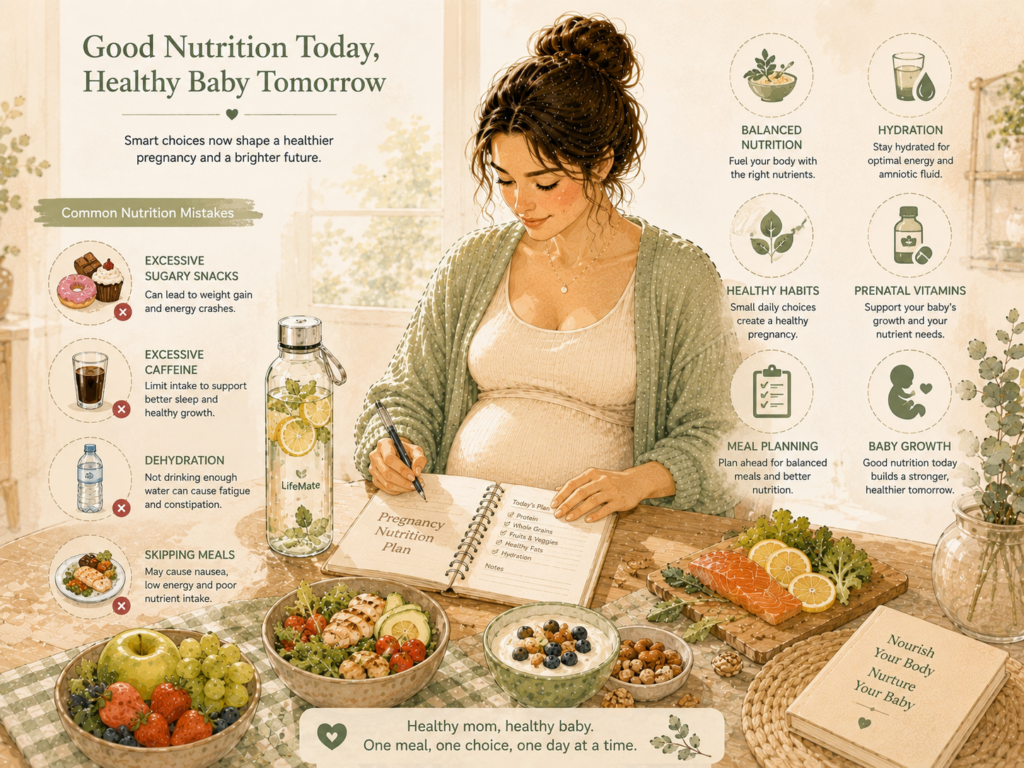
Common Nutrition Mistakes During Pregnancy
Many women worry about eating perfectly during pregnancy, but healthy eating is about making balanced choices most of the time rather than striving for perfection.
Some common mistakes include:
- Skipping meals because of nausea
- Eating too many processed or sugary foods
- Drinking too little water
- Avoiding healthy fats
- Consuming too much caffeine
- Relying only on supplements instead of a balanced diet
- Following restrictive diets without medical advice
- Ignoring food safety recommendations
If nausea or food aversions make healthy eating difficult, speak with your healthcare provider for personalized guidance.
Should You Take Prenatal Vitamins?
Prenatal vitamins help fill nutritional gaps during pregnancy, but they are not a replacement for a healthy diet.
Healthcare providers commonly recommend prenatal vitamins that contain nutrients such as:
- Folic acid
- Iron
- Iodine
- Vitamin D
- Vitamin B12 (when appropriate)
- DHA (for some individuals)
Always take supplements only as recommended by your healthcare provider. Taking more than the recommended amount of certain vitamins or minerals can be harmful.
Frequently Asked Questions
A balanced diet that includes fruits, vegetables, whole grains, lean proteins, dairy or fortified alternatives, healthy fats, and plenty of water provides many of the nutrients needed during pregnancy.
Avoid alcohol, high-mercury fish, raw seafood, raw or undercooked meat and eggs, unpasteurized dairy products, and foods that may increase the risk of foodborne illness.
Yes. Fish that are low in mercury, such as salmon, sardines, trout, and cod, can be part of a healthy pregnancy diet. Avoid fish known to contain high levels of mercury.
Many healthcare organizations recommend limiting caffeine intake to less than 200 mg per day, but individual recommendations may vary. Speak with your healthcare provider about what is appropriate for you.
Pregnancy increases nutritional needs, but it does not necessarily mean “eating for two.” Focus on nutrient-rich foods rather than simply increasing portion sizes.
No. Prenatal vitamins support a healthy diet but do not replace nutritious meals and snacks.
Spicy foods are generally safe during pregnancy unless they trigger heartburn or digestive discomfort.
Staying hydrated supports circulation, digestion, amniotic fluid production, temperature regulation, and the transport of nutrients to your growing baby.
Conclusion
Eating a healthy, balanced diet during pregnancy is one of the best ways to support your baby’s growth and your own well-being. Choosing nutrient-rich foods, staying hydrated, practicing safe food handling, and limiting foods that may pose a risk can help promote a healthy pregnancy.
Remember that every pregnancy is unique. If you have questions about your diet, supplements, food allergies, or medical conditions, speak with your healthcare provider or a registered dietitian for personalized advice.
Small, consistent healthy choices each day can make a meaningful difference for both you and your baby.
Medical Disclaimer
This article is intended for educational purposes only and should not replace professional medical advice, diagnosis, or treatment. Nutritional needs vary during pregnancy, so always consult your healthcare provider or a registered dietitian before making significant dietary changes or taking supplements.
Sources & References
This article was prepared using information from trusted medical organizations and evidence-based clinical resources, including:
- World Health Organization (WHO)
- American College of Obstetricians and Gynecologists (ACOG)
- NHS (United Kingdom)
- Mayo Clinic
- Cleveland Clinic
- Office on Women’s Health (U.S. Department of Health & Human Services)
- Academy of Nutrition and Dietetics
- March of Dimes
LifeMate regularly reviews and updates its health content to reflect current medical knowledge and evidence-based guidelines.